
Democrats have secured 258 seats in the House of Representatives. That number, confirmed Sunday after a recount in North Carolina, represents the party’s most commanding position in the lower chamber since Bill Clinton first won the presidency in 1992.
The thesis here is straightforward: this is not merely a good night for the Democratic Party. It is a structural realignment, one that carries both enormous governing potential and an equally enormous burden of expectation. The scale of the win demands that Democrats treat it as a mandate, not a relief.
How 258 Happened
The decisive seat came from North Carolina’s 5th congressional district, where Democrat Chuck Hubbard defeated incumbent Republican Virginia Foxx by 330 votes following a recount certified by the North Carolina Board of Elections. Hubbard drew 48.7% of the vote to Foxx’s 48.6%, with 99% of ballots counted. It was the kind of margin that, in another cycle, might have gone the other way. It did not.
That single seat pushed Democrats’ total gains to 44 seats nationwide, exceeding the 40 seats the party captured in the 2018 midterms during Donald Trump’s first term. North Carolina alone illustrated the breadth of the shift: Democrats won 11 of the state’s 14 House seats, a result that would have seemed implausible not long ago in a state Republicans long considered reliable territory.
Republicans, for their part, held at least 173 seats. Four races remained uncalled as of Sunday, one each in Minnesota and Tennessee and two in Louisiana, where runoff elections are scheduled for December. Democrats still hold the possibility of adding to their total. The floor, for now, is 258.
A Majority That Puts This Century to Shame
To understand what 258 means historically, consider the benchmarks. Democrats won exactly 258 seats in 1992 alongside Clinton’s presidential victory. They secured 257 in 2008, when Barack Obama carried the White House. According to historical records compiled by the Federal Election Commission, Sunday’s result matches the best Democratic performance of the modern era and surpasses every House majority either party has assembled in the 21st century. Only the New Deal-era Democratic caucuses, which swelled past 300 seats during Franklin D. Roosevelt’s dominance, eclipse it.
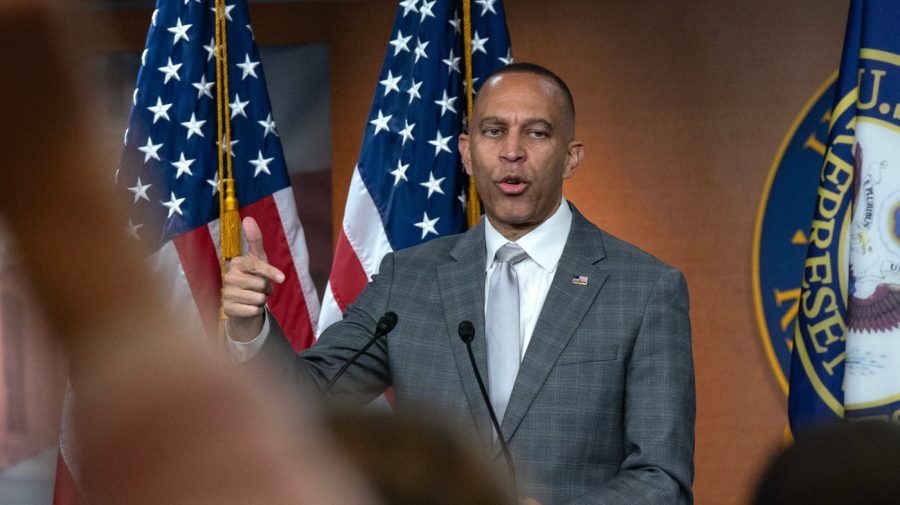
“House Democrats have just secured the largest majority any party in Congress has held this century. BOOM,” wrote Democratic leader Hakeem Jeffries of New York on X, shortly after the North Carolina result was confirmed. Jeffries is positioned to become Speaker of the House, a role that will test whether this majority can be translated into durable legislative achievement. Going into the election, Democrats held 214 seats in the outgoing Congress. The net gain of 44 to 47 seats, depending on how the remaining races resolve, is a genuine wave by any measure.
The Weight of a Mandate
Wave elections create opportunities. They also create traps. The 2010 Republican wave, built partly on opposition to the Affordable Care Act, gave the GOP the leverage to obstruct for years. The 2018 Democratic wave, which netted 40 seats, produced a House majority that passed significant legislation only to watch it die in the Senate. The question now is whether a majority of this size, the largest of the century, can be wielded with enough discipline and ambition to match the moment.
The political geography of this result matters too. Longtime Republican strongholds flipped to Democratic hands, some for the first time in decades. That breadth suggests voters were not simply registering dissatisfaction with one figure or one policy; they were signaling something wider. Whether Democrats read that signal as a call for bold, progressive governance or retreat into cautious incrementalism will define the next two years as much as any single vote.
The party that just won 258 seats has no excuse for small thinking. The majority is there. The pressure, now, is to use it.