
Reports began circulating in recent months that Russia is planning to launch a nuclear antisatellite weapon into orbit before the end of this year. The claims, allegedly drawn from Western intelligence assessments, have triggered alarm across governments and arms-control communities worldwide. They have not been independently corroborated. Yet experts warn the scenario, however uncertain, demands serious attention.
The story’s origins trace back to February 2022, when Russia launched a satellite designated Kosmos 2553. At the time, analysts suspected the mission was connected to nuclear weapons research in space. By 2023, reports emerged that the satellite had begun spinning out of control and was likely nonoperational. Its apparent failure did not end the concern; it shifted it.
A joint investigation by several German news agencies subsequently identified a successor program. The new device, reportedly called Sputnik-S, is said to be stored in the Moscow area, where it has been sitting in readiness for launch for years. Whether Russian military planners intend to place a functioning nuclear weapon in orbit, or simply conduct further tests similar to those associated with Kosmos 2553, remains unknown to outside observers.
Victoria Samson, chief director of space security and stability at the Secure World Foundation, frames the uncertainty plainly. “It is possible that they’re thinking about doing it; it’s possible they’re thinking about doing a replacement to Kosmos 2553,” she says. “It’s possible they’re not doing anything.” That ambiguity is not unusual. Civil analysts working outside classified channels routinely face near-total opacity when assessing covert military space programs.
What is not ambiguous is the legal status of such a weapon. Placing a nuclear device in orbit would directly violate the Outer Space Treaty, which 118 countries have signed, Russia among them. The treaty has governed the militarization of space since 1967. Violating it would mark a sharp rupture in the international arms-control architecture that survived even the tensest decades of the Cold War.
Beyond the legal dimension, the practical logic of a space-based nuclear weapon is deeply flawed. Mark Melamed, deputy vice president for the global nuclear policy program at the Nuclear Threat Initiative, puts it directly: “The use of a nuclear weapon in space would cause widespread and very indiscriminate damage, so it’s bad for everybody. It’s not a capability that can be targeted against any specific adversary.”
Samson describes the sequence of destruction that a nuclear detonation in orbit would unleash. The immediate effect would be a blinding flash of optical light, x-rays and gamma rays, disabling every satellite within line of sight. Then would come an expanding cloud of radioactive plasma, drifting through orbital paths and incapacitating satellites regardless of their country of origin or purpose. Depending on the altitude and yield of the detonation, a vast swath of low-Earth orbit could become effectively unusable for nearly a year.
The cascade would not stop there. Dead satellites colliding at thousands of miles per hour would generate enormous clouds of debris, threatening any surviving active satellites in their path. The loss of telecommunications infrastructure on that scale would severely disrupt global internet access. Some hardened military satellites, including certain GPS assets, might survive; most civilian infrastructure would not.
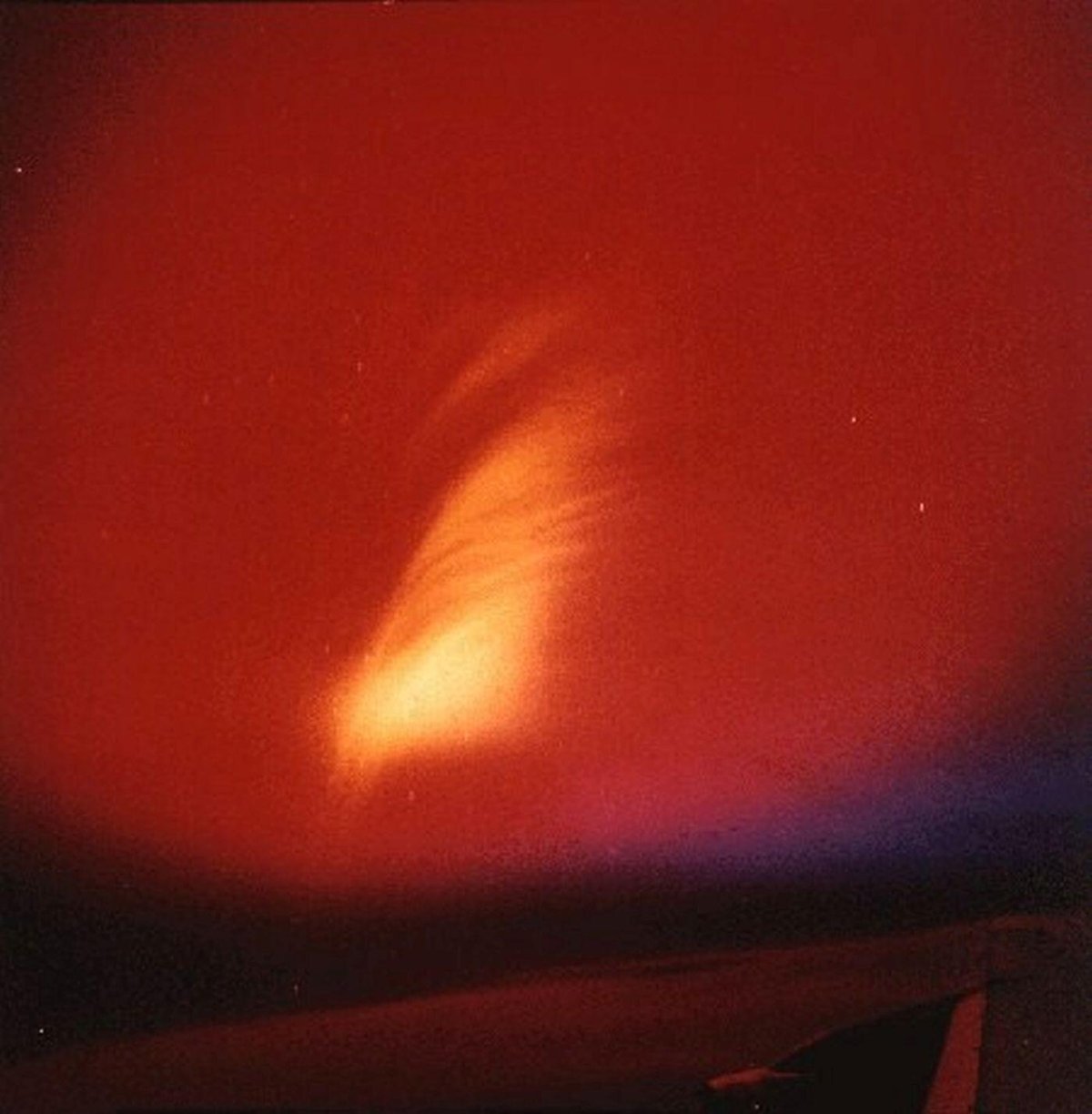
This kind of catastrophic, indiscriminate weapon has precedent. At the height of the Cold War, both the United States and the Soviet Union tested nuclear explosions in space. The U.S. detonated a nuclear bomb approximately 250 miles above Earth in 1962, in the test known as Starfish Prime, knocking out several satellites and causing electrical blackouts on the ground below. The sheer destructiveness of those tests helped drive the Outer Space Treaty’s negotiation. The world learned the lesson. Until now, perhaps.
The emergence of massive commercial satellite constellations has changed the strategic calculus in ways the treaty’s architects could not have anticipated. SpaceX’s Starlink system has become operationally critical to Ukraine’s defense against Russia’s full-scale invasion, which began in February 2022. Russia has suffered severe battlefield losses in the years since. Eliminating Starlink and similar systems in a single strike would remove a capability that has materially degraded Russian military effectiveness. “If you were to put a weapon into space, it’s because you want to get rid of a lot of satellites all at once,” Samson says, while still accepting enormous collateral damage.
Even so, Samson considers actual deployment unlikely. “I think it is very low-probability they would actually do it, because I think it’d be very escalatory,” she says. “But it’s one of those low-probability, high-impact type of scenarios.” The distinction matters: low probability does not mean negligible risk, especially when the downside is the effective destruction of the global satellite commons.
The broader context is a documented and accelerating arms race in space. The United States, Russia, China and India have all tested ground-launched antisatellite missiles over the past two decades. In September, a senior U.S. Air Force official publicly confirmed that the United States had already placed so-called “on-orbit space control” weapons in Earth orbit. That announcement reverberated through the arms-control community.
Melamed cautions against drawing a direct causal line between that U.S. announcement and the Russian nuclear weapon reports. “I definitely think we are in a period of military competition in outer space; that’s undeniable,” he says. “But I don’t think it’s fair to link this latest reporting around the Russian capability to that announcement, because this Russian capability, at least the reporting on it, is that they were developing this capability back in 2024, and who knows how long before that the intelligence might have existed.”
What may be driving Russia’s calculus is something older than the current war. Russia carries a deep institutional identity as a space power, rooted in Soviet achievements that predate any living military officer’s career. Samson points to that legacy as a motivating factor. “Russia has a historical legacy of being a major space power going back from the Soviet times,” she says. “This is something they’re very proud of. I don’t think it’s something they’d give up lightly.”
The possibility that Moscow is pursuing a nuclear antisatellite capability less as a rational military instrument and more as a demonstration of prestige and deterrence is, in some ways, more unsettling than a purely tactical calculation. Weapons developed to project power and signal resolve carry their own escalation risks, independent of whether anyone intends to use them. The world is watching a situation it cannot fully see, debating a threat it cannot fully verify, with stakes that are unambiguously global.