
A Troubling Decline in a Once-Routine Protection
The rate of newborns receiving the hepatitis B vaccine has fallen to its lowest level in years, according to a study published Tuesday in The New England Journal of Medicine, with vaccination coverage dropping to 65.6 percent in 2026, down from roughly 80 percent between 2020 and 2022. The study, which analyzed data from 1.3 million births compiled by Truveta, a healthcare analytics company, documents a collapse in a public health measure that had, for three decades, been considered one of medicine’s most straightforward interventions. The speed of the decline surprised even the researchers who found it.
“This decline really outpaces the decline that we saw for other vaccines, so it was a bit shocking to see just how far vaccination rates have fallen,” said Dr. Masters, one of the study’s authors. The findings point to a public health system under deliberate pressure, shaped in part by political decisions made at the highest levels of federal health administration.
The consequences are not abstract. Hepatitis B is a contagious liver infection that can cause fatigue, jaundice and loss of appetite, and that can progress to liver cancer. It is also preventable. The virus can be transmitted from an infected mother to her baby during childbirth, and infants born to hepatitis B-positive mothers face a 90 percent chance of perinatal infection if left unprotected.
How Federal Policy Sowed the Confusion
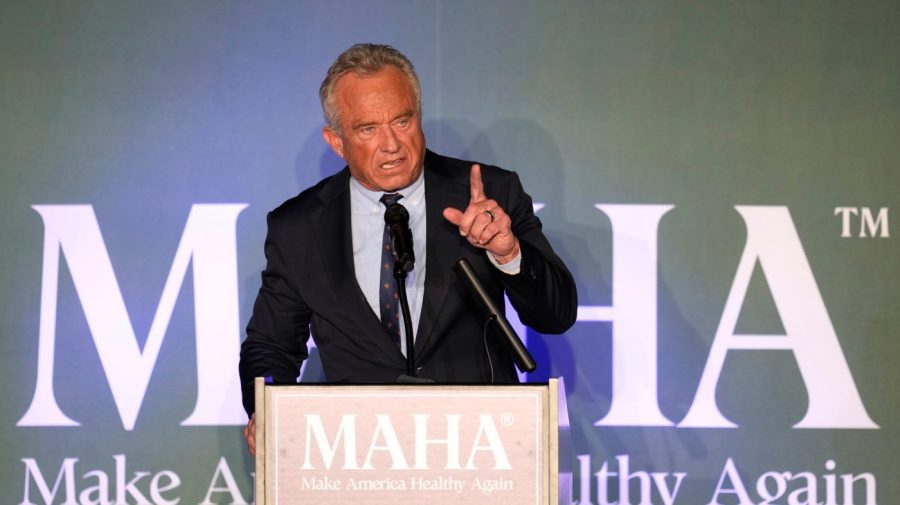
The immediate policy trigger was a December 2025 vote by the Advisory Committee on Immunization Practices, the federal body that issues vaccine guidance. Its members, hand-picked by Health Secretary Robert F. Kennedy Jr., a longtime vaccine skeptic, voted to scrap the longstanding recommendation that every newborn receive the first hepatitis B dose at birth regardless of the mother’s infection status. Instead, parents of babies born to hepatitis B-negative mothers were told simply to consult their doctors, a vague directive that replaced a clear, universal standard.
That decision is currently on hold, suspended by legal challenges, but the damage to public confidence was already done. The study’s authors noted that the vaccination rate began declining even before the December vote, suggesting that the broader atmosphere of doubt cultivated around pediatric vaccines had been eroding parental trust for months. Kennedy’s public skepticism of vaccines, amplified through his role at the Department of Health and Human Services, created precisely the kind of institutional uncertainty that public health experts had warned against.
“When messaging gets confusing and there’s different recommendations coming from different medical bodies and different kinds of assessments of vaccine safety that are being publicized, I think it can become scary and hard to make the right choice,” Dr. Masters said. “That’s what we’re seeing: extreme confusion as a result of the level of misinformation and changing recommendations around pediatric vaccines.”
The Safety Net That Is Fraying
Since 1991, the Centers for Disease Control and Prevention has recommended that all newborns receive the hepatitis B vaccine within one day of birth. The rationale was never complicated: the birth dose functions as a safety net for cases where a mother does not know she is infected and unknowingly transmits the virus during delivery. A 2023 CDC study found that between 1990 and 2019, newborn vaccination corresponded with a 99 percent decline in reported acute hepatitis B cases among people younger than 19.
The current study found that even the most critical group, babies born to mothers who tested positive for hepatitis B, is now receiving less protection. Vaccination rates among that cohort dropped from approximately 98 percent in 2025 to around 94 percent in 2026. That shift is particularly alarming because these are infants for whom the birth dose is not merely precautionary but medically urgent.
“The hepatitis B birth dose was designed to protect every newborn, including those whose mothers may not know they’re infected,” Dr. Masters said. “That’s why it’s so concerning to see vaccination decline across the board, even among babies whose mothers have tested positive.”
The Long Shadow of Chronic Infection
Infants who contract hepatitis B perinatally face a high probability of developing chronic infection, a lifelong condition that significantly raises the risk of liver disease and cancer. Unlike adults, who clear the virus in the vast majority of cases, newborns lack the immune maturity to fight it off. The birth dose, combined with hepatitis B immune globulin for at-risk infants, is highly effective at blocking transmission, but only if it is administered promptly.
The long-term public health consequences of today’s declining vaccination rates will take years to fully materialize. What is already clear is that the protective infrastructure built over three decades, one that achieved a near-elimination of hepatitis B in children, is being dismantled not by scientific evidence but by political interference and manufactured doubt.
A Pattern Bigger Than One Vaccine
The hepatitis B findings do not exist in isolation. Researchers noted that the decline coincides with a broader rollback of vaccine requirements across the federal government and in conservative-led states, where legislative efforts to weaken school immunization mandates have accelerated. The political project of casting routine childhood vaccination as a matter of contested personal choice, rather than settled public health science, has found institutional support in the current administration in ways that would have been unthinkable a decade ago.
The distinction matters. Vaccine hesitancy has always existed on the margins, but it has historically been contained by strong, consistent guidance from public health institutions. What is different now is that the confusion is being generated from within those institutions, by officials appointed precisely because of their skepticism toward the scientific consensus they are meant to communicate.
“Confusion creates inaction among parents,” one physician noted, and that inaction carries a cost measured in preventable infections, chronic disease and early death. The hepatitis B vaccine did not become less safe or less effective. The science did not change. The politics did.