
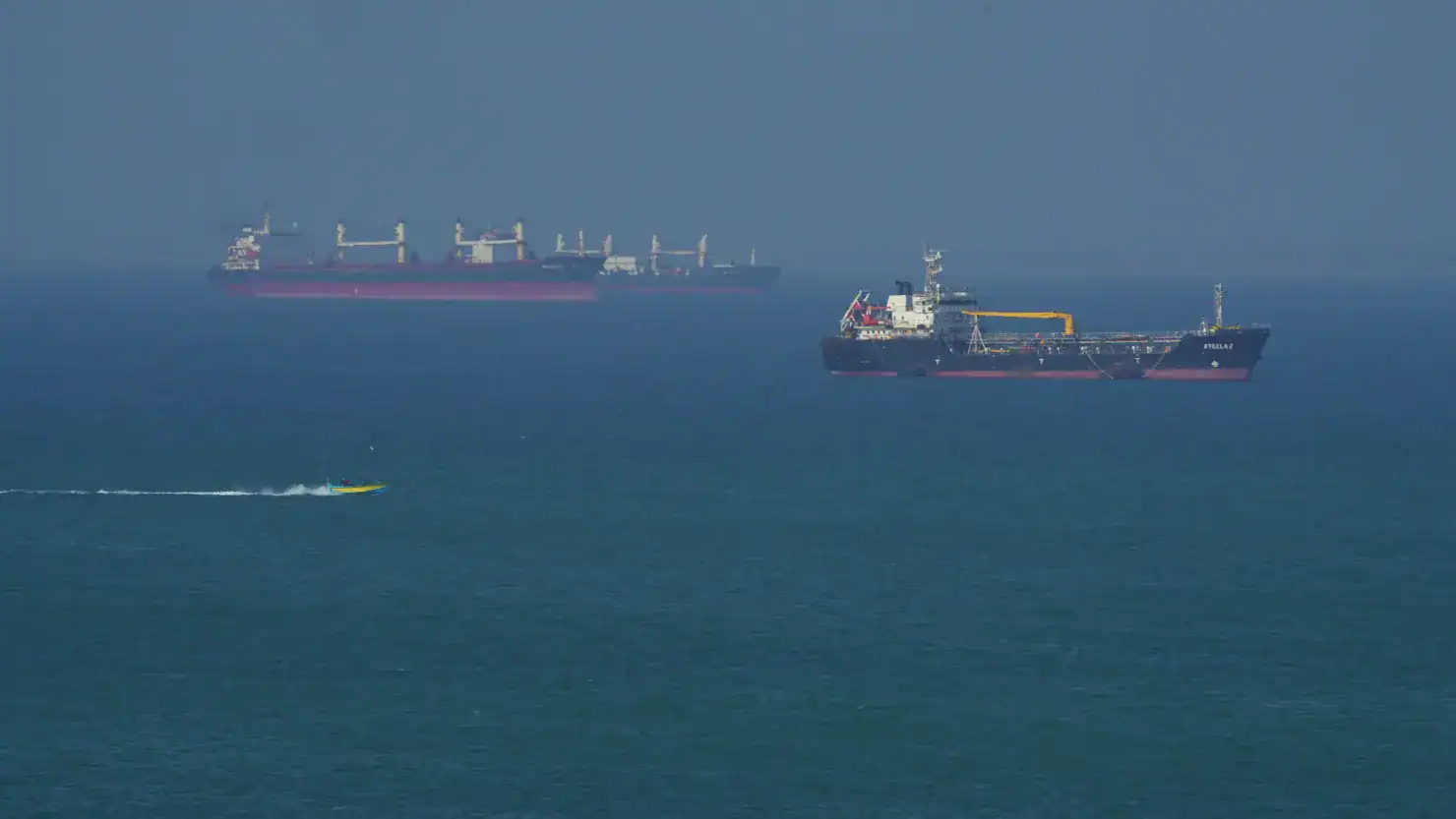
Oil Prices Surge Past $112 as Trump Launches Military-Backed “Project Freedom” to Unblock Hormuz Strait
Oil prices jumped sharply Monday after President Donald Trump announced a U.S. military operation to escort stranded civilian ships through the blockaded Strait of Hormuz, a critical chokepoint whose closure has sent energy markets into turmoil and raised fears of a global recession.
Brent crude futures rose 3.61% to $112.08 per barrel by 7:05 a.m. ET, while U.S. West Texas Intermediate climbed 3.54% to $105.55 per barrel — levels that economists warn could tip the world economy into recession if sustained.
What Is “Project Freedom”?
Trump announced the operation Sunday on Truth Social, framing it as an effort to “free” cargo ships trapped since the start of the Iran conflict. The initiative targets civilian vessels flagged by countries not party to the fighting.
U.S. Central Command confirmed the scope of the deployment shortly after Trump’s post, outlining a significant military commitment.
The operation was set to begin Monday — the same day a tanker was struck by projectiles north of Fujairah in the United Arab Emirates, according to the United Kingdom Maritime Trade Operations agency, underscoring the real and immediate dangers vessels face in the region.
Why the Hormuz Strait Matters
Before the conflict, roughly one-fifth of the world’s energy supplies transited the Strait of Hormuz. Its near-total blockade has severed a critical artery of global trade, driving up energy costs for consumers and businesses worldwide.
The disruption represents a stark illustration of how geopolitical instability — and the military decisions made in response to it — translates directly into economic pain for ordinary people, from heating bills to transport costs.
Recession Risk Is Real and Growing
Economists are sounding the alarm. Gaurav Ganguly, head of international economics at Moody’s Analytics, told CNBC’s Squawk Box Asia that the global economy is dangerously close to the edge.
“It doesn’t take much from this point for the global economy to sink into recession,” Ganguly said. “We estimate something like $125 for Brent over a sustained period of time will push the global economy into some sort of recession.”
With Brent already at $112 and climbing, that threshold is no longer a distant hypothetical.
OPEC+ Adds Supply — But Modestly
In its first meeting since the United Arab Emirates exited the cartel, OPEC+ agreed to increase output by 188,000 barrels per day. Traders are weighing whether that modest supply increase can meaningfully offset the disruption caused by the Hormuz blockade — most analysts suggest it cannot.
The combination of military escalation, constrained supply routes, and rising prices places enormous pressure on governments to respond — through diplomacy, energy policy, or both. The costs of inaction are increasingly measurable in dollars per barrel.