
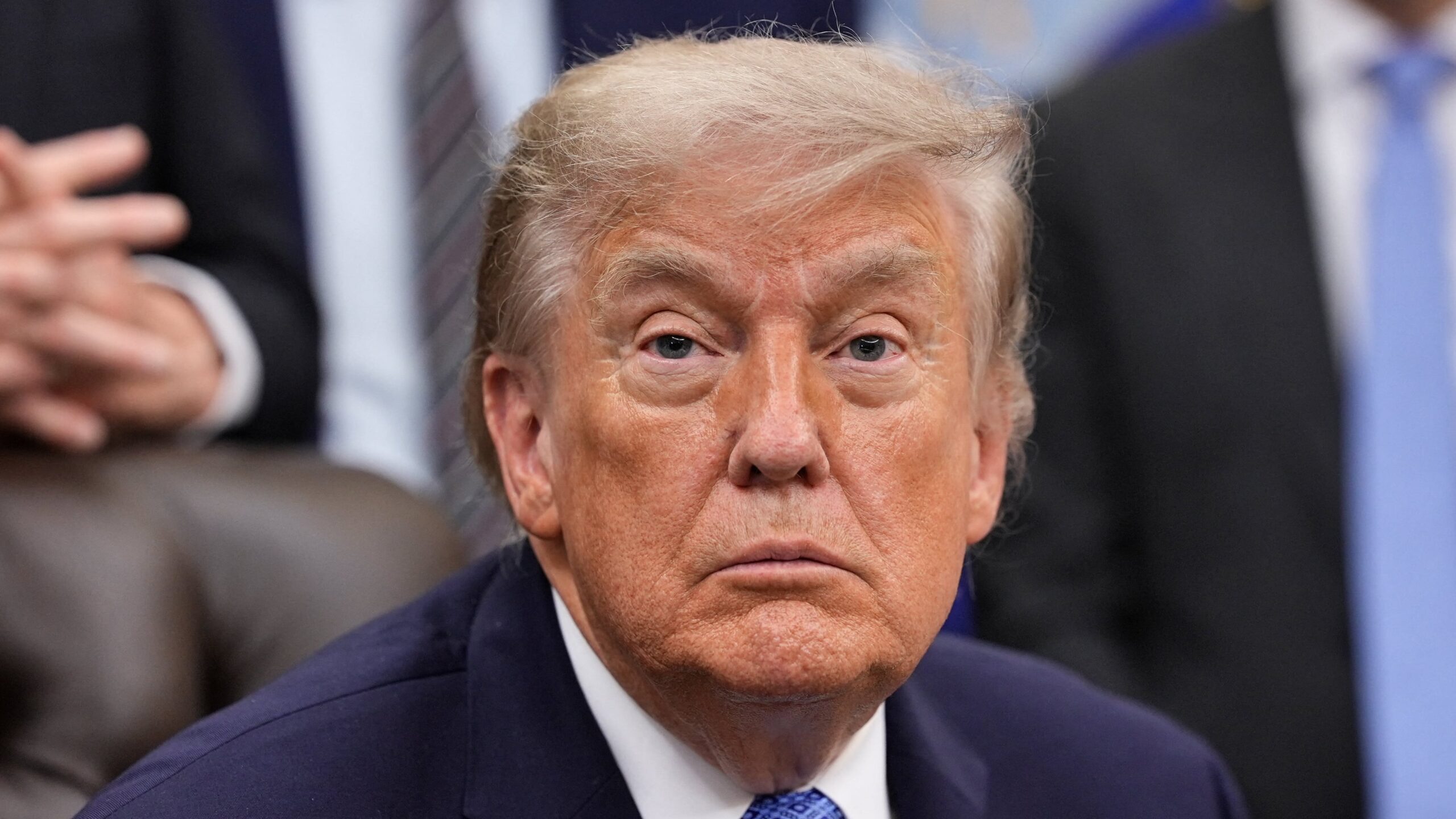
The Age Problem Republicans Can No Longer Ignore
Donald Trump is 80 years old, the oldest person ever inaugurated as president, and a growing share of his own party thinks that matters. New polling from Daily Mail/JL Partners finds that 38 percent of Republican voters believe the presidency requires a younger person — a striking concession from within the coalition that spent years deflecting identical questions about Joe Biden.
The numbers reveal an uncomfortable internal fracture. Of that 38 percent of GOP skeptics, 11 percent say Trump should step down before completing his term, while 27 percent think he is too old but should nonetheless stay in office. A slim majority of Republicans — 51 percent — still maintain he is not too old. That is hardly a ringing endorsement for a sitting president from his own base.
Among Democrats, the verdict is far harsher: 59 percent say Trump is both too old and should step down, with another 22 percent calling him too old while stopping short of demanding his resignation. When both parties’ voters are combined, the single largest group — by a margin of 12 points — is those who believe Trump is too old and should leave office, at 38 percent of all respondents.
The thesis here is straightforward: the age and health questions surrounding Trump are no longer a partisan talking point easily dismissed by Republicans. They have become a legitimate governance concern, one that a majority of Americans across party lines are now prepared to take seriously — even as the White House continues to insist everything is fine.
A Pattern of Concealment That Demands Scrutiny
The evidence accumulating around Trump’s physical condition is not merely tabloid speculation. It is a documented pattern of visible symptoms, unexplained medical visits, and active efforts to manage public perception. Trump has made three trips to Walter Reed Hospital in his first 13 months back in office — an unusually high frequency — alongside what have been described as mysterious dental appointments in Florida.
Observers have noted bruising on both hands, a rash on his neck, an unsteady gait, and visible swelling in his lower legs. The swelling has since been attributed to chronic venous insufficiency (CVI), a condition common in elderly patients in which blood pools in the lower extremities. His staff has reportedly used thick layers of makeup to conceal the hand bruises — a detail that speaks less to vanity than to a deliberate strategy of concealment.
After his most recent Walter Reed visit, Trump posted on Truth Social that his six-month physical had gone “perfectly,” even as reports confirmed his weight and heart rate had both increased. The gap between the president’s self-assessment and the observable facts is not a minor discrepancy — it is a credibility problem with real institutional consequences.
A Quinnipiac poll conducted in June found that 59 percent of voters believe the White House is not giving the public the full picture on Trump’s health. That is a majority of the country — not a fringe concern — concluding that the administration is being less than transparent about the condition of the person holding the most consequential office in the world.
Why This Is a Governance Issue, Not a Political Weapon
It would be convenient for critics to treat Trump’s age purely as a political liability to exploit. But the stakes are more serious than that. Presidential capacity is a genuine constitutional and democratic concern, and the public has a legitimate right to accurate information about whether the person exercising executive power is fit to do so. That standard applies regardless of party — it applied to Biden, and it applies equally, and now more urgently, to Trump.
What makes the current situation distinct is the active suppression of information. Concealing bruises with makeup, offering vague post-visit statements that contradict observable data, and declining to release comprehensive medical records all constitute a failure of transparency that a democratic government simply cannot justify. The public is not asking for perfection; it is asking for honesty.
The polling data suggests that this argument is landing — even among Republican voters who have historically been willing to dismiss concerns about Trump’s fitness. When more than a third of your own party questions whether you are physically capable of doing the job, the deflection strategy has run its course. The question now is not whether Trump’s age and health are legitimate subjects of public scrutiny. They clearly are. The question is whether the institutions around him — Congress, the press, the medical establishment — will demand the transparency that voters are already asking for.