
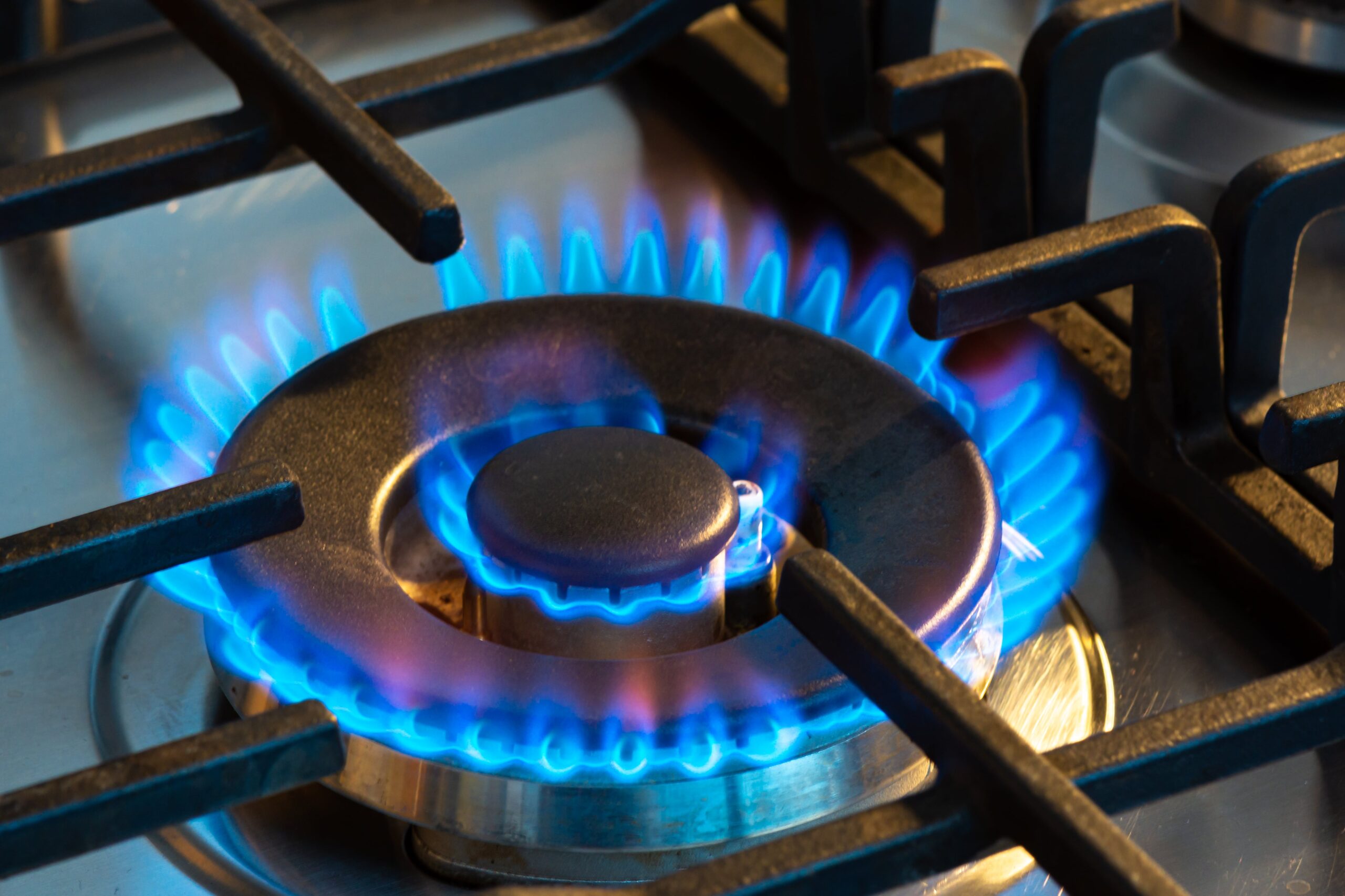
The Trump administration terminated an $18 million federal grant to study whether replacing gas stoves reduces asthma symptoms — and the researchers published their findings anyway. What they found, even with barely a tenth of the intended sample, should disturb anyone who believes public health policy ought to be grounded in evidence.
Ash Sehgal, a medical professor at Case Western Reserve University in Cleveland, had secured the grant from the Environmental Protection Agency in December 2024 to replace gas stoves with electric induction units in 1,200 homes of asthma sufferers across the Cleveland and Akron, Ohio, areas. By the time the grant was terminated — one of thousands cancelled after President Donald Trump took office — only 85 households had completed the intervention. Sehgal and his co-authors published the results this month in the Journal of Allergy and Clinical Immunology in Practice. The findings were striking: participants recorded far fewer asthma attacks, emergency room visits and missed days of work, and nitrogen dioxide levels in their kitchens fell by 70 percent.
“What really surprised me,” Sehgal said, “is that the improvement in the asthma symptoms was similar to or even larger than the improvement reported in clinical trials of commonly used asthma medications.” Two independent scientists who reviewed the methodology but were not involved in the research confirmed that the effect was strong enough to be statistically meaningful despite the truncated sample. Julian Marshall, an environmental engineering professor at the University of Washington, put it plainly: the results are “actionable” — people with asthma can and should know about them.
The thesis here is not complicated. The cancellation of this grant was not a neutral bureaucratic decision or a reasonable prioritisation of limited resources. It was a political act, one that subordinated public health to the ideological project of protecting the fossil fuel industry — and it will cost real people their health.
The Cost of Deliberate Ignorance
Paul Moore, a Cleveland resident with severe, debilitating asthma who had been hospitalised multiple times and nearly died from being unable to breathe, received a new induction stove through the study in June 2025. He had moved into a century-old home in 2020 and could not understand why his condition refused to improve despite medication and medical care. Within a week of the gas stove being removed, the difference was palpable. “It was just like, ‘Huh, I feel a little bit better,'” he recalled. “A slow realization over the first week.” He subsequently found stable employment — something his asthma had previously made impossible. Angela Bland, a 38-year-old participant from Akron, described feeling her throat close up less while cooking, almost immediately after the switch. “Here’s something that can really help people,” she said, “and they cut it so quick.”
These are not anecdotes in the pejorative sense. They are precisely the kind of real-world, observational evidence that distinguishes rigorous public health research from the modelling studies that have dominated this field. Rob Jackson, an environmental scientist at Stanford University, noted that most prior work on indoor air pollution from gas stoves relies on estimated models rather than direct measurement of health outcomes. This study did the harder, more expensive, more consequential thing — and was stopped before it could reach its full power. Sehgal calculates that, had the remaining 1,100 households participated as planned, the intervention would have produced 900 people with better-controlled asthma and spared 84 from emergency room visits or hospitalisation. Those are not abstractions. They are people who will instead continue to suffer.
The EPA has now terminated $28.5 billion in grants, according to the tracking project Grant Witness, with the bulk of that funding directed at climate resilience, pollution reduction and environmental justice. The agency shuttered its Office of Environmental Justice and External Civil Rights — the office that awarded Sehgal’s grant — as part of a broader purge of programmes touching climate change, environmental justice and diversity, equity and inclusion. A district court judge ruled earlier this month that many of these cancellations were illegal, but the damage to ongoing research cannot be undone by a court order. Studies halted midway through cannot simply be restarted; participants scatter, funding windows close, and the knowledge that should have existed simply does not.
The administration’s ideological hostility to this line of research is not incidental. For years, conservative politicians and fossil fuel advocates have championed gas stoves as a cultural symbol, treating any evidence of their health harms as an attack on personal freedom rather than a finding of science. Trump has aggressively promoted fossil fuel development, rolling back environmental protections and opening new areas to oil and gas exploration. The White House’s Office of Management and Budget went further still in late May, proposing a regulation that would require all federal grants to align with the president’s policy priorities — a move that, as public health researcher Darya Minovi of the Union of Concerned Scientists observed, would formalise the politicisation of scientific grant-making across the entire federal government. This is not a matter of differing policy preferences. One side has the data; the other has the industry.
The EPA spokesperson’s claim that “gold-standard science” is proceeding “like never before” under the Trump administration is not a defensible position in light of the evidence. It is spin — and it should be treated as such. What is actually happening is that the federal government is systematically dismantling the infrastructure of public health research to shield a profitable industry from accountability. Paul Moore found a job locating underground gas lines after his health recovered. He put it with simple clarity: “There’s a whole lot of people out there probably feeling just like how I felt. A lot more people deserve to feel good when they cook.” The study that could have proven that at scale, and driven the policy response it deserved, was killed before it could. That is the implication — and the indictment.