
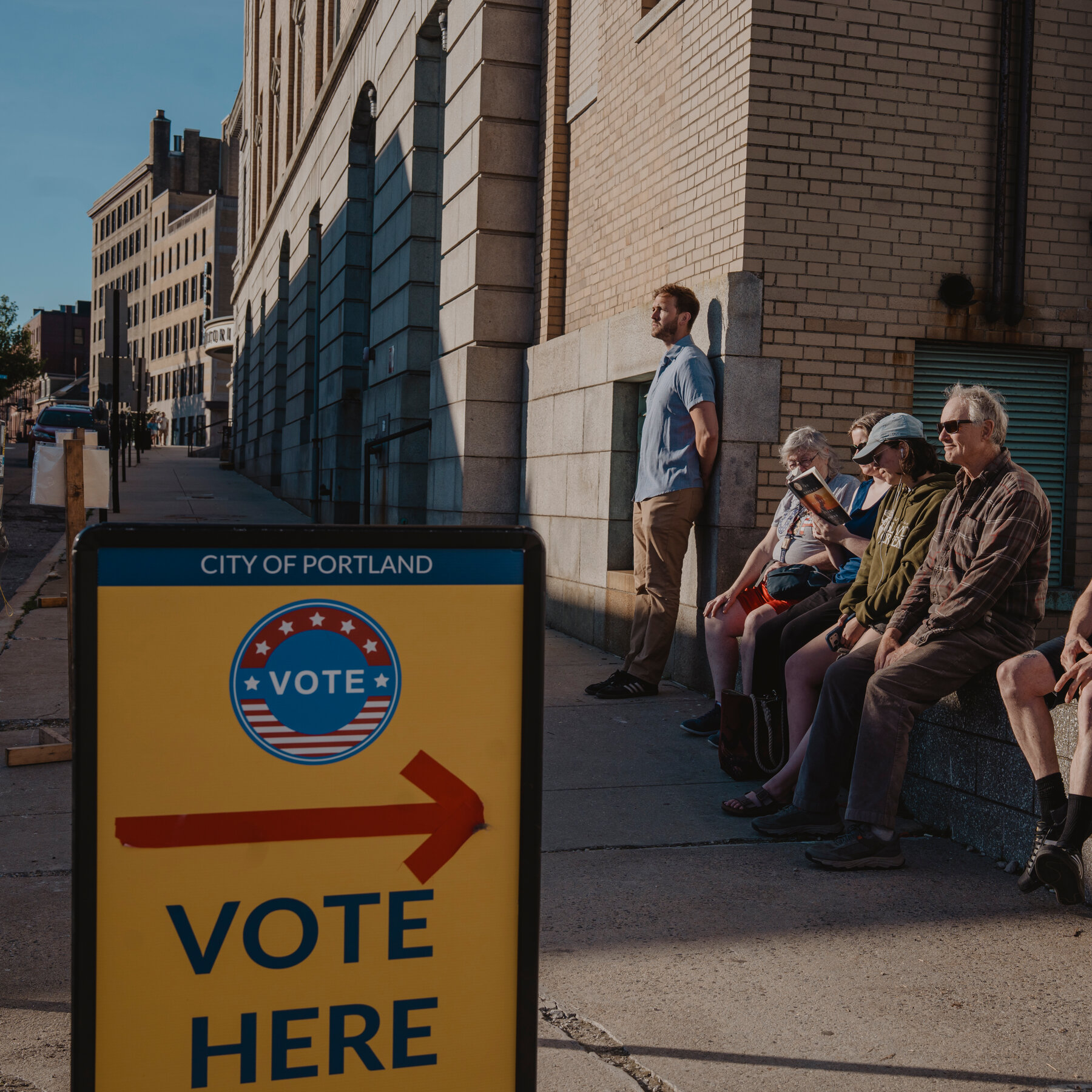
A new survey has put a number on something many political observers have long suspected: American voters increasingly see the national parties as ideological outliers, even as they view their own candidates — the people they actually vote for — as reasonable, pragmatic, and closer to the center.
The New York Times/Siena College poll, conducted across battleground states and published on August 9, 2026, found that voters perceive both major national parties as having drifted too far from the mainstream — Republicans too far to the right, Democrats too far to the left — while simultaneously rating their own local and statewide nominees as meaningfully more moderate. It is a striking split, and it tells us something important about how voters navigate a political landscape they find increasingly alienating.
The pattern is not simply a matter of partisan self-flattery. Voters across the ideological spectrum applied this logic consistently: the party as an institution felt extreme; the candidate wearing its label felt manageable. That distinction matters enormously for how campaigns are run, how voters make decisions in the booth, and — perhaps most importantly — for what it reveals about the growing gap between institutional party politics and the lived political preferences of ordinary Americans.
Understanding this gap requires separating two things that political coverage too often collapses together: the national party apparatus, with its donor class, its media surrogates, its platform fights and culture-war positioning, and the individual candidates who run under its banner in competitive districts. Battleground-state voters, who by definition live in places where elections are genuinely contested, have developed a practiced ability to make that separation. They have to. Their elections are close enough that voting purely on party brand would feel like a blunt instrument.
What the poll captures, then, is less a contradiction than a coping mechanism — a rational adaptation by voters who feel poorly served by both parties as national entities but who still want to participate in democracy and still believe, at least provisionally, that the person on the ballot in their state or district might actually represent them.
This dynamic has asymmetric consequences, however, and it would be a mistake to treat the two parties’ perceived extremism as equivalent in kind. When Republican voters say their national party has gone too far right, they are often responding to the post-2020 transformation of the GOP into a vehicle for authoritarian grievance politics — a party that has, on empirical matters ranging from climate science to election integrity, systematically rejected factual consensus. When Democratic voters say their national party has gone too far left, they are more often reacting to cultural signaling and messaging failures than to a comparable drift in actual policy positions. Those are not the same thing, and flattening them into a symmetrical “both sides” narrative would misread what the data is actually showing.
For progressive voters in particular, the poll raises a pointed question: if candidates are consistently seen as more moderate than the party, does that reflect genuine ideological positioning by those candidates, or does it reflect successful rebranding by candidates who have learned to soft-pedal their affiliations in hostile territory? The answer has real consequences. A candidate who wins by distancing themselves from the party’s core commitments — on healthcare access, labor protections, climate action, housing investment — may be harder to hold accountable once in office. Winning the seat is not the same as winning the argument.
The battleground-state focus of the Times/Siena poll is itself significant. These are the states where national politics gets translated, imperfectly and often messily, into local contests. They are places where a Democratic Senate candidate might run on expanding Medicaid while carefully avoiding the phrase “Medicare for All,” or where a Republican gubernatorial candidate might quietly drop the most extreme immigration rhetoric that plays well at national conventions. Voters in these states have seen enough of this translation process to become somewhat sophisticated consumers of political branding.
What the poll cannot fully answer — and what journalists and analysts should resist the temptation to paper over — is whether voters’ perception of candidate moderation is accurate, or whether it is the product of effective campaign communication that deliberately obscures where candidates actually stand. Perception and reality diverge in politics with uncomfortable frequency, and voters who believe they are choosing a moderate may find, after the election, that they chose something else entirely.
What seems clear is that the national parties, as institutions, have a serious credibility problem with the very voters they need most — the persuadable, the cross-pressured, the people living in states where margins are measured in thousands rather than millions. That credibility problem will not be solved by better messaging alone. It will require parties to ask harder questions about whether their actual positions, their actual coalitions, and their actual records in power reflect what the people they claim to represent actually want and need. For the Democratic Party, that means taking seriously the progressive case that bold, structural policy — on healthcare, housing, climate, and economic fairness — is not the liability consultants warn it is, but potentially the most honest answer to voters who feel left behind by institutions that promise moderation and deliver drift.
The voters in this poll are not asking for radical politics. But they are signaling, clearly, that they no longer trust the parties to deliver even what they promise. That is a warning worth taking seriously — not as a reason to retreat to the cautious center, but as an invitation to rebuild trust through honesty, consistency, and the courage to govern on behalf of the many rather than the comfortable few.