
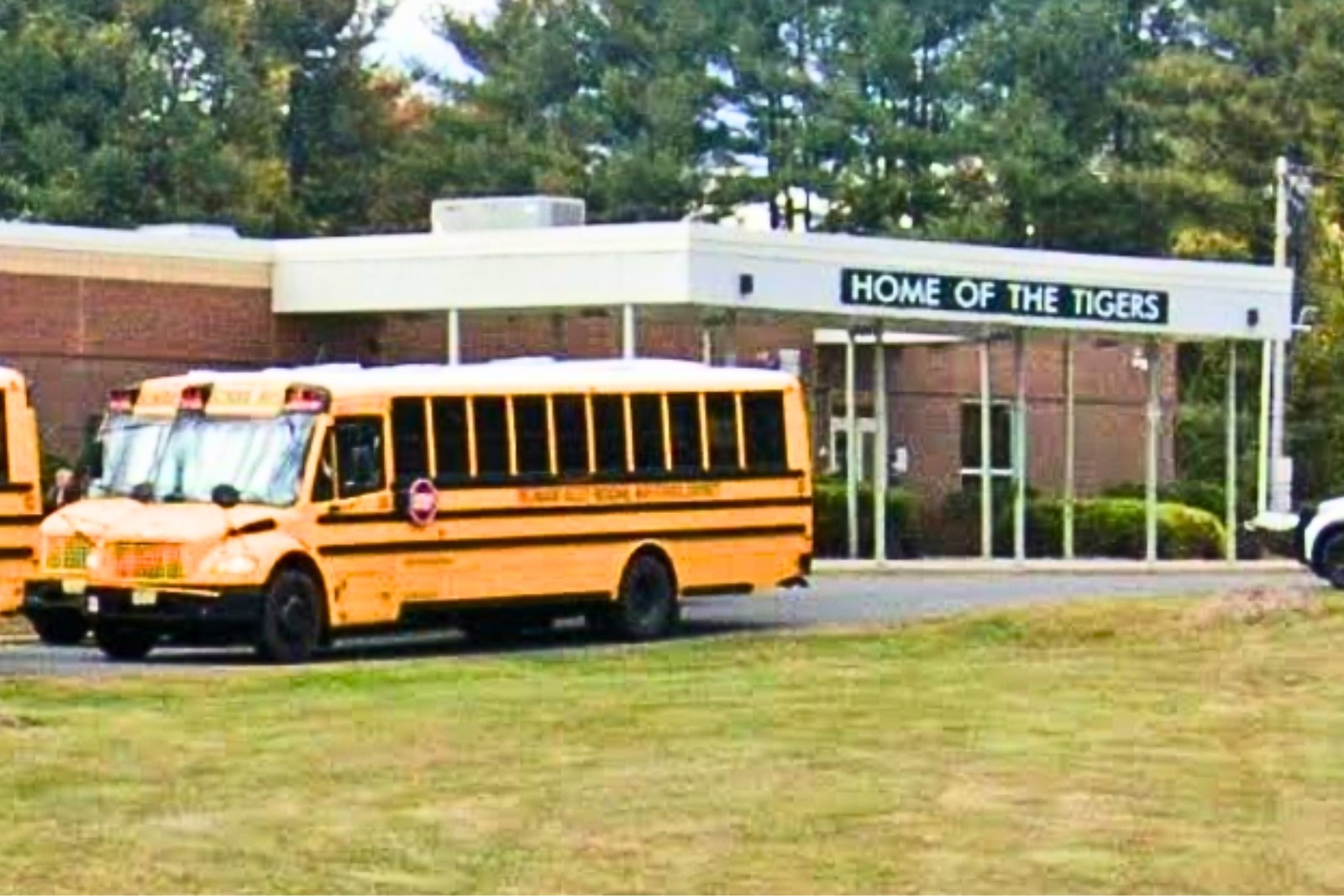
A Teacher’s Discovery Shuts Down an Entire School
It took one teacher noticing something wrong on the second day of school to trigger a crisis that would keep 422 students out of their classrooms for nearly two weeks. At Alexandria Township School in Hunterdon County, New Jersey, mold was discovered in an office — and what followed exposed just how quickly a school building can become uninhabitable when infrastructure is neglected and the climate doesn’t cooperate.
School officials locked the doors on September 4. Every student, from pre-kindergarten through eighth grade, was sent home to learn remotely.
This wasn’t a minor inconvenience. It was a public health response.
What the Testing Revealed
Environmental testing firm RK Environmental moved in on September 3 and identified mold contamination across 33 classrooms. The culprits: heavy rainfall, elevated humidity, and cool nighttime temperatures — a combination that created ideal conditions for mold to spread through the building largely undetected until the school year had already begun.
Parents had already started reporting symptoms. Children were coming home with respiratory problems and hives. These aren’t abstract air quality statistics — these are kids whose bodies were reacting to a toxic environment they were legally required to attend.
Remediation firm Gold Star Restoration deployed air scrubbers in one wing and erected plastic barriers to isolate contaminated sections of the building. The work was substantial enough to keep the entire school closed for days.
A Phased Return — But Not for Everyone
Pre-K through fourth-grade students were cleared to return on Tuesday. Middle schoolers in grades five through eight remained on remote learning while remediation of their section of the building continued. School officials indicated that Friday would mark the final day of virtual instruction for the older students.
The phased return reflects a responsible, evidence-based approach to reopening. It also underscores just how extensive the contamination was — this wasn’t a single room that could be sealed off and forgotten.
The Superintendent’s Message to Families
Superintendent Barbara Popp and Principal Erin Durborow announced in a Wednesday evening email to parents that all middle school students should be back in their classrooms by Monday. Their statement struck a tone of relief and gratitude: “We received encouraging results today, and we are pleased to share that we will be reopening to all of our middle school students on Monday. We are so looking forward to welcoming our middle school students back and having our entire school community together again at ATS. We cannot thank our families enough for their continued support, flexibility, and understanding throughout this process.”
The words are warm. But families shouldn’t have needed to be flexible about their children breathing mold spores in the first place.
The Bigger Picture: School Buildings Are Failing Students
Alexandria Township’s crisis is not an isolated incident — it is a symptom. Across the United States, public school buildings are aging, underfunded, and increasingly vulnerable to the kinds of climate-driven conditions that turned a New Jersey elementary school into a health hazard. The American Society of Civil Engineers has consistently graded the nation’s school infrastructure poorly, and lower-income districts bear a disproportionate share of that burden.
Mold doesn’t appear overnight. It accumulates in buildings where ventilation systems are outdated, where deferred maintenance has become the norm, and where the budget for proactive inspections simply doesn’t exist. A teacher’s sharp eye caught this one. The next school may not be so fortunate.
The state has a legitimate and necessary role here. Waiting for a visible health crisis before addressing building conditions is not a policy — it’s a failure of governance. New Jersey, like every state, must invest in systematic school infrastructure assessments, prioritize remediation funding, and stop treating building safety as a line item to be trimmed when budgets tighten.
What Accountability Looks Like
The immediate response from Alexandria Township officials appears measured and transparent. Testing was conducted quickly, communication to parents was consistent, and the phased return was tied to actual remediation results rather than administrative convenience. That matters. But accountability cannot end at the school-building level.
State education agencies and legislators need to ask harder questions: How many other schools in New Jersey — and across the country — are one humid summer away from the same shutdown? How many teachers have noticed something wrong and reported it, only to be ignored? And how many students are sitting in classrooms right now where no one has looked closely enough?
422 Students, Two Weeks, One Preventable Crisis
By Monday, if remediation holds, the full school community at Alexandria Township will be back together. That is genuinely good news. But the story doesn’t end with a return to normal — it begins a conversation about what “normal” has been allowed to mean for public school buildings in America.
Children deserve classrooms that don’t make them sick. That’s not a progressive aspiration. It’s a baseline obligation.