
Florida Leads the Nation in Dengue Cases as Local Transmission Accelerates
Florida has become the country’s most active hotspot for mosquito-borne disease in 2024, recording 270 dengue fever cases — more than any other state. What makes this year’s outbreak particularly alarming is not just the scale of infection, but where people are contracting the virus: not in tropical destinations abroad, but in their own neighborhoods. As of early September, at least 111 of those cases were locally acquired, spread across six Florida counties, with no international travel involved. That shift from imported to homegrown transmission marks a significant and troubling escalation.
The hardest-hit area has been Hillsborough County, which recorded 95 of those locally acquired cases — a concentration that has pushed mosquito control teams into overdrive, ramping up aerial and ground-level spraying operations. Miami-Dade and Palm Beach counties together account for eight additional local cases. The death of an 80-year-old woman in South Tampa has also been linked to a suspected dengue infection, underscoring that this is not a theoretical risk. Mosquito control experts identify July through September as peak dengue season, meaning the window of highest danger is not yet fully behind us.
What Dengue Does to the Body — and Why So Many Cases Go Undetected
Dengue fever is caused by four closely related viruses — DEN-1, DEN-2, DEN-3, and DEN-4 — all belonging to the same viral family as West Nile and yellow fever. The virus enters the body through a mosquito bite and typically produces symptoms four to ten days later. Those symptoms can include sudden high fever, severe headache, pain behind the eyes, deep muscle and joint aches, skin rash, nausea, vomiting, and unusual bleeding or bruising. The joint pain, in particular, can be so debilitating that dengue earned the historical nickname “breakbone fever.”
Yet a significant proportion of infected people never realize they are sick at all. “A lot of people can get bitten, acquire dengue, and nothing happens to them,” said Dr. Rana Chakraborty, division chief in Pediatric Infectious Diseases at the University of Miami. “Only a fraction have symptoms.” That silent majority is itself a public health concern: people who feel fine may still contribute to transmission chains if the right mosquito bites them and then bites someone else. For roughly one in twenty infected individuals, however, the disease progresses to a severe form, triggering repeated vomiting, nosebleeds, intense abdominal pain, and organ failure — outcomes that frequently require hospitalization.
The Two Mosquitoes Responsible — and Why Florida Is Especially Vulnerable
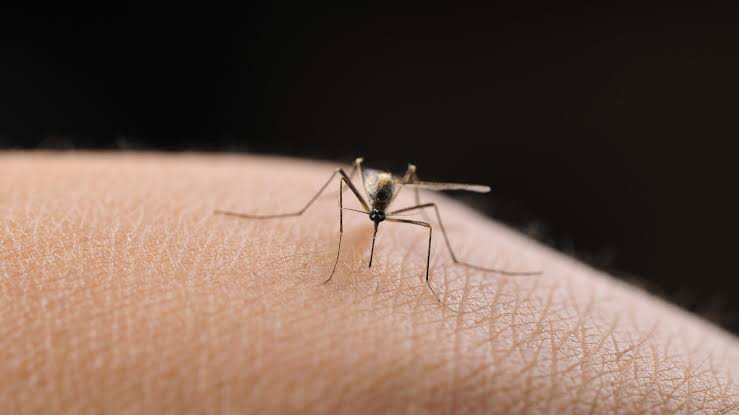
Of the many mosquito species present in Florida, only two transmit dengue: Aedes aegypti and Aedes albopictus. Both are visually distinctive — dark-bodied with bright white-striped legs — and both are daytime biters, most active just after sunrise and again before sunset, which means standard evening precautions offer incomplete protection. These same two species also carry Zika, yellow fever, and chikungunya, making them among the most consequential disease vectors on the planet.
Florida’s climate makes it uniquely hospitable to these mosquitoes. The state’s rainy season, which runs from May 15 to October 15, provides ideal breeding conditions: Aedes mosquitoes lay their eggs in standing water, and even small accumulations — a clogged gutter, a forgotten flower pot, a tarp that pools rainwater — can sustain a breeding population. South Florida, with its subtropical humidity and dense urban landscape, is particularly exposed. The combination of warm temperatures, abundant rainfall, and high population density creates conditions that public health professionals have long warned could support sustained local transmission of dengue.
A Regional Crisis Feeding a Local One
The surge in Florida does not exist in isolation. Across the broader Americas region, the Pan American Health Organization has recorded more than 2.7 million dengue cases this year — a figure that already surpasses the epidemic year of 2015 by 13 percent. Latin America, which shares deep travel and migration ties with South Florida, is experiencing one of its worst dengue seasons on record. As infected travelers arrive in Florida, and as local mosquito populations remain robust through the rainy season, epidemiologists warn that case counts in the state are likely to keep rising before conditions improve.
This is precisely the kind of public health challenge that demands coordinated government response — not just individual precaution. Mosquito surveillance, vector control programs, and public education campaigns require sustained public investment. Florida’s counties that have responded most aggressively, like Hillsborough, illustrate what active intervention looks like. The broader question is whether state and federal resources will keep pace with a threat that climate change is expected to intensify in coming decades, as warming temperatures expand the geographic range of Aedes mosquitoes further north.
How to Reduce Your Risk Right Now
While systemic solutions require political will and public funding, individuals can take meaningful steps to reduce their exposure and limit local mosquito breeding.
These steps matter, but they work best as a complement to robust public health infrastructure — not a substitute for it. The dengue surge unfolding across Florida is a warning that vector-borne disease is no longer a distant tropical concern. It is a present, local, and growing threat that warrants serious attention from policymakers and residents alike.