
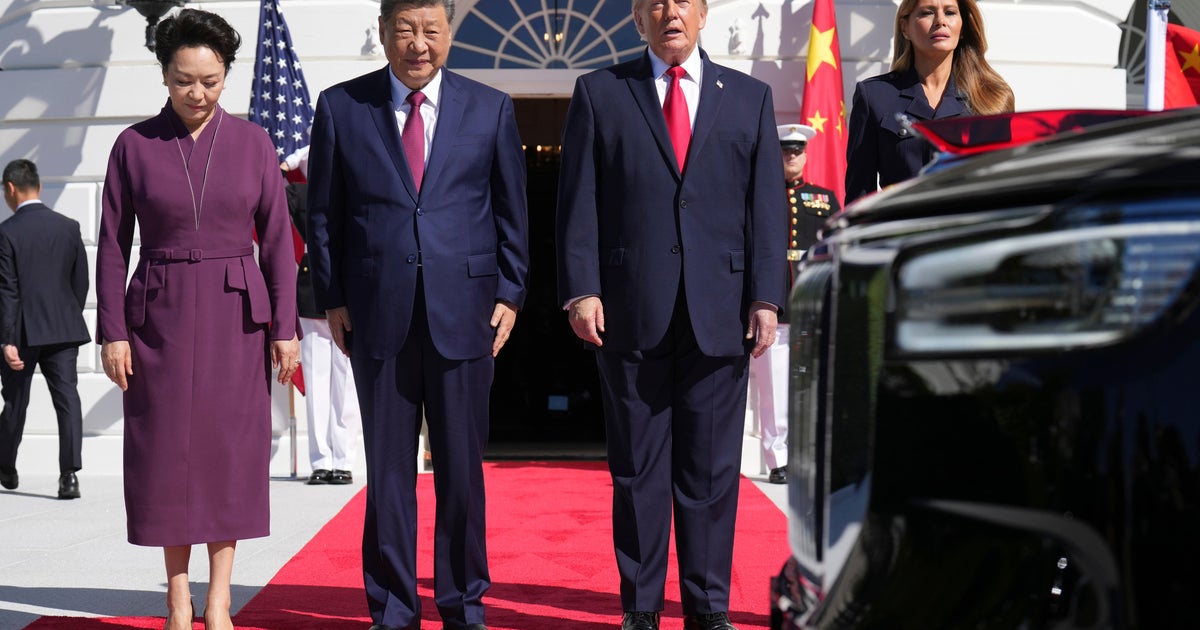
When Xi Jinping boarded his plane back to Beijing on Saturday, he left behind a Washington that had offered him something rare in the current era of great-power rivalry: a degree of warmth. The three-day summit between President Xi and President Trump produced no sweeping resolution to the deep structural tensions between the world’s two largest economies, but it did yield a set of incremental agreements — on artificial intelligence risk management, military crisis communications, and trade — that analysts described as meaningfully stabilizing, even if far from transformative.
The story of how the two governments arrived at this moment begins, in important ways, with the trade war Trump escalated the previous year. That confrontation, which sent tariffs spiraling upward on hundreds of billions of dollars’ worth of goods and reverberated through supply chains across the globe, created the conditions of mutual economic pain that ultimately pushed both sides back toward the negotiating table. By the time Xi touched down in Washington for the summit, the two governments had already agreed to a temporary tariff truce, and one of the summit’s concrete outcomes was an extension of that truce by two additional months.
The tariff reductions under discussion remain focused largely on what both sides classify as non-sensitive goods — agricultural products, holiday decorations, and similar categories — affecting roughly $30 billion worth of bilateral trade. The White House statement added that China agreed to import at least 10 million metric tons of American coal in each of 2027 and 2028, a commitment that reflects both the economic logic of the deal and the continued centrality of fossil fuels in Trump’s economic vision, whatever the environmental cost.
On the question of rare earths — a domain where China’s export controls, imposed last year in direct retaliation for U.S. tariffs, have created genuine vulnerabilities in American manufacturing and defense supply chains — both sides said they continued working toward restoring shipment levels to what the White House called “appropriate levels.” The framing was careful, the progress unspecified.
Weeks of diplomatic groundwork preceded the summit’s most structurally significant outcome: the agreement to establish a bilateral communication channel specifically dedicated to managing artificial intelligence-related incidents. Both governments confirmed that the mechanism would be used to discuss AI risks and benefits, with a dedicated AI-focused dialogue scheduled for November. China’s Foreign Ministry also confirmed that the two sides agreed to sign a memorandum of understanding on crisis communications between their militaries — a step that, if implemented, would create institutional guardrails against the kind of miscalculation that could escalate a regional confrontation into something far worse.
The military-to-military dimension of the agreement deserves emphasis. The absence of reliable crisis communication channels between the U.S. and Chinese armed forces has long been identified by security analysts as one of the most dangerous structural gaps in the bilateral relationship, particularly as the two powers compete for influence across the Indo-Pacific. An MOU on crisis management does not resolve that competition, but it establishes a floor beneath it.
Trump, characteristically, used his remarks to reporters on the White House’s south lawn to reframe the AI agreement around his own terminological preferences. He has long pushed for the phrase “super intelligence” over “artificial intelligence,” arguing that the word “artificial” implies something fake. “I call it SI because it’s a much better name,” he told reporters Saturday. “Artificial means it’s fake, and it’s not fake.” The White House confirmed that both leaders agreed to use the term — a detail that says more about Trump’s communication style than about the substance of the technology policy being negotiated.
On the substance, Trump was notably more guarded. He made clear that the United States would not slow its AI development, and that he had no intention of opening up American AI capabilities to Chinese access. “When you’re leading, you don’t open it up to each other,” he said. “We’re leading by at least a year, maybe a year and a half.” The claim of a commanding U.S. lead — while broadly accepted in the research community with respect to certain frontier models — is contested in specific domains, and Trump’s framing elides the genuine competitiveness of Chinese AI development in areas from surveillance technology to scientific research applications.
Beyond technology and trade, the two governments issued a joint statement on Iran, agreeing that Tehran should honor its stated commitment not to develop nuclear weapons — a notable moment of alignment given the broader context of the U.S. conflict with Iran, which has already disrupted traffic through the Strait of Hormuz. Both sides also said no country should charge tolls on international waterways, a formulation widely understood as directed at the Hormuz situation specifically.
The United States also welcomed China’s decision to impose export controls on two additional precursor chemicals used in the production of fentanyl, and both governments noted recent arrests in fentanyl-related cases — a domain where cooperation has historically been fragile but politically significant for both leaders.
Two new institutional structures emerged from the summit alongside the AI channel: a Board of Trade, which the White House said had already begun operating this week, focused on selected bilateral issues, and a newly established Board of Investment, designed to address potential investment opportunities and remove impediments on both sides. Both mechanisms reflect a broader effort to create working-level engagement that can function independently of the volatility of the leaders themselves.
That institutionalization is precisely what analysts found most encouraging. Wang Zichen, deputy secretary-general of the Beijing-based Center for China and Globalization, noted that “the emphasis on working-level engagement, military-to-military dialogue and crisis-management mechanisms suggests an effort to make that stability more durable and institutionalized.” The two leaders also agreed to meet again at the Asia-Pacific Economic Cooperation summit in Shenzhen in November, and subsequently at the G20, to be hosted at Trump’s National Doral Miami golf club in Florida.
What the summit did not produce is as important as what it did. The fundamental disagreements over Taiwan, technology transfer, market access, and the broader architecture of global economic governance remain entirely unresolved. The tariff truce is temporary. The AI channel is new and untested. The military MOU has not yet been signed. Progress, in other words, is real but fragile — and it exists within a relationship that one side’s leader spent the previous year deliberately destabilizing through an aggressive and largely unilateral trade war whose costs were borne disproportionately by workers and consumers on both sides of the Pacific.