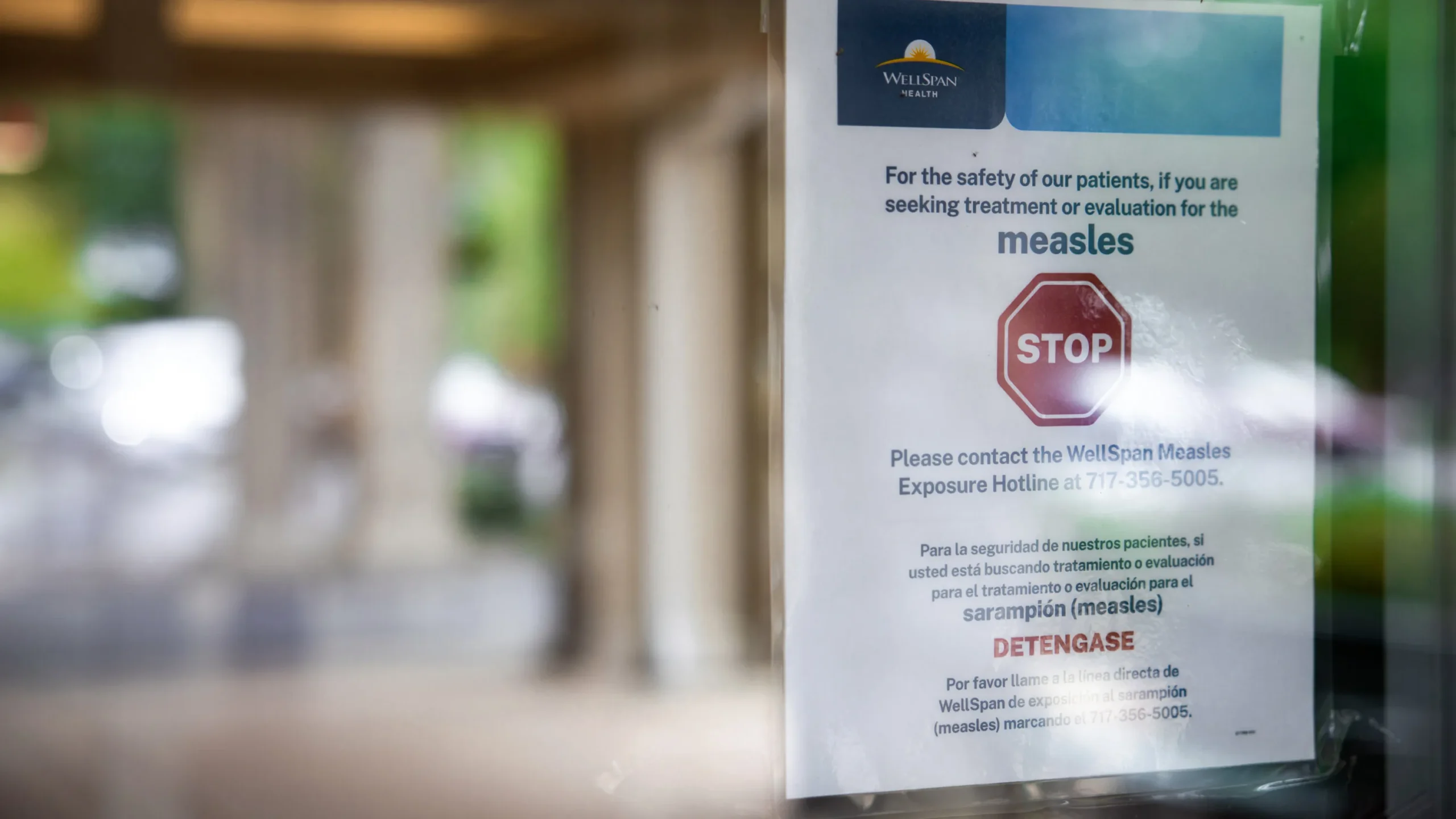
A disease that the United States had effectively eliminated a quarter century ago is back, spreading through under-vaccinated communities with a ferocity that has now forced New York Governor Kathy Hochul to declare a statewide disaster emergency. The declaration, the first of its kind by any U.S. state since cases began surging in 2025, is not a bureaucratic formality. It is a public health alarm, sounding loudly over a crisis that was entirely avoidable.
Hochul signed the executive order on Monday, and it runs through November 4. The order temporarily expands the authority of health professionals to administer the measles-mumps-rubella vaccine, accelerating access to testing and immunization across the state. “No one should get seriously ill or die from a vaccine-preventable disease,” Hochul said. She is right. And yet, in 2026, people are doing exactly that.
As of October 3, New York has recorded 108 confirmed measles cases — seven in New York City and 101 spread across the rest of the state. Since mid-July alone, 92 of those cases have emerged among under-immunized rural communities across 18 counties. These are not random clusters. They are the predictable consequence of vaccination rates that have been allowed to erode, quietly and dangerously, over years of misinformation and institutional neglect.
The situation is considerably worse just across the border. Pennsylvania is fighting a fast-spreading outbreak that has already claimed five lives and recorded more than 1,000 cases, concentrated heavily in rural counties that share a border with New York. At least six babies have been born with measles in Pennsylvania — a detail that should stop readers cold. Newborns do not choose their exposure to preventable illness. The adults and institutions around them do.
Nationally, the numbers are alarming in their trajectory. There have been 3,887 measles cases across the United States so far in 2026, compared to 2,289 for the entirety of 2025. That is not a plateau; it is an acceleration. Children and adolescents aged five to nineteen account for 43 percent of this year’s cases, making the youngest and most school-dependent members of society the primary victims of a collective failure to vaccinate. Pennsylvania, South Carolina, Utah, and Wisconsin currently report the highest case counts, according to the CDC.
The vaccination data is damning. In 2026, 95 percent of measles patients were either unvaccinated or had an unknown vaccination status — up from 93 percent in 2025. The MMR vaccine has existed for more than half a century. It is safe. It is highly effective. The science is not in dispute. What is in dispute, apparently, is whether public institutions retain both the will and the capacity to deliver basic preventive healthcare to the communities that need it most.
The United States declared measles eliminated in 2000. That achievement, built on decades of public health investment and the infrastructure of a functioning vaccination system, is now being dismantled in slow motion. The CDC has long warned that measles spreads with devastating efficiency when it enters communities of unvaccinated people. That warning was not heeded with sufficient urgency, and the early symptoms of the disease — high fever spiking above 104 degrees when a rash appears, cough, runny nose, red and watery eyes — are now being experienced by thousands of Americans who had no reason to be at risk.
New York’s emergency declaration is a meaningful step. But it is also a measure of how far the country has already fallen. A state should not need to invoke disaster powers to distribute a vaccine that has been available since 1963. The fact that it does reflects not just a public health failure but a governance failure — one rooted in years of underfunded health departments, the unchecked spread of anti-vaccine misinformation, and a political environment in which basic scientific consensus has been treated as negotiable. It is not. Measles does not negotiate. And the communities bearing the heaviest costs of that lesson are the ones that could least afford to learn it this way.