
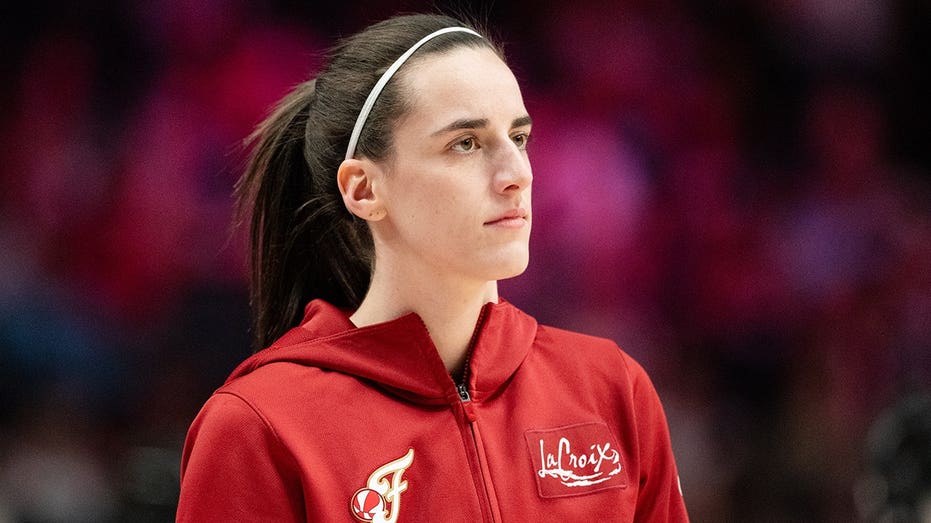
Caitlin Clark cannot remember the last time she read a direct message on social media. She actively tunes out the noise, embraces hostile road crowds, and draws a clear, principled line between passionate fandom and genuine discrimination. In a season-ending press conference Thursday, the Indiana Fever star offered one of the more levelheaded public statements to emerge from a WNBA year that generated enormous attention — not all of it constructive — and her words cut through the surrounding chaos with unusual clarity.
The conversation began with a question about comments made by her teammate Kelsey Mitchell, who had spoken about the unique pressures that come with playing alongside the league’s most scrutinized player. Clark said watching her teammates absorb that kind of attention genuinely upset her. She was unambiguous in rejecting any attempt to weaponize her name in service of racism or discrimination. “That’s never been something I’ve stood for,” she said. “For those of you that know me, that’s not what I’m about. It’s not how I was raised.” The statement was brief, direct, and unequivocal — qualities that were notably absent from much of the broader discourse surrounding her this season.
On the question of social media abuse, Clark’s approach is straightforward and, frankly, instructive. She acknowledged that sending vile messages to athletes is wrong. She also acknowledged that she simply doesn’t read them. “I couldn’t tell you the last time I read a direct message,” she said. “I just try to block out the noise the best I can.” There is something genuinely useful in that posture — condemning harmful behavior does not require surrendering your mental bandwidth to the people producing it. Online harassment thrives on the attention it generates, and refusing to grant that attention is one of the few forms of resistance that actually costs the harasser something.
Her comments on booing were, in their own way, just as revealing. Clark recalled playing in front of Golden State fans who booed her every time she touched the ball. Her response? She loved it. “I like that. I thought that was great and fun,” she said, and even invoked the famously unforgiving atmosphere of Yankee Stadium as a reference point. “Man, those Yankee fans are brutal,” she added, smiling. For anyone who has spent real time watching professional sports, this is not a surprising sentiment — road hostility is part of the competitive fabric of athletics, and a player who can channel crowd antagonism into fuel is a player who tends to win on the road. What makes Clark’s framing notable is that it coexists, without contradiction, with her rejection of rhetoric that crosses into genuine harm.
That distinction — between boisterous, competitive fan behavior and conduct that causes real harm — became a flashpoint during the playoffs, when Las Vegas Aces star A’ja Wilson confronted a Fever fan in an incident that generated significant controversy. The Fever organization and the WNBA itself investigated and found no fan-conduct violation. That finding did not prevent some commentators from treating Wilson’s reaction as sufficient evidence of wrongdoing on the fan’s part, a logical shortcut that serves neither accountability nor fairness. Clark was not directly addressing that incident Thursday, but her framework — enjoy the noise, condemn what actually crosses the line — offers a more coherent model than the reflexive defensiveness that characterized much of the public response on all sides.
Fever general manager Amber Cox stated this season that no fans had been removed from home games for misconduct. The response from some quarters was to characterize that denial as itself suspicious, which is a strange standard to apply: an organization produces evidence that contradicts a claim, and the evidence is treated as proof of bad faith. Scrutiny of fan behavior is entirely legitimate, and organizations have a genuine responsibility to enforce codes of conduct. But that scrutiny has to be tethered to what actually happened, not to what a given narrative requires to be true.
Clark closed her remarks by doing something that too rarely happens in these conversations — she thanked the fans who show up, behave well, and make the games worth attending. “For the real fans that do show up and do support and do respect, I applaud you,” she said. “And there are a lot of you. And that’s not just here in Indianapolis. That’s across the league.” When the dominant frame around fan culture focuses exclusively on the worst behavior, or the alleged worst behavior, the vast majority of people in those arenas — who came to watch basketball, cheered loudly, and went home — simply disappear from the story. Clark’s insistence on naming them is not naive optimism. It is a more accurate picture of what actually fills those seats, and the WNBA’s continued growth depends in part on treating those people as the asset they are, rather than as a liability to be managed.