
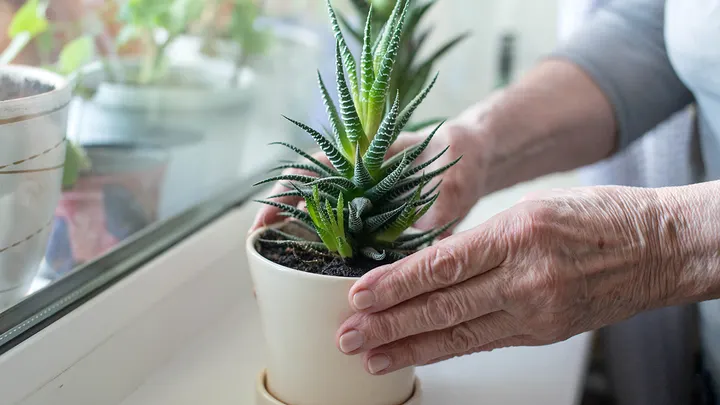

Compounds found in aloe vera may warrant further testing as potential Alzheimer’s drug leads, according to a computer-modeling study that examined whether plant molecules could bind to enzymes involved in the brain’s acetylcholine signaling.
The research, published in Current Pharmaceutical Analysis, used in silico methods—molecular docking and molecular dynamics simulations—to evaluate how aloe vera leaf compounds interact with acetylcholinesterase (AChE) and butyrylcholinesterase (BChE), two enzymes targeted by several symptom-treating Alzheimer’s medicines.
Aloe vera Alzheimer’s research focuses on two cholinesterase enzymes
AChE and BChE help break down acetylcholine, a chemical messenger important for nerve-cell communication. In Alzheimer’s disease, acetylcholine levels are reduced, contributing to problems with memory and thinking, and medications that inhibit these enzymes can sometimes provide limited symptom relief.
The authors emphasized that their work is an early-stage screening effort designed to identify candidates for laboratory and clinical testing rather than to demonstrate a treatment effect in patients.
Beta-sitosterol showed the strongest predicted binding in simulations
Among the aloe vera compounds assessed, beta-sitosterol recorded the strongest predicted binding affinities to both enzyme targets in the docking analysis, with reported values of −8.6 kcal/mol for AChE and −8.7 kcal/mol for BChE. Follow-on simulations, including 100-nanosecond molecular dynamics runs, were used to assess stability of the modeled interactions.
The study also included computational ADMET screening—an approach that estimates absorption, distribution, metabolism, excretion and toxicity—to gauge whether top candidates might have acceptable drug-like properties.
Experts caution that enzyme inhibition is not a cure
Alzheimer’s organizations and medical authorities note that cholinesterase inhibitors do not stop the underlying brain-cell damage caused by Alzheimer’s disease, even when they help lessen or stabilize symptoms for a limited period.
The aloe vera findings, based on computer predictions rather than animal or human testing, would need confirmation through lab experiments and clinical trials before any conclusions could be drawn about safety or effectiveness in people with Alzheimer’s