
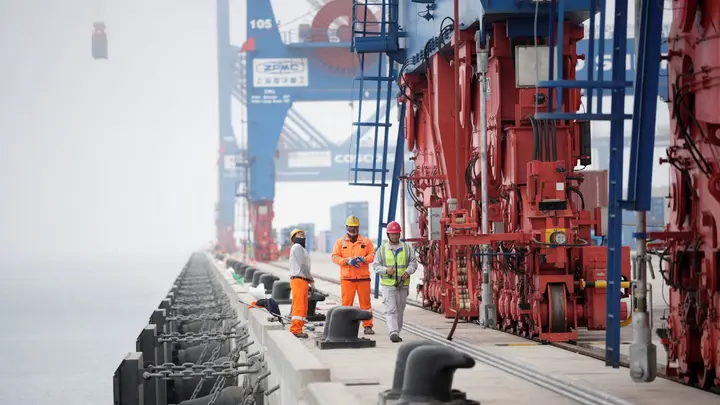

The United States has warned Peru that it could lose effective oversight of the Chinese-backed Chancay deep-water port, escalating a dispute over Beijing’s growing role in critical infrastructure across Latin America.
The State Department’s Bureau of Western Hemisphere Affairs said it was concerned by reports Peru could be “powerless” to oversee Chancay and described the port as being under “predatory Chinese owners,” adding that “cheap Chinese money costs sovereignty,” in a message posted on social media.
Chancay port warning follows ruling limiting regulator’s powers
The warning centers on the $1.3 billion port of Chancay, located north of Lima, after a lower court ruling issued on Jan. 29 ordered Peruvian authorities to refrain from exercising regulatory, supervisory and sanctioning powers over the terminal, according to reporting on the decision.
Peru’s transport infrastructure regulator, Ositran, said it plans to appeal, arguing the port should not be exempt from the oversight applied to other major facilities.
China and Cosco reject US sovereignty concerns
China’s foreign ministry and the Chinese state-owned shipping group involved in the project rejected the U.S. characterization of the port, saying Peru retains jurisdiction and that state agencies continue to oversee areas such as security, customs and environmental compliance, according to reports that cited official responses.
The port is operated by Cosco Shipping Ports, with Cosco holding a majority stake, and it has been promoted as a key link for trade between South America and Asia.
A new front in US-China competition in Latin America
Washington’s statement comes as the United States and China intensify efforts to shape infrastructure, trade and investment ties across the region. Chancay has drawn attention as one of the largest recent Chinese-backed port projects on the Pacific coast of South America and part of broader Belt and Road-linked activity, according to past reporting on the port’s development and operations.
Peruvian authorities have not announced changes to the port’s operations following the ruling, and Ositran’s appeal is expected to determine whether the regulator can reassert its role over the terminal.