
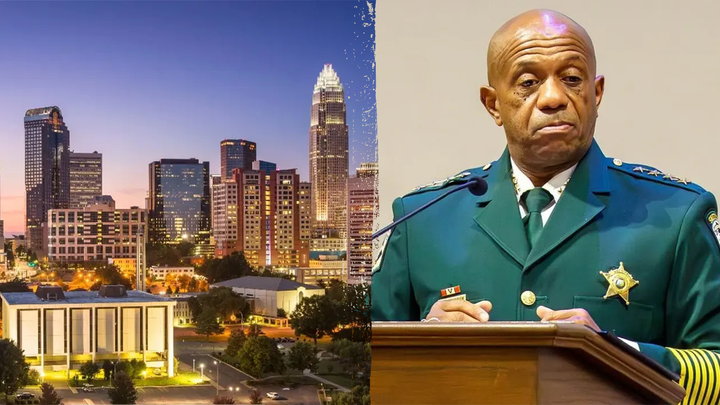

A tense North Carolina oversight hearing took an unexpected turn when a lawmaker asked the Mecklenburg County sheriff a basic civics question.
State Rep. Allen Chesser, a Republican, said he was caught off guard when Sheriff Garry McFadden struggled to explain which branch of government oversees his office. The exchange happened during a House Oversight Committee hearing tied to public safety concerns following the killing of Iryna Zarutska in Charlotte.
A simple question turns into a standoff
Chesser asked McFadden, “What branch of government do you operate under?”
McFadden first answered, “Mecklenburg County.” Chesser repeated the question. McFadden then responded, “The Constitution of the United States,” before returning again to “Mecklenburg County,” according to the hearing exchange described in coverage.
Chesser then asked how many branches of government there are. McFadden replied, “No,” when asked if he knew. After that, Chesser laid out the common framework of three branches and asked which applied. McFadden said he believed it was the judicial branch. Chesser told him that was incorrect and said the sheriff falls under the executive branch.
Why the committee was focused on the sheriff
The hearing was prompted by broader concerns about crime and how local officials handle public safety. Zarutska, a young Ukrainian woman who came to the U.S. seeking refuge, was killed in a stabbing on Charlotte’s light-rail system. The case drew political attention and renewed scrutiny of local policy decisions.
Within that wider debate, McFadden has been a lightning rod over immigration enforcement. He has long opposed deep cooperation with U.S. Immigration and Customs Enforcement, and Republicans have argued that sheriff policies should not vary from county to county on issues tied to state law.
The ICE issue at the center of the clash
After the civics exchange, Chesser pressed McFadden on the practical point behind his questioning: how a sheriff, as a law enforcement official, reconciles the duty to enforce the law with public opposition to cooperating with ICE.
Chesser cited a previous statement attributed to McFadden suggesting the sheriff’s office did not have a role in enforcement in that area. McFadden said the quote was being taken out of context and argued it referred specifically to immigration enforcement.
McFadden also said his office is now following North Carolina law that requires cooperation with ICE-related procedures when people are in custody. “We follow the law,” he said, as described in reporting.
Chesser says he didn’t expect a “fifth-grade civics” moment
In a post-hearing interview, Chesser said he had planned to focus on what he viewed as conflicting public statements about following the law. Instead, he said, the questioning stalled on what he called a baseline issue of government structure.
He added that the committee’s broader goal was to ensure laws are applied consistently across the state, regardless of county lines.
What happens next
The hearing did not resolve the political fight over how sheriffs should interact with federal immigration authorities. But it intensified attention on McFadden’s leadership and on how Mecklenburg County balances state mandates, local policy choices, and public safety pressures.
For now, the exchange has become a flashpoint in North Carolina’s larger argument over crime, accountability, and who sets the rules for enforcement.