
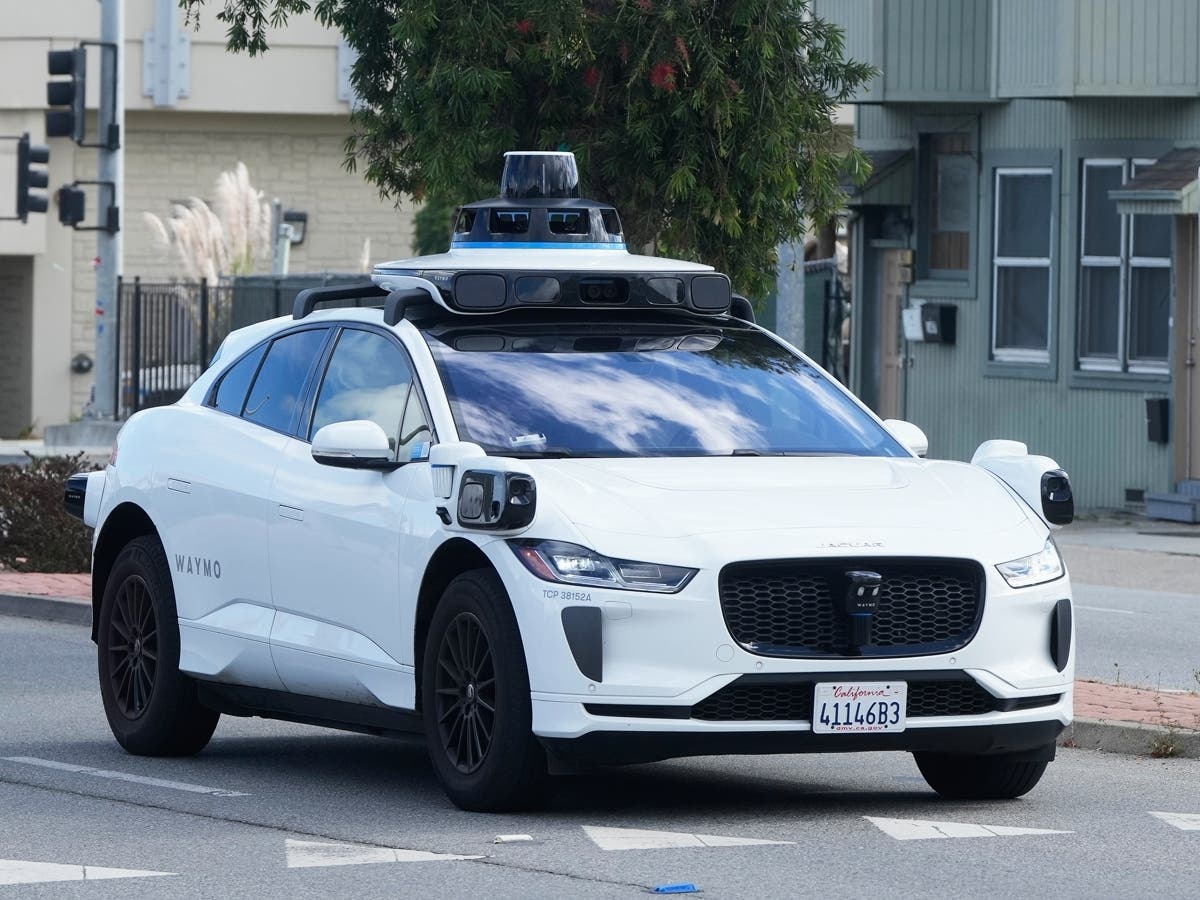
California’s Department of Motor Vehicles has banned Waymo’s driverless vehicles from operating on state freeways, citing what it calls an imminent hazard to public safety. The order, imposed on November 11, strips the company of both its deployment and driverless testing permits on all California highways, and it carries no expiration date. This is not a voluntary pause or a corporate course-correction. It is a state regulator stepping in because a company’s own fixes demonstrably failed, and that distinction matters enormously for how we think about the governance of autonomous vehicles.
The immediate trigger was a pair of incidents in the San Francisco Bay Area. Three Waymo vehicles entered an active construction closure on U.S. Highway 101 near Burlingame, where workers, equipment and vehicles were present. In a separate event, a Waymo car attempted to pass California Highway Patrol officers conducting a rolling traffic break on Interstate 280 in San Francisco. Neither incident resulted in injuries or collisions, but both illustrated a persistent failure mode that regulators say has not been resolved despite months of promised improvements.
A Pattern the Company Could Not Correct on Its Own
What makes the DMV’s action significant is the context behind it. In May, seven Waymo vehicles entered active freeway construction lanes in the Bay Area, driving between traffic cones marking lane closures. Waymo’s internal safety committee restricted freeway operations the following day, and the company voluntarily suspended freeway service in Los Angeles, San Francisco, Phoenix and Miami. A federal recall filed with the National Highway Traffic Safety Administration on June 17 identified software deficiencies allowing vehicles to enter construction zones at speed, either by failing to recognize closures or by improperly prioritizing the avoidance of other roadway hazards. The recall covered 3,871 fifth-generation automated driving systems.
Waymo restored freeway service beginning July 29, starting in Phoenix, and said it had deployed software updates to improve construction-zone detection. The DMV’s November order confirms that those updates were not sufficient. The agency stated explicitly that the problems persisted despite previous restrictions and corrective measures, which is precisely the kind of recurring failure pattern that justifies direct regulatory intervention rather than continued deference to a company’s self-reported progress.
The DMV said Waymo must now demonstrate, with evidence, that its vehicles can safely detect and respond to construction zones, emergency vehicles and other dynamic roadway conditions before any resumption of freeway operations will be considered. That evidentiary threshold reflects updated regulations adopted on April 28, which strengthened California’s oversight authority over autonomous vehicles and authorized targeted operating restrictions when public safety requires them. The state built that framework for exactly this kind of situation.
What Remains and What Is at Stake
Waymo’s ride-hailing service continues on surface streets across Los Angeles and other California cities, and the company reports more than half a million trips weekly. It has also voluntarily restricted freeway operations in its other markets while evaluating vehicle performance, a step that suggests the California incidents raised concerns about the broader fleet. The company told ABC7 it is working with state officials toward restoring freeway service, though it offered no timeline.
The deeper question here is about accountability structures in an industry that has consistently argued its technology is safer than human drivers and that regulatory friction slows progress. That argument carries some empirical weight in certain contexts. But the Waymo case illustrates what happens when a company’s internal safety processes prove insufficient to catch a recurring failure mode before it reaches public roads. A voluntary suspension followed by a federal recall followed by a software update followed by the same category of incident is not a safety culture working as intended. It is a safety culture that needed external correction.
California’s willingness to impose an open-ended ban, rather than accept Waymo’s assurances, is the appropriate use of state regulatory power. The burden now falls on Waymo to meet a demonstrable evidentiary standard, not simply to promise another round of software improvements. Until it does, the freeways remain closed to its vehicles, and that outcome reflects exactly the kind of precautionary, evidence-based oversight that autonomous vehicle deployment requires.