
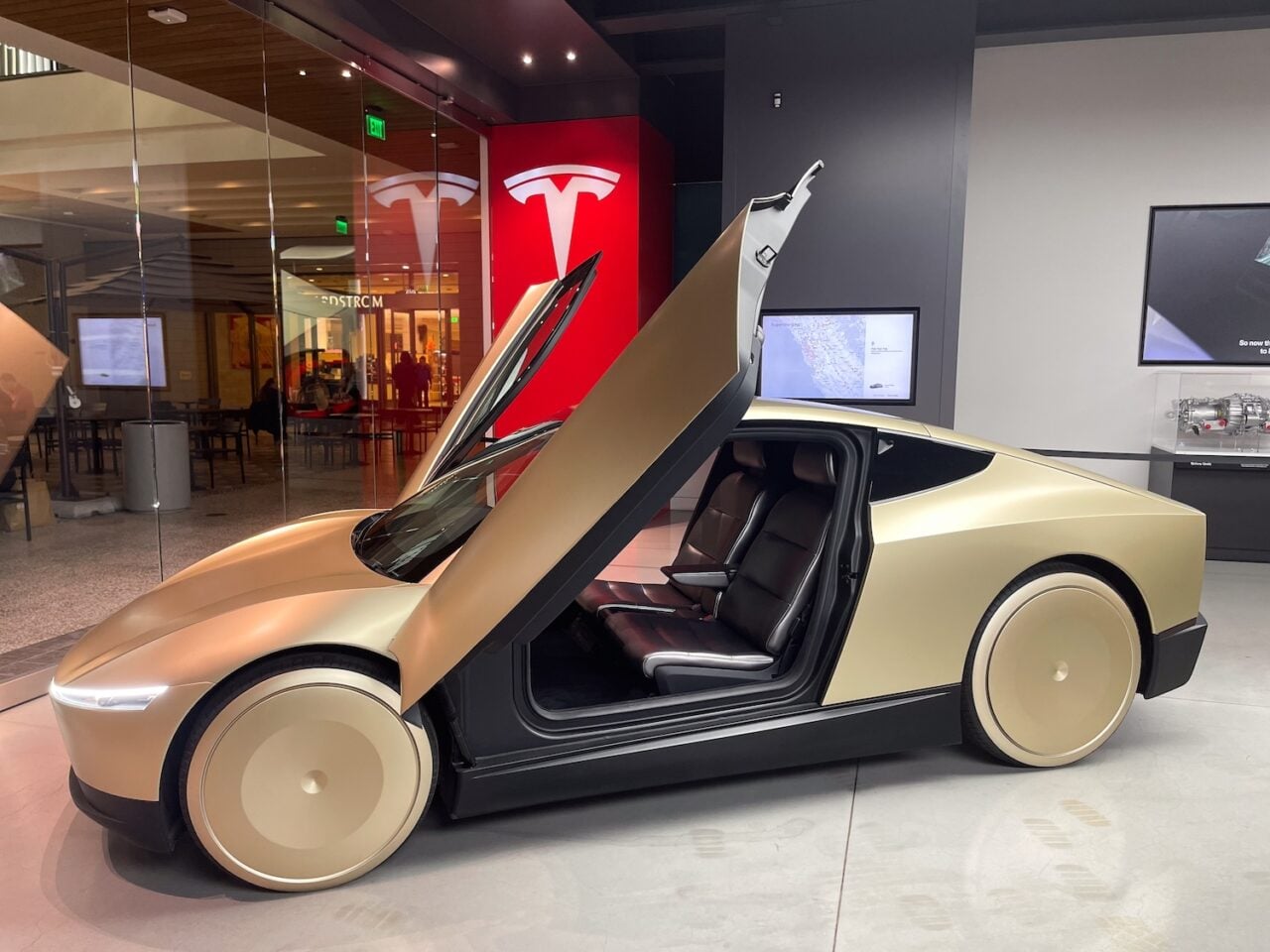
Tesla has begun inviting select customers to preorder its long-awaited Cybercab, with an estimated delivery date sometime next month and a sticker price of $29,990, but the terms attached to the vehicle reveal a product far more constrained than the autonomous taxi dream the company has spent years selling. The announcement, made via an X post from the official Robotaxi account on November 13, 2026, comes with a tangle of geographic restrictions, a substantial monthly fee, and a prohibition on the very revenue-generating feature that made the Cybercab concept compelling in the first place.
The terms and conditions confirm that the vehicle will operate only within Tesla-enabled robotaxi geofences, all of which are currently located in Texas, meaning buyers outside those zones cannot legally or technically use the car at all. On top of the purchase price, owners must pay a monthly operating fee of $299, a charge that CEO Elon Musk himself acknowledged on November 14, 2026, is too high. Writing on X, Musk said the fee “should match the cost of Tesla FSD and connectivity for other models, which is more like ~$115/month,” an admission that undercuts Tesla’s own pricing structure before the first units have even shipped.
The most significant limitation, flagged by the Wall Street Journal, is that buyers will not be permitted to deploy their Cybercab as a commercial robotaxi to generate income. The vehicle is restricted to personal use only, at least for the time being, which strips away the central financial argument for spending nearly $30,000 on a car designed without a steering wheel or pedals. Musk suggested the nationwide rollout would follow “as we receive regulatory approval,” framing federal and state sign-off as a near-certainty rather than the genuinely uncertain, jurisdiction-by-jurisdiction process it remains.
The announcement has reignited a public bet made by tech YouTuber Marques Brownlee, who in 2024 pledged to shave his head on camera if Tesla delivered a Cybercab to consumers for under $30,000 before 2027, declaring himself “that confident they won’t do it.” Brownlee now argues his hair is safe, contending that the geofencing, the fee structure and the personal-use-only restriction mean Tesla has not genuinely fulfilled its promise. Grok, the AI assistant built by Musk’s own xAI, reportedly sided with Brownlee on the question, a result that frustrated Tesla supporters online. Whether the limited, fee-heavy, geofence-bound version of the Cybercab counts as honoring a two-year-old commitment is, at minimum, a reasonable question, and the economics Musk himself conceded do not yet add up.