
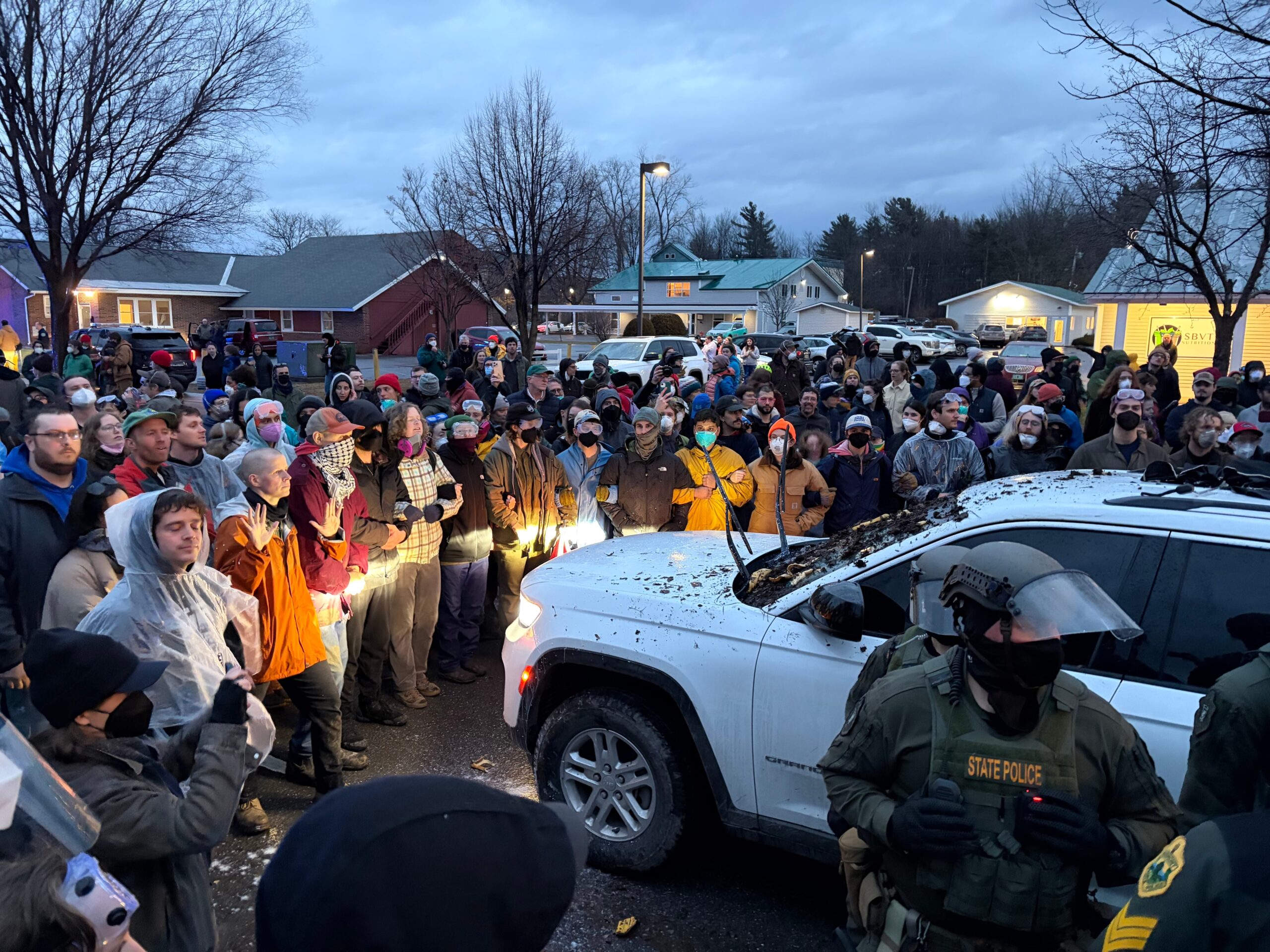
A chaotic Immigration and Customs Enforcement operation in South Burlington, Vermont, last month has reignited calls for abolishing or dramatically reforming the federal agency — a proposal that looks far more reasonable than the failed “Defund the Police” movement that swept through progressive cities after George Floyd’s murder.
Body camera footage reviewed by reporters shows ICE agents creating a “needlessly dangerous situation” on March 11, surrounding a house while activists protested nearby. When local Deputy Police Chief Sean Briscoe tried to de-escalate by asking ICE supervisor David Johnston “At what point does it become not worth it for one person?” the federal agent not only refused but accused Briscoe of siding with protesters.
The confrontation escalated when ICE agents fired pepper spray and pepper ball projectiles with “ridiculously disproportionate” force, hitting a Vermont state trooper in the process. The incident exemplifies how ICE operates nationwide, particularly in blue states targeted for what critics call “performative violence.”
Burlington’s Police Defunding Backfired
The contrast with Burlington’s police defunding experiment couldn’t be starker. After Floyd’s death, progressive city councilors slashed the police budget by 30 percent, then quickly reversed course when crime and social disorder predictably increased.
Burlington is still struggling to hire enough officers and restore public safety to pre-defunding levels. The hasty ideological approach to policing reform proved counterproductive, undermining legitimate concerns about police accountability.
ICE Reform Gains Broader Support
Unlike police defunding, which lacked sustained public backing, ICE abolition polls at 50 percent support nationwide, with only 40 percent opposition. The agency’s pattern of aggressive tactics and disregard for local law enforcement concerns has built a broader coalition for reform.
ICE operates essentially as “Trump’s private paramilitary force,” deployed strategically for political effect rather than genuine public safety needs. The South Burlington incident wasn’t an aberration — it represents standard ICE procedure.
While complete abolition remains unlikely given Republican congressional support for Trump’s immigration enforcement, the Vermont incident strengthens the case for dramatic structural reform. ICE needs to be “torn down and built back up from its bones,” with new oversight mechanisms and accountability measures.
The lesson from Burlington’s police experiment is clear: ideological approaches to law enforcement reform often backfire. But ICE’s documented pattern of reckless endangerment makes the case for reform on practical, not just progressive, grounds.