
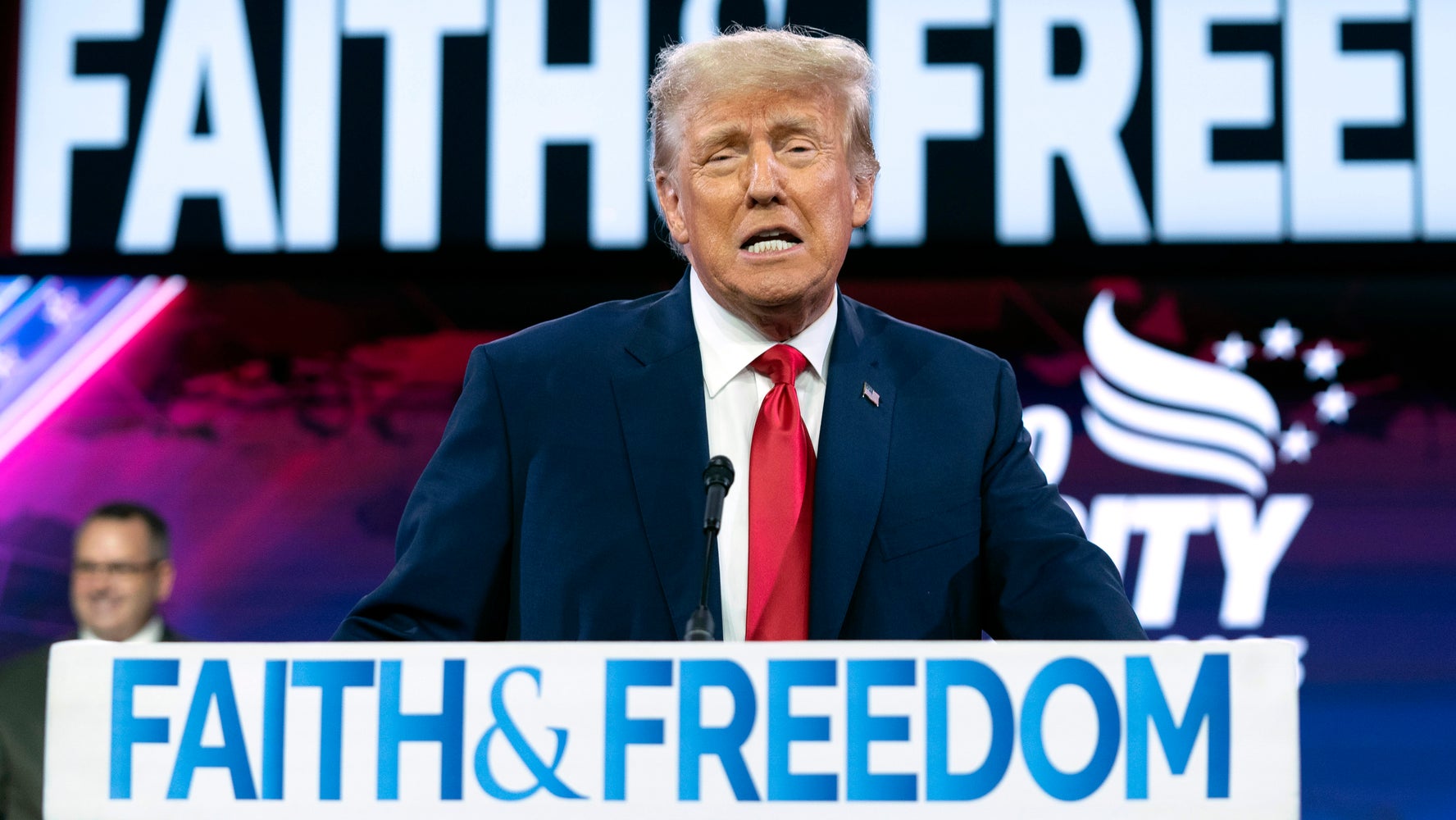
A Federal Panel Stacked With Conservative Christians Is Recommending Policies That Would Erode Constitutional Protections
Trump’s Religious Liberty Commission, a federally chartered advisory panel dominated by conservative Christian clergy and activists, is preparing a final report that would effectively dismantle the constitutional separation of church and state — with its own chair calling that separation “a lie” and proposing a federal hotline to say so.
At the commission’s most recent meeting in April, members outlined sweeping recommendations: expanding public funding for religious organizations, allowing faith-based exemptions to labor, healthcare, and education law, and pushing the Department of Justice to intervene in court cases on behalf of religious conservatives fighting vaccine mandates and LGBTQ+ protections.
No commissioner publicly dissented.
The Chair’s Explicit Goal: Reject Settled Constitutional Precedent
Commission Chair Dan Patrick — Texas’s Republican lieutenant governor — went further than any advisory panel chair typically would, openly rejecting a legal principle that has governed American constitutional law for more than a century.
“We need to say there is no separation of church and state,” Patrick told fellow commissioners in April. “That’s a lie.” He proposed printing “a million bumper stickers” to that effect.
President Trump echoed the sentiment at a White House prayer event earlier this year. “They say separation between church and state,” Trump said. “I said, all right, let’s forget about that for one time.”
While the phrase does not appear verbatim in the Constitution, it is firmly embedded in Supreme Court precedent. The court has repeatedly cited Thomas Jefferson’s description of the First Amendment as erecting “a wall of separation between church and state,” applying that principle to both federal and state governments under the 14th Amendment. Calling it a “lie” is not a matter of constitutional interpretation — it is factually wrong.
A Commission Built for One Constituency
The commission’s membership reflects its agenda. Most commissioners are conservative Christian clerics and commentators; one is an Orthodox Jewish rabbi. A progressive interreligious coalition has filed a lawsuit arguing the panel violates federal law requiring advisory bodies to represent diverse viewpoints.
The coalition notes that most commission meetings have been held at the Museum of the Bible in Washington, an institution with explicitly Christian leadership. The Trump administration is seeking to have the lawsuit dismissed, arguing the law does not define what “balanced” representation means — a position that underscores how far the administration is willing to stretch legal interpretation to protect the commission’s ideological uniformity.
The Rev. Paul Brandeis Raushenbush, president of the progressive Interfaith Alliance and one of the plaintiffs, said the commission’s omissions are as revealing as its focus areas. “The commission has failed adequately to address anti-Muslim efforts in Texas and elsewhere, and the rise of antisemitism on the right, not just the left,” he said.
What the Commission Wants
During the April meeting, commissioners outlined a broad wish list for their final report:
Bishop Robert Barron of the Catholic Diocese of Winona-Rochester called for faith-based organizations to receive public money “without compromising on traditional church teachings about the family” — a formulation that would allow federally funded groups to discriminate against LGBTQ+ individuals and families.
Barron also called for humane treatment of Catholic immigrants in detention — a position that stands in notable tension with an administration that has pursued mass deportations and eliminated protections against immigration enforcement at houses of worship.
A Broader Web of Trump-Aligned Religious Initiatives
The Religious Liberty Commission does not operate in isolation. A separate Trump-created body, the Task Force to Eradicate Anti-Christian Bias, issued a report claiming Christians faced systemic discrimination under the Biden administration. Progressive groups said the report documented no such systemic pattern and amounted to political advocacy dressed up as investigation.
Several commission members are also scheduled to participate in a May 17 prayer event tied to the country’s 250th anniversary, and multiple commissioners took part in a recent Bible-reading marathon held largely at the Museum of the Bible — blurring the line between government advisory work and religious activism.
Internal Tensions, External Criticism
The commission has not been entirely without conflict. Commissioner Carrie Prejean Boller was ousted in February after a contentious hearing on antisemitism, during which she clashed with witnesses over the definition of the term and defended commentator Candace Owens against charges of antisemitic statements. Patrick said Boller sought to “hijack” the hearing; Boller said she was punished for expressing her Catholic beliefs.
In other hearings, witnesses described defying workplace rules on gender, abortion, and COVID-19 vaccines, citing religious objections. Jewish witnesses testified about harassment at pro-Palestinian campus protests. Some Hindu, Muslim, and Sikh witnesses were also heard — but critics say these voices were marginal to a commission overwhelmingly focused on conservative Christian grievances.
The commission’s final report has not yet been released. But based on the April meeting, its direction is clear: a government-backed push to redefine religious liberty as a conservative Christian entitlement, at the expense of pluralism, established constitutional law, and the rights of everyone else.