
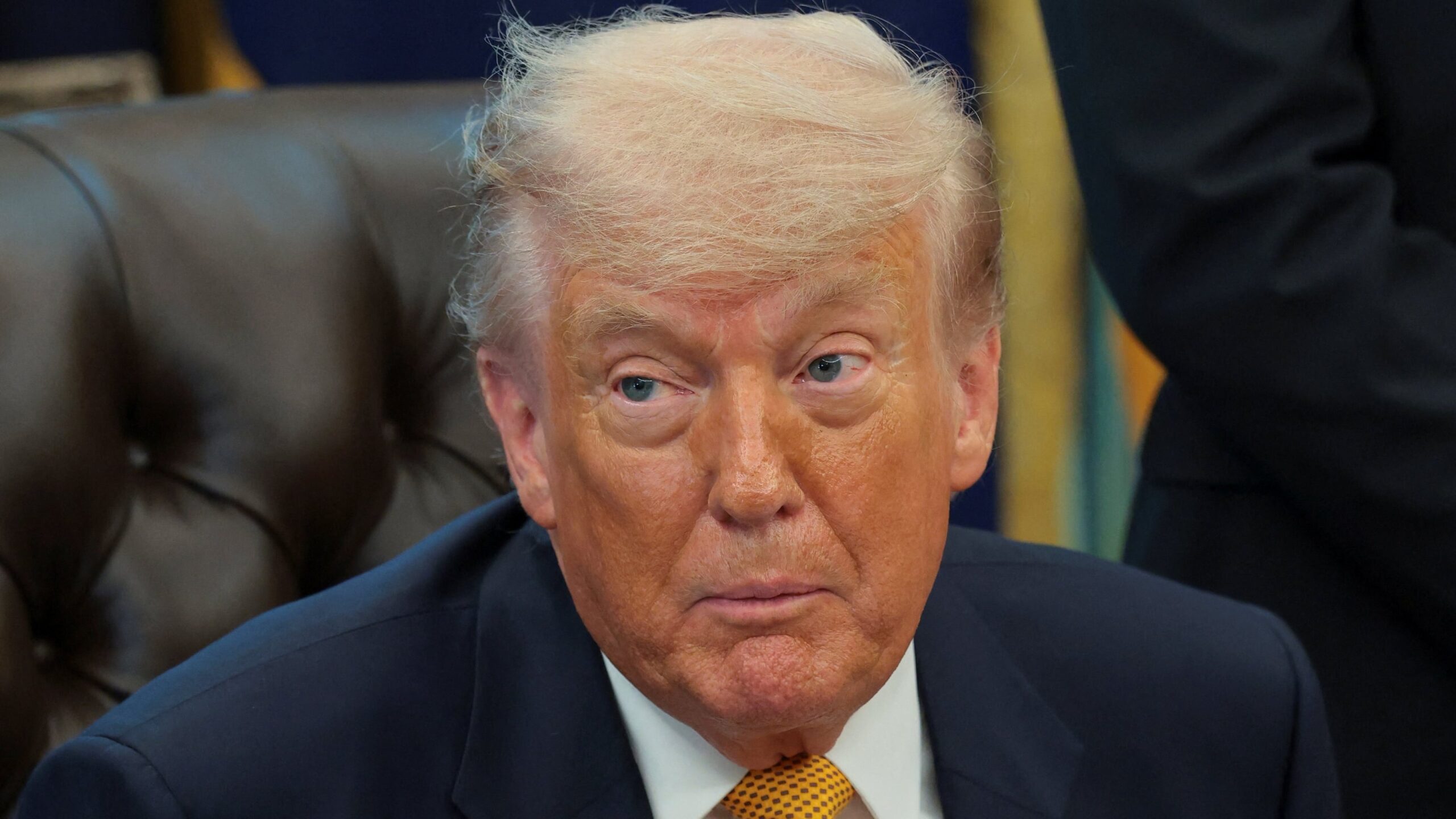
Trump’s DOJ Moves to Erase $83 Million Carroll Defamation Judgment by Swapping In Federal Government as Defendant
The Justice Department has announced plans to intervene on President Donald Trump’s behalf in the $83.3 million defamation lawsuit brought by writer E. Jean Carroll — a legal maneuver that, if successful, would automatically erase the judgment against him by replacing him with the United States government as defendant.
The DOJ filed its intention to intervene on Tuesday, arguing it should substitute the federal government for Trump under the Westfall Act, which shields federal employees from certain civil liability for actions taken within the scope of their employment. Because defamation claims cannot be brought against the federal government, the substitution would trigger an automatic dismissal.
The move represents an extraordinary use of federal prosecutorial power to shield a sitting president from a civil judgment stemming from his personal conduct — and raises immediate questions about whether the DOJ, now led by acting Attorney General Todd Blanche, Trump’s former personal defense attorney, is functioning as an arm of the president’s legal defense.
Courts Have Already Ruled Against Trump
The intervention attempt comes after the 2nd Circuit Court of Appeals upheld the defamation verdict last week, rejecting both Trump’s claim of presidential immunity and his earlier attempt to substitute the United States as defendant. The appellate court’s ruling was a clear rebuke of the same arguments the DOJ is now advancing to the Supreme Court.
Trump’s personal attorney, Justin Smith, separately filed a petition with the 2nd Circuit asking it to halt enforcement of its ruling while Trump prepares to argue before the Supreme Court that the government should be substituted as defendant and that he should be granted presidential immunity.
The Underlying Findings Against Trump
A federal jury awarded Carroll $83.3 million in damages in 2024 after finding that Trump defamed her when, as a sitting president in 2019, he publicly denied her account that he sexually abused her in a New York department store dressing room in the mid-1990s.
A separate federal jury in 2023 had already found Trump liable for sexual abuse against Carroll and ordered him to pay $5 million. Trump has denied all allegations.
Immunity Arguments Stretch Legal Precedent
Trump is invoking the Supreme Court’s 2024 ruling in Trump v. United States, which granted former presidents absolute immunity from criminal prosecution for core constitutional acts and presumptive immunity for other official acts. Trump argues that his public denials of Carroll’s allegations — made while in office — qualify as official presidential conduct.
Legal experts have widely questioned that interpretation, noting that publicly attacking a private citizen who accused him of sexual assault bears no recognizable relationship to any constitutional duty of the presidency.
Trump has also separately petitioned the Supreme Court to take up his challenge to the $5 million sexual abuse judgment, arguing the trial judge erred by allowing testimony from two other women alleging sexual assault and by admitting his Access Hollywood recording — in which he boasted about grabbing women without consent — into evidence. The Court has not yet decided whether to hear that case.
What Comes Next
The Supreme Court will ultimately decide whether to accept the DOJ’s substitution argument. If it does, Carroll would lose her defamation judgment entirely — not because a court found the verdict wrong, but because the government successfully argued Trump was acting in his official capacity when he called his sexual abuse accuser a liar.
The White House and DOJ did not respond to requests for comment. Carroll’s representatives had not yet responded at the time of publication.