
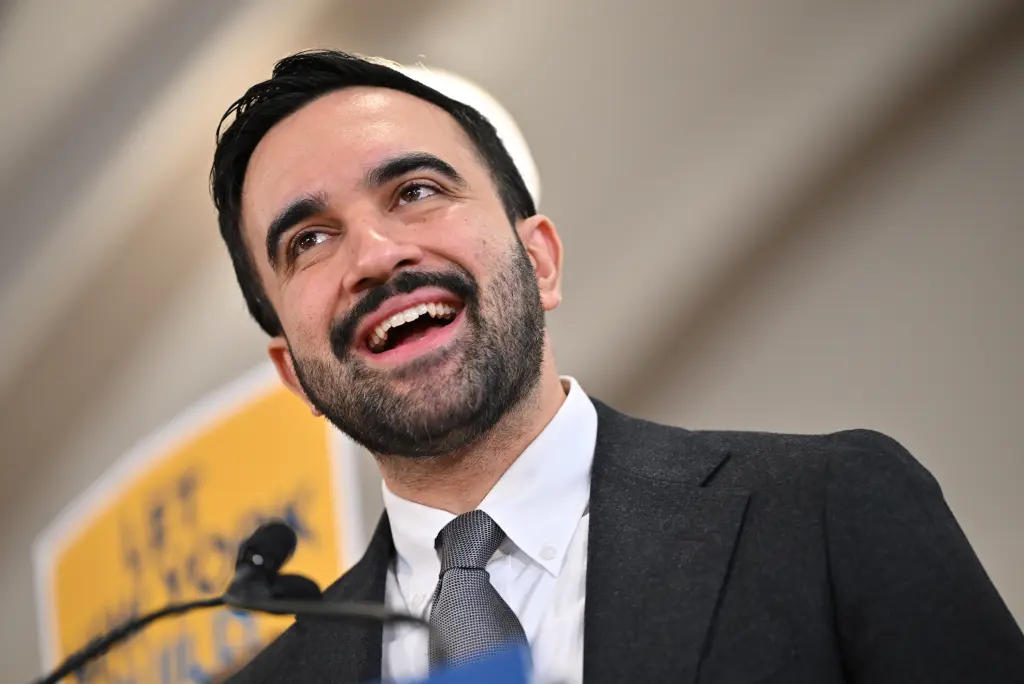
Ohio gubernatorial hopeful Vivek Ramaswamy is calling for a crackdown on Medicaid fraud after an investigation found hundreds of home healthcare companies registered to the same addresses — but his response has drawn scrutiny for blaming immigrants rather than regulatory failures.
A report by The Daily Wire identified 288 home healthcare companies listed at shared addresses across Ohio, including locations that appeared vacant, with covered windows, piled-up mail, and no visible staff. One Columbus address was linked to 94 separate businesses that reportedly billed taxpayers more than $66 million.
Ramaswamy, the tech entrepreneur and former Republican presidential candidate now running for Ohio governor, called the findings alarming and pledged aggressive investigation and prosecution if elected.
“We’re going to have to take a deep, hard look at the way the $40-plus billion in state Medicaid dollars are being spent,” Ramaswamy told Fox News host Kayleigh McEnany on Saturday in America.
What the Investigation Found
The Daily Wire investigation focused on Ohio’s rapidly expanding Medicaid-funded home healthcare sector, where broadly defined “homemaking” services — including cooking, cleaning, and companionship — can generate substantial taxpayer-funded payments with limited regulatory oversight.
In some cases, family members are reportedly paid through Medicaid to provide care to relatives at home, with little verification that services are actually being rendered. One landlord’s properties allegedly housed hundreds of Medicaid-billing businesses that collectively billed the federal government hundreds of millions of dollars.
The investigation also noted that Columbus, home to one of the largest Somali immigrant communities in the United States, has seen a significant proliferation of Medicaid-billing home healthcare businesses in recent years.
State Officials Say Oversight Is Already in Place
Republican Gov. Mike DeWine’s office pushed back against Ramaswamy’s framing, saying the state has “extensive oversight mechanisms in place” to combat fraud. Those measures include electronic visit verification, signed daily activity logs, provider audits, background checks, and regular reassessments of medical need.
The Ohio Department of Medicaid said it has been “actively investigating these matters since prior to the publication” of the Daily Wire series. The department noted that some of the flagged entities are no longer active Medicaid providers, have not billed in years, or are already under investigation.
The state’s response suggests the problem — while real — is not as novel or unaddressed as Ramaswamy’s campaign rhetoric implies.
Ramaswamy Blames Immigration — A Claim That Warrants Scrutiny
Rather than focusing on regulatory gaps or enforcement failures within Ohio’s Medicaid administration, Ramaswamy attributed the alleged fraud to what he called an “open border crisis” under President Biden and an “overgrown federal welfare state.”
“They’re downstream of an open border crisis under Biden where for years millions and millions of people were crossing the southern border and finding their way to different parts of the country,” he said.
That framing conflates immigration status with Medicaid fraud — a significant logical leap. Medicaid eligibility rules already restrict access for most immigrants, and fraud in home healthcare billing is a documented national problem that predates recent immigration trends and spans demographics. Attributing systemic billing fraud primarily to immigration is not supported by the available evidence.
The invocation of Columbus’s Somali community — without evidence that immigrants are disproportionately responsible for the fraud — follows a pattern of racializing welfare and healthcare debates in ways that generate political heat but obscure policy solutions.
The Real Issue: Weak Oversight of a Fast-Growing Sector
Home healthcare is one of the fastest-growing areas of Medicaid spending nationally, and Ohio’s program has expanded significantly in recent years. Experts and watchdog groups have long warned that the sector’s loosely defined service categories and limited in-person verification create structural vulnerabilities to billing fraud.
Those are regulatory and administrative failures — problems that require stronger state oversight, better verification systems, and adequate funding for enforcement. They are not primarily an immigration problem.
Ramaswamy’s call for aggressive prosecution of fraud is reasonable on its face. But his broader framing — tying the issue to border policy and using it to argue for eliminating Ohio’s income tax — suggests the fraud allegations are serving as a political vehicle as much as a genuine policy concern.
A Campaign Platform Built Around the Report
Ramaswamy has indicated that his approach to Medicaid reform would extend beyond Ohio, framing any savings as a potential model for national replication. He has also used the issue to advance his proposal to eliminate Ohio’s state income tax.
“Income taxes in certain states are zero income tax,” Ramaswamy said. “I want Ohio to be such a zero income tax state as well, but that means we’re going to have to take a look at every other area of savings for the taxpayer.”
The logical chain — from Medicaid fraud to zero income taxes — is a significant stretch, and one that conveniently aligns with longstanding conservative goals of shrinking the social safety net rather than strengthening its oversight.
If fraud is occurring at the scale suggested, it demands serious investigation and accountability. But the solution is more and better oversight of Medicaid — not less government, not immigration crackdowns, and not tax cuts that would ultimately reduce the state’s capacity to fund and monitor public programs.