
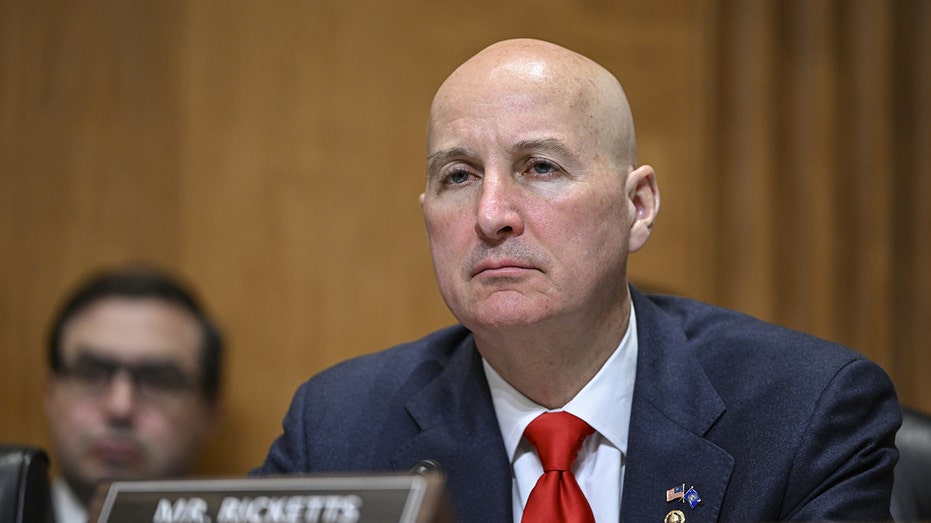
Pete Ricketts Wins Nebraska GOP Primary, Sets Up Fall Showdown With Independent Dan Osborn
Republican Sen. Pete Ricketts cleared his first major hurdle toward a full six-year Senate term Tuesday, winning Nebraska’s GOP primary against four challengers and advancing to what could be one of the fall’s more competitive Senate races — a general election matchup against independent candidate Dan Osborn.
Ricketts, who was appointed to the Senate in 2023 to replace resigned Sen. Ben Sasse and subsequently won a 2024 special election to complete Sasse’s term, will now face Osborn — an industrial mechanic and military veteran — in November’s midterm elections.
Osborn: A Proven Threat to Nebraska Republicans
Osborn is no long-shot. In 2024, he came strikingly close to unseating incumbent Republican Sen. Deb Fischer in a state Donald Trump carried by double digits, demonstrating genuine crossover appeal in a red-leaning electorate.
While nonpartisan political handicappers currently rate the Nebraska Senate race as likely Republican, Osborn’s track record makes this race worth watching. Republicans hold the Senate 53-47, and Democrats are eyeing every available pickup opportunity heading into November.
A Messy Democratic Primary With Strategic Undertones
The Democratic primary produced its own drama. Although the Nebraska Democratic Party formally backs Osborn in the general election, community college instructor Cindy Burbank and pastor Bill Forbes still competed for the party’s nomination.
Burbank won decisively. But the circumstances surrounding the primary raised eyebrows: both candidates were last-minute filers, and some Nebraska Democrats alleged Forbes entered the race specifically to place a Democrat on the November ballot and siphon votes away from Osborn — effectively boosting Ricketts. Forbes denied the allegation.
Burbank said she entered the race precisely to prevent that outcome — to defeat Forbes in the primary and keep him off the fall ballot.
Who Is Pete Ricketts?
Ricketts is the eldest son of TD Ameritrade founder Joe Ricketts and, along with other family members, a part-owner of Major League Baseball’s Chicago Cubs. He served two terms as Nebraska’s governor, winning in 2014 and again in 2018.
Just one week after leaving the governorship, he was appointed to the U.S. Senate by his Republican successor, Gov. Jim Pillen — a move that critics noted blurred the line between political succession and democratic accountability.
In a post-primary fundraising appeal, Ricketts leaned into culture-war framing, warning supporters that “out-of-state liberal donors are going to pour millions into Nebraska this fall” and urging them to donate to resist what he characterized as outside influence. The pitch notably conflates liberal with progressive — a distinction that matters, given Osborn’s working-class, labor-focused platform sits well to the left of conventional Democratic centrism.
What’s at Stake in November
The Nebraska race is one of several contests that will determine whether Republicans hold their slim Senate majority or Democrats can engineer a reversal. With the midterms now less than six months away, both parties are mobilizing resources across a narrow map of competitive states.
Osborn’s ability to win without the Democratic Party label — and despite it — may prove to be his greatest asset in a state where the party brand remains a liability.