
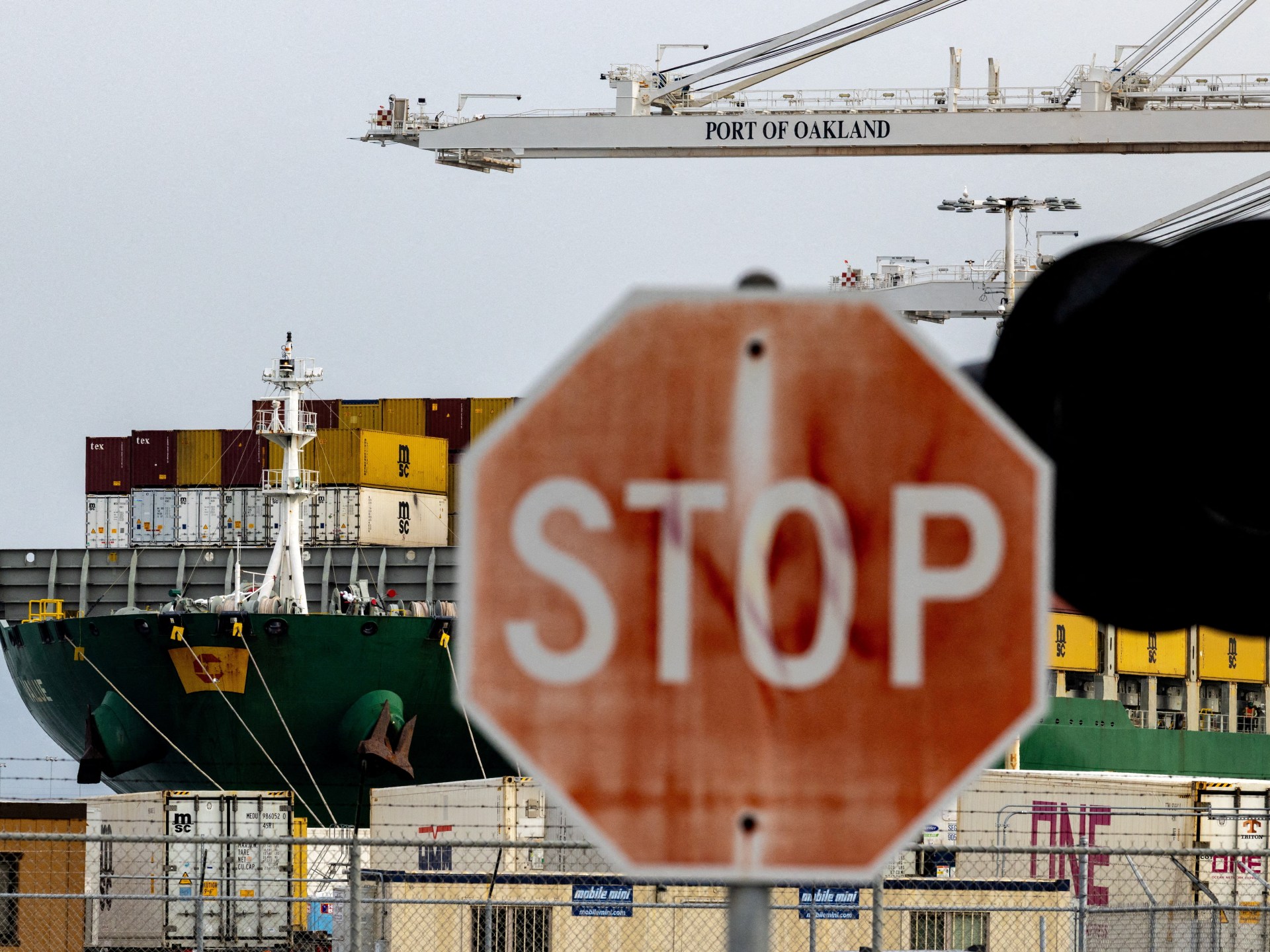
Federal Appeals Court Issues Stay, Keeping Contested Import Tax in Place While Legal Battle Continues
A federal appeals court on Tuesday temporarily blocked a lower court ruling that had invalidated President Donald Trump’s sweeping 10 percent global tariff, issuing a short-term administrative stay while the case proceeds. The pause gives the White House time to respond — but the legal, economic, and political obstacles facing Trump’s tariff campaign are mounting rapidly.
The ruling keeps the import tax alive for now, even as a coalition of 24 state attorneys general press their argument that Trump has repeatedly abused executive power to impose tariffs that Congress never authorized.
What the Lower Court Found
On Friday, a panel at the US Court of International Trade ruled two-to-one that Trump had failed to satisfy the legal conditions required under Section 122 of the 1974 Trade Act to justify the tariff.
“The President’s Proclamation fails to assert that those required conditions have been satisfied,” the lower court ruling stated, adding that the proclamation “is invalid, and the tariffs imposed on Plaintiffs are unauthorized by law.”
Tuesday’s appeals court stay temporarily pauses that decision — it does not overturn it.
A Pattern of Overreach
Trump originally imposed sweeping tariffs using the International Emergency Economic Powers Act (IEEPA), but the Supreme Court struck those down, ruling that the IEEPA does not grant the president authority to impose blanket import taxes.
Trump then pivoted to Section 122 of the 1974 Trade Act to impose the current 10 percent global tariff. Courts are now asking the same fundamental question: did the president actually have the legal authority to do this?
The pattern — impose broad tariffs, face legal defeat, find a new statutory hook — has drawn sharp criticism from legal scholars and state officials alike.
Real Costs for Consumers
The states challenging the tariffs argue the damage is not merely legal or abstract. Washington State Attorney General Nick Brown was blunt after Friday’s ruling.
“It’s American consumers and businesses that have ultimately paid for the president’s illegal tariff campaign,” Brown said.
A Consumer Price Index report released Tuesday appeared to validate that concern. Prices for apparel and electronics rose 0.6 percent, while toys and furniture jumped 0.8 percent — increases economists have directly linked to the tariff regime.
The Clock Is Also Ticking
Even if the White House prevails in court, Section 122 imposes a hard deadline. The 10 percent global tariff is capped at 150 days and is set to expire in July unless Congress votes to extend it.
Critics have also flagged the broader economic disruption caused by the tariff whiplash — businesses face uncertainty, supply chains have been upended, and unwinding the taxes carries its own regulatory costs.
IEEPA Refunds Already Underway
Meanwhile, the fallout from the earlier, court-struck IEEPA tariffs is already hitting federal coffers. US Customs and Border Protection expects to pay out $35.46 billion in refunds across 8.3 million shipments processed as of Monday — a striking illustration of how legally exposed the administration’s tariff strategy has been from the start.