
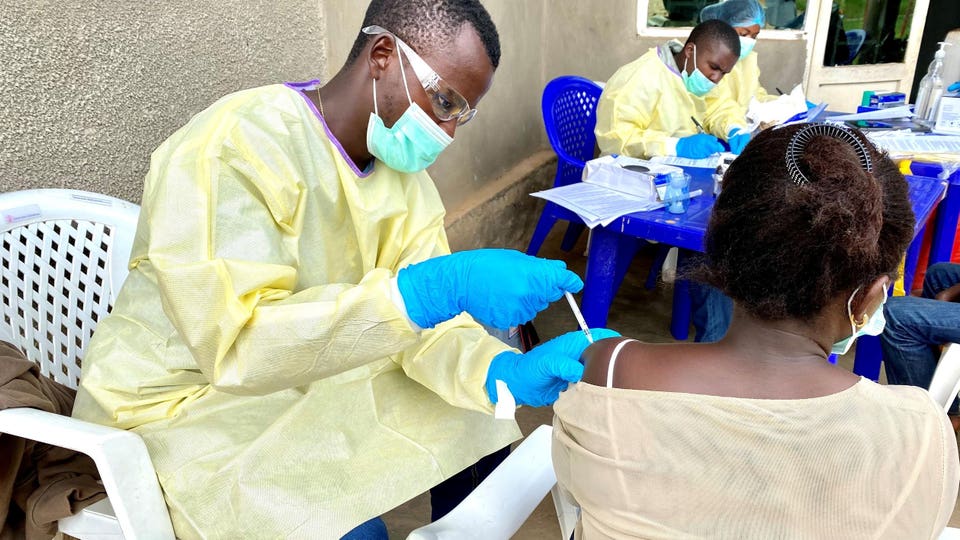
A Deadly Strain With No Vaccine Has Killed 87 People. Trump’s USAID Cuts Are Hampering the Response.
A fast-moving Ebola outbreak in the Democratic Republic of Congo has killed at least 87 people and infected more than 336, the World Health Organization confirmed Friday. The outbreak, centered in the northeastern Ituri province, has already crossed an international border — with one death reported in neighboring Uganda — raising urgent alarms among global health officials.
This is not a distant regional crisis. It is a global public health emergency unfolding at the worst possible moment, as the Trump administration’s sweeping cuts to international health funding have gutted the surveillance and response systems designed to stop exactly this kind of outbreak.
A Strain With No Approved Treatment or Vaccine
The pathogen driving this outbreak is the Bundibugyo strain of Ebola — not the more familiar Zaire strain that existing approved vaccines and treatments target. There are currently no licensed therapies or vaccines effective against Bundibugyo.
Without medical countermeasures, health workers must rely entirely on isolation, contact tracing, and containment protocols. The Bundibugyo strain carries a mortality rate of up to 50%, according to the DRC’s health minister — meaning roughly one in two infected people die.
When containment is the only tool available, every gap in surveillance infrastructure, every delay in detection, and every breakdown in community cooperation costs lives.
Ebola Does Not Respect Borders
Ebola spreads through direct contact with infected bodily fluids — blood, vomit, urine, saliva, and sweat — as well as contaminated surfaces including clothing, bedding, and medical equipment. While it does not transmit as easily as respiratory viruses, it is lethal enough that even limited spread across borders carries serious consequences.
Modern air travel connects remote regions to global hubs within hours. The COVID-19 pandemic demonstrated in devastating terms how quickly a pathogen can travel from a single origin point to every corner of the world. The confirmed spread of this outbreak into Uganda is an early warning sign that containment is already under strain.
Congo’s Political Crisis Compounds the Danger
The DRC has experienced more than a dozen Ebola outbreaks since 1976, but the current context is particularly dangerous. Ongoing armed conflict, political instability, and widespread violence in Ituri province make systematic contact tracing and community cooperation extraordinarily difficult.
Infected individuals in conflict zones may be unable or unwilling to seek testing, comply with isolation protocols, or trust health authorities. That breakdown in trust and access accelerates viral spread — and increases the death toll.
Trump’s USAID Cuts Have Weakened the Global Early-Warning System
The outbreak’s timeline reveals a critical failure. Health officials believe the Ebola outbreak in Congo likely began in April — yet it was only officially confirmed this past Friday. That months-long gap between probable origin and confirmed detection is a direct indicator of degraded public health infrastructure.
That degradation has a clear cause. The Trump administration announced cuts of 83% of USAID’s activities last year, eliminating billions of dollars in funding that had supported laboratory networks, disease surveillance systems, vaccination campaigns, and frontline health worker training across low-income countries — including the DRC.
These were not abstract bureaucratic programs. They were the systems that detect outbreaks early, train the epidemiologists who investigate them, and build the community trust that makes containment possible. Dismantling them does not save money — it shifts costs onto future crises that will be far more expensive, in lives and dollars, to manage.
As public health experts have long argued: stopping outbreaks overseas protects Americans at home. Fewer trained epidemiologists, weaker surveillance networks, and slower response times mean more time for a virus to spread before the world even knows it exists.
The Stakes Are Clear
This outbreak sits at a dangerous intersection: a highly lethal virus with no approved treatment, emerging in an active conflict zone, at a moment when the international health architecture built to respond to exactly this scenario has been deliberately defunded.
The consequences of inaction — or of treating global health investment as expendable — will not stay contained within Congo’s borders. The world is watching. It should be alarmed.