
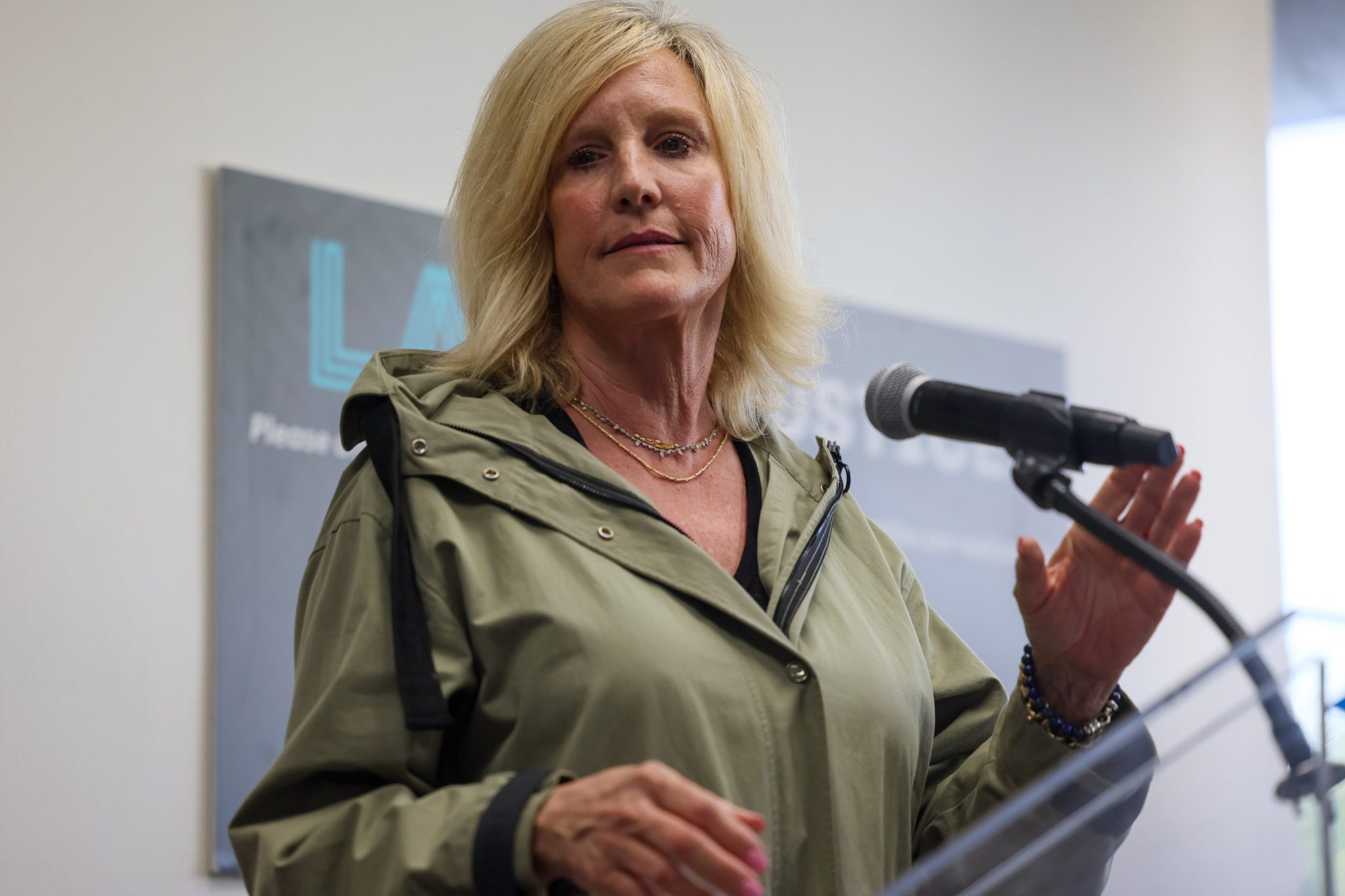
Erin Brockovich Takes On Big Tech: Activist Demands Transparency as Data Centers Quietly Reshape Communities
Erin Brockovich, the environmental activist who secured a landmark $333 million settlement against utility giant PG&E for groundwater contamination, has launched a new campaign targeting the explosive growth of data centers across the United States — and the corporate secrecy surrounding them.
Brockovich, immortalized by Julia Roberts in the 2000 film bearing her name, launched Brockovich AI Data Center Reporting, a project compiling community complaints into an interactive map at brockovichdatacenter.com. The site has already received nearly 4,000 reports from residents in almost every state.
“The single most common concern — more than noise, more than water usage, more than rising utility bills — is the one word that keeps appearing in submission after submission: transparency,” Brockovich wrote in a recent Substack post.
Communities Left in the Dark
Brockovich’s campaign documents a recurring pattern: corporations propose massive data center projects with little or no advance notice to the communities that will bear the consequences.
In Holly Ridge, Louisiana, resident Diane Cobb told New Orleans Public Radio that neighbors received no warning about Meta’s planned $27 billion Hyperion data center, a facility set to occupy 4,000 acres nearby.
“Nobody told us anything,” Cobb said. “They supposedly had a big meeting. The whole community was supposed to come. Nobody knew anything about it. Ever.”
Meta did not respond to requests for comment.
In Box Elder County, Utah — a rural county of fewer than 60,000 residents — a public meeting for a $100 billion data center project backed by Shark Tank investor Kevin O’Leary drew a packed room of concerned citizens. One county commissioner told the audience to “grow up” before officials retreated to a separate room and unanimously approved the project.
The Real Costs to Local Communities
Proponents argue that data centers generate jobs and tax revenue. In Loudoun County, Virginia — home to roughly 200 data centers — the facilities generated $875 million in tax revenue in 2024, exceeding the county’s entire general operations budget.
But the costs are mounting too, and they fall disproportionately on ordinary residents.
What Brockovich Is Demanding
Brockovich is not calling for a blanket ban on data centers. Instead, she is demanding that companies and elected officials meet basic democratic standards before projects move forward.
“Transparency means notifying residents before decisions are made, not after,” she wrote. “It means public hearings with real, complete information about energy consumption, water use, noise levels, and effects on local infrastructure. It means elected officials who answer to their constituents first, not to the corporations seeking tax breaks and zoning variances.”
The campaign reflects a broader tension between the tech industry’s infrastructure ambitions and the communities absorbing their footprint — a tension that is accelerating as artificial intelligence drives unprecedented demand for computing power.
For Brockovich, the parallels to her earlier work are clear: when corporations obscure the consequences of their operations from the public, it is communities — not shareholders — who pay the price.