
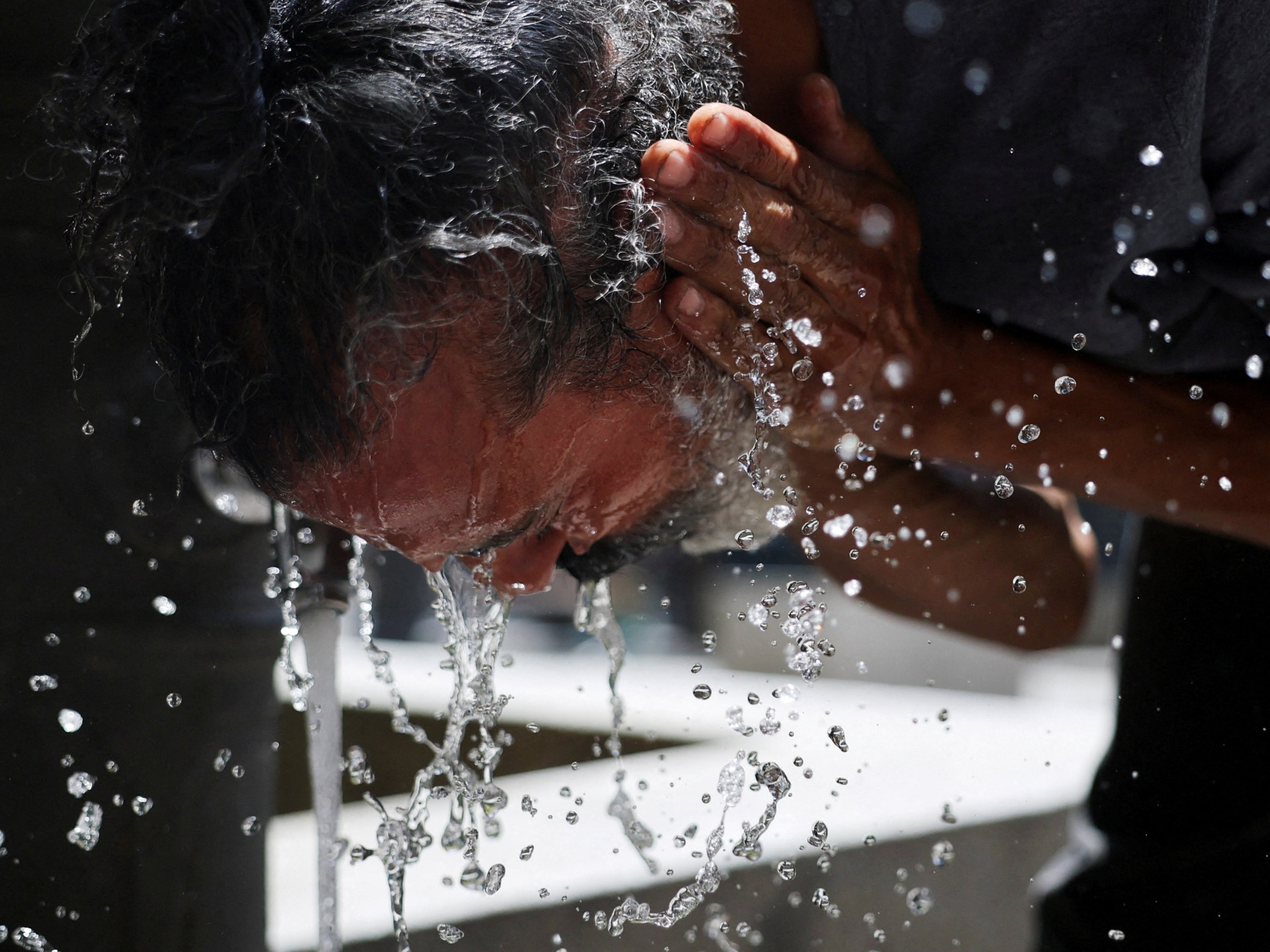
A Climate Emergency in Real Time
A catastrophic heatwave is killing people across Europe, shattering temperature records, and overwhelming public services — the second major extreme heat event to strike the continent in just two months. Scientists are unambiguous: the climate crisis is making these events more frequent, more deadly, and harder to survive.
France recorded its hottest nationally averaged day ever, with one town exceeding 44°C (111°F). At least 40 people have drowned in France alone since Thursday, with French Prime Minister Sébastien Lecornu directly linking the deaths to people seeking desperate relief from the heat. Three elderly people died from heat-related causes near Bordeaux; two children, aged two and four, were found dead in a hot car in southern France.
In Spain, a 90-year-old woman died of heatstroke in a nursing home near Bilbao, and a 68-year-old man in Almería also died from heat exposure. Across the continent, many more have been hospitalized.
Infrastructure Buckling Under the Heat
Public services are straining under conditions they were never designed to handle. The UK’s Met Office issued a rare red warning for extreme heat, with temperatures forecast to exceed 38°C (100°F). Hundreds of schools closed or moved to shortened schedules. Rail passengers were urged to avoid unnecessary travel amid fears of track buckling and signal failures.
Spain’s weather service AEMET reported highs above 45°C (113°F) in the south, placing nearly the entire country under some form of heat alert. The UK, Germany, France, Spain, Switzerland, and Luxembourg all faced the highest-level red alerts simultaneously.
The vulnerability is structural. Only about 20 percent of European homes have air conditioning. In northern countries especially, buildings were historically designed to retain warmth — precisely the wrong architecture for the climate Europe now faces.
What Is Driving the Heatwave
Meteorologists attribute the extreme temperatures to a heat dome — a vast area of high pressure parked over Western Europe — sustained by a weather pattern called an omega block, named for the Greek letter whose shape it resembles in the atmosphere.
Under normal conditions, the jet stream moves weather systems from west to east. During an omega block, that flow becomes distorted, trapping a ridge of high pressure between two low-pressure systems. The result is hot, stagnant air locked over the same region for days or weeks at a time.
Who Dies in a Heatwave — and Why It’s Not Random
Heat stress is already the world’s most lethal environmental hazard, killing nearly half a million people annually, according to the World Health Organization. But the deaths are not evenly distributed.
“People over the age of 65 account for around 90 percent of mortality from heat stress, whilst exposure to heat more generally is tightly structured by socioeconomic inequalities,” said Laurie Parsons, reader in Human Geography at Royal Holloway, University of London.
Lower-income communities face compounding risks: poorly insulated housing, no access to air conditioning, and physical outdoor jobs that cannot simply be paused. “Heat stress is thus a prime example of climate precarity in a globalised, environmentally vulnerable world,” Parsons said.
The Science Is Clear: Climate Change Made This Far More Likely
This is not a natural disaster in any meaningful sense — it is a foreseeable consequence of decades of fossil fuel use. Global average temperatures are now approximately 1.25°C (2.25°F) above pre-industrial levels, with 2024 reaching 1.55°C (2.79°F) above those baselines.
Europe is warming at roughly twice the global average rate, making it the world’s fastest-warming continent.
“Heatwaves like we are seeing now are about 30 times more likely to happen than in the pre-climate change era,” Parsons said. “Exceptional heatwaves like the current one would previously have been a once-in-300-year event but now occur more often than once a decade.”
WHO Director-General Tedros Adhanom Ghebreyesus warned that Europe’s heatwave was “putting people’s health at risk” and called for urgent investment in climate-resilient health systems. “We cannot afford further delay,” he said.
Global Leaders Meet as the Crisis Burns
The heatwave coincides with London Climate Action Week, one of the largest annual climate gatherings in the world, attended by heads of state and UN Secretary-General António Guterres.
Guterres used the moment to demand faster action on fossil fuels. “The climate crisis and the energy crisis may seem separate, but they share the same destructive origin: fossil fuels,” he said. “They demand the same answer: a fast, fair transition to clean energy and a surge in adaptation, resilience and climate justice for those already facing climate harm.”
Manufactured Doubt Is Costing Lives
Despite overwhelming scientific consensus, public attention to climate change remains politically fragmented — and that fragmentation is not accidental.
“Climate change has become a highly political issue with a concerted media pushback against climate policy targets like net zero,” Parsons said. “This has been led by media groups, such as News Corp and GB News among others, which have consistently pushed anti-net-zero editorial lines over the last five years.”
The result is a dangerous gap between scientific reality and political will — one that is being measured in lives lost during events like this week’s heatwave.
Parsons noted that extreme weather events do consistently reignite public concern. “Now is a good time to push for stronger climate policy,” he said — as Europe buries its dead and braces for more heat to come.