
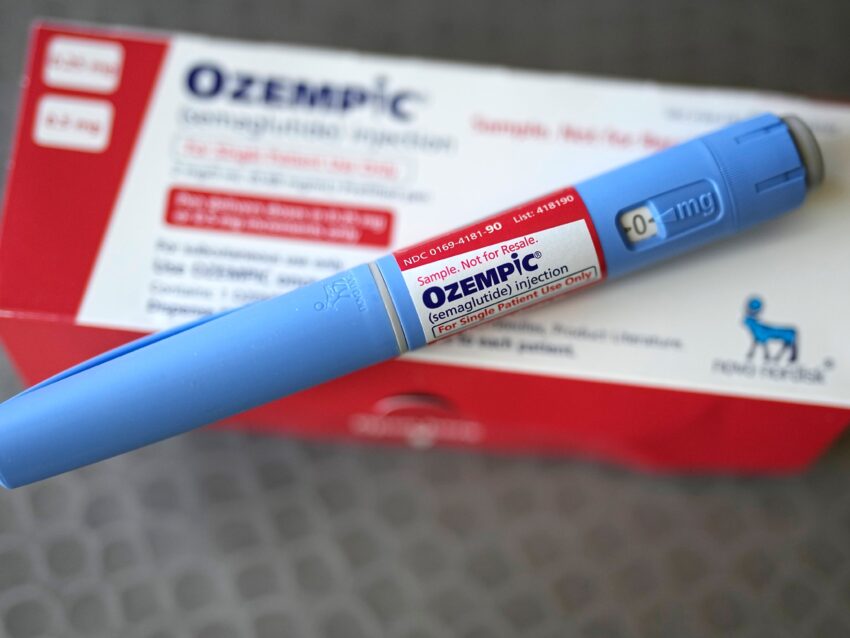
A Massachusetts man says Ozempic took his sight — and he’s far from alone in making that claim in court.
Edward Gillen, a father of four and longtime state highway worker from Dedham, has filed a federal lawsuit alleging that taking Ozempic between 2024 and 2025 caused him to develop non-arteritic anterior ischemic optic neuropathy (NAION), a sudden and irreversible form of vision loss. Filed in Pennsylvania federal court alongside more than 130 similar complaints, the lawsuit names Novo Nordisk, the Danish pharmaceutical giant behind Ozempic, and accuses the company of marketing GLP-1 drugs as near-miraculous treatments while failing to adequately warn patients about serious risks. Gillen says he would never have taken the drug had he known vision loss was a potential consequence. He learned of that risk only after he suddenly went blind in the spring of 2025.
The lawsuit alleges that Gillen and other patients were “lured into a false sense of hope” that GLP-1 receptor agonists “would guarantee results and be efficacious and safe.” That framing matters: it points not just to a product liability dispute, but to a broader pattern of pharmaceutical marketing that has consistently outpaced the evidentiary record on long-term safety. GLP-1 drugs have generated extraordinary profits and cultural momentum, with Ozempic and its sister drug Wegovy becoming household names before their full risk profiles were established.
The scientific picture remains genuinely unsettled, though not uniformly reassuring. Recent peer-reviewed studies, including one co-authored by Dr. Joseph Rizzo, an ophthalmologist at Mass General Brigham, have identified a possible elevated risk of NAION among patients taking certain GLP-1 medications. Rizzo has described NAION as akin to a “stroke” of the optic nerve — striking suddenly, painlessly, and without warning. At the same time, the American Academy of Ophthalmology has cautioned that the risk appears low and has not been definitively confirmed, recommending that patients consult a multidisciplinary care team before making decisions about starting or stopping these drugs.
- Gillen’s lawsuit, filed alongside more than 130 similar cases in Pennsylvania federal court, alleges Novo Nordisk failed to provide adequate warnings about NAION as a potential side effect of Ozempic.
- Dr. Joseph Rizzo, who co-authored a study suggesting a possible link between GLP-1 drugs and NAION, has nonetheless urged caution rather than discontinuation, calling the findings a basis for more careful doctor-patient conversations.
- Novo Nordisk disputes the lawsuits’ merits, pointing to a pooled clinical trial analysis published in the British Journal of Ophthalmology that found no increased incidence of NAION in patients receiving semaglutide compared to placebo.
- Gillen has since sought adaptive living support from the Carroll Center for the Blind in Newton, and his community has launched a GoFundMe to establish the “Coach BlindED Foundation,” aimed at supporting visually impaired individuals and funding vision loss research.
Novo Nordisk, for its part, maintains that semaglutide — sold as both Ozempic and Wegovy — carries a “well-established safety profile” and that the benefit-risk balance remains favorable. The company said it takes adverse event reports seriously and will implement further measures if emerging safety data warrants them. That measured corporate language, however, sits uneasily alongside the lived reality of a man who says he lost his sight while believing he was improving his health.
The pharmaceutical industry’s aggressive promotion of GLP-1 drugs has consistently run ahead of long-term safety data, and these lawsuits are a foreseeable consequence of that gap. Regulatory bodies and prescribers bear responsibility for ensuring that patients receive complete, accurate information — not the curated optimism of a drug advertisement. Gillen’s case is a reminder that when that standard fails, real people pay the price.