
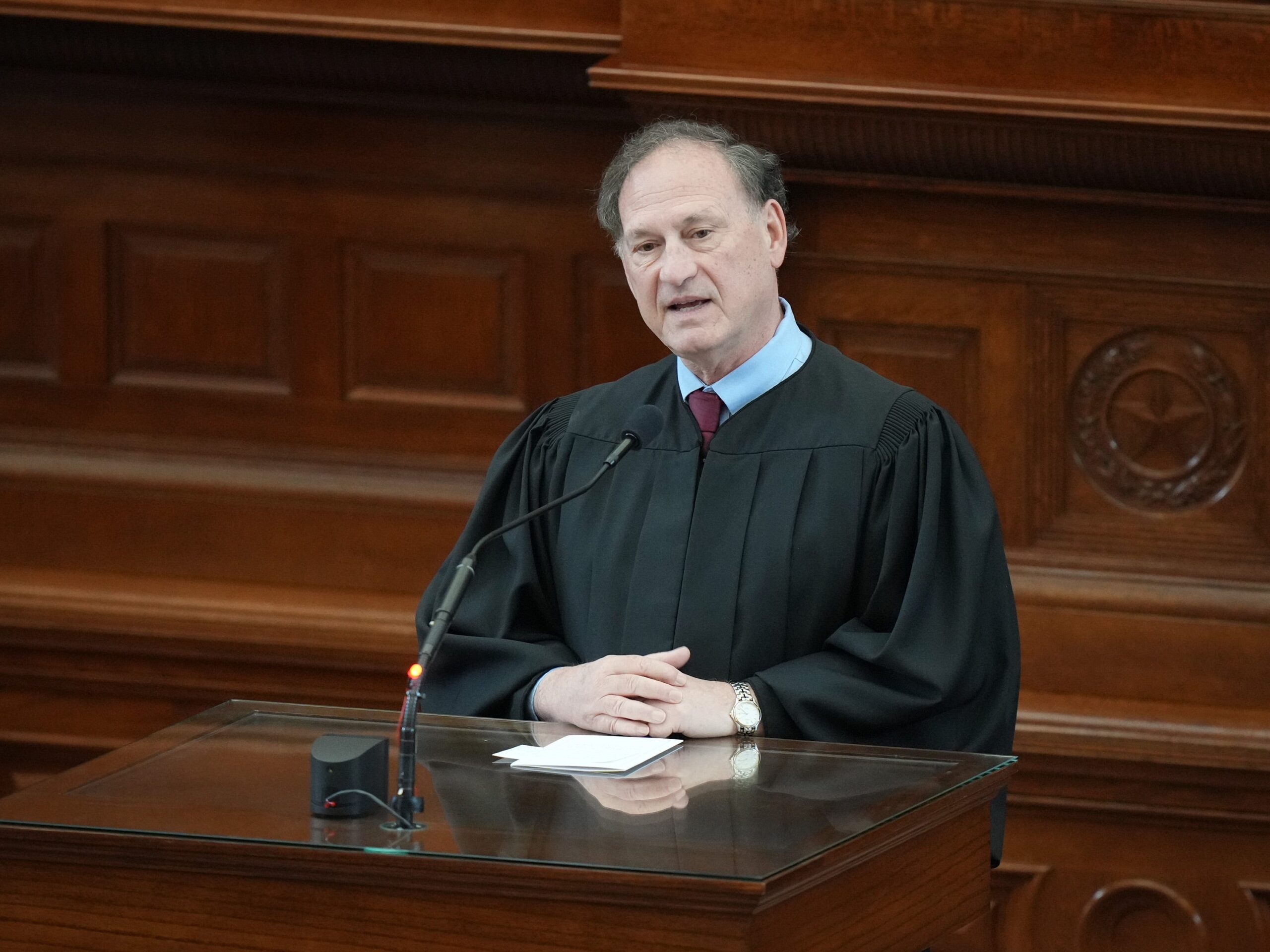
One week before the Supreme Court opens its 2026–27 term, Justice Samuel Alito has abruptly withdrawn from Suncor Energy Inc. v. County Commissioners of Boulder County, a consequential case that will determine whether state tort law can be used to hold oil and gas companies financially accountable for their role in accelerating climate change. The announcement came in a terse letter from the Court’s clerk, Scott Harris, offering no explanation beyond the bare statement that “Justice Alito has determined that he will not continue to participate.” That silence is doing a great deal of work.
The case carries nationwide implications. Boulder County’s lawsuit is one of dozens filed across the country by state and local governments seeking to make fossil fuel companies pay for climate-related damages — flooding, wildfires, infrastructure destruction — that scientists have directly linked to those companies’ emissions. A ruling favourable to the industry would effectively slam the courthouse door on that entire legal strategy. A ruling the other way could reshape how climate accountability is litigated in America for a generation.
Several things make Alito’s last-minute exit notable, and worth examining carefully.
The speculation around Alito’s motives is understandable, if ultimately unresolvable without disclosure. Whether this reflects a belated ethical instinct, pressure from Chief Justice John Roberts, or simple legal exposure to another embarrassing recusal fight, the outcome is the same: the Court will hear a landmark climate case with eight justices, and the public will receive no accounting of why.
What is not speculative is the underlying problem. Allowing justices to hold financial interests in industries that generate major litigation before the Court is indefensible — not merely as an appearance problem, but as a substantive one. The workers at the gas stations and grocery stores whose communities face the consequences of climate inaction do not get to exempt themselves from the rules because the rules were never written to constrain them. The justices should not either.