
A Public Health Crisis Decades in the Making
Pennsylvania has officially crossed a grim threshold. State health officials confirmed Monday that the number of measles cases in the commonwealth has surpassed 1,000 in 2026, making it the largest state-level outbreak in more than three decades. The Pennsylvania Department of Health reported 1,004 cases spanning 39 counties, accompanied by 198 hospitalizations and five deaths. That death toll alone — in a single state, in a single year — is a stark measure of how far the country has allowed a once-eliminated disease to resurge. The last comparable state outbreak dates to a multiyear crisis in New York City in the early 1990s, which ultimately infected more than 4,500 people.
The Pennsylvania figures do not exist in isolation. Nationally, the United States is enduring its worst measles year since 1991, with the CDC reporting nearly 3,900 cases across the country. Over the past two years, eight Americans have died from measles-associated causes — more than the combined reported deaths from the previous three decades. These are not abstract statistics. They represent a concrete, measurable collapse in the public health infrastructure that once made measles elimination possible, driven by declining vaccination rates, eroding healthcare access, and the unchecked spread of medical disinformation.
Lancaster County at the Epicenter
Within Pennsylvania, Lancaster County has emerged as the hardest-hit region, with 391 confirmed cases — nearly 40 percent of the state’s total. The outbreak began in April, west of Philadelphia, before spreading outward across dozens of counties. Lancaster County, in southeastern Pennsylvania, is also home to one of the five people who have died, an unvaccinated resident whose death adds to a pattern that health officials cannot afford to ignore. The county’s significant communities with historically lower vaccination rates have made it particularly vulnerable to rapid transmission.
Measles is among the most contagious pathogens known to medicine. It spreads through the air when an infected person breathes, coughs, or sneezes, and can linger on surfaces and in the air for up to two hours after an infected person has left a room. The CDC estimates that up to nine out of ten susceptible people will contract the virus upon exposure. That extraordinary transmissibility means that even modest gaps in community vaccination coverage can produce explosive outbreaks — exactly what Pennsylvania is now experiencing.
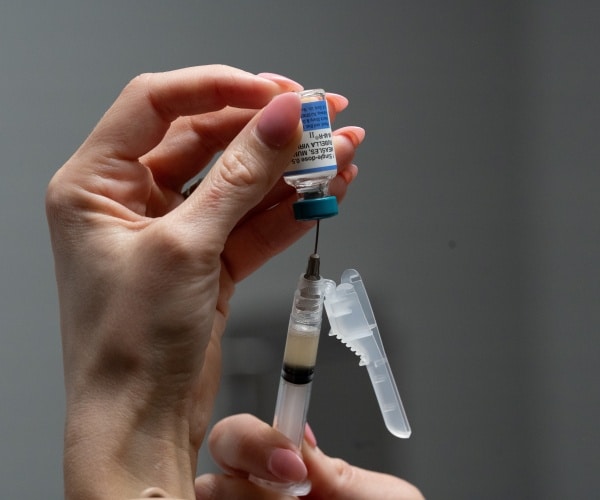
Critically, fewer than one percent of Pennsylvania’s cases occurred in individuals who were fully vaccinated with the MMR vaccine. The data could not be clearer: vaccination works, and the absence of vaccination kills. The MMR vaccine is safe, highly effective, and has been administered to hundreds of millions of people over decades. The current crisis is not a failure of the vaccine — it is a failure of vaccine uptake.
Who Is Dying — and Why the CDC’s Silence Matters
The five deaths recorded in Pennsylvania carry their own sobering specificity. Two occurred in unvaccinated adults — an 18-year-old and a 40-year-old. Two more were infants, too young to have received the MMR vaccine, who were therefore entirely dependent on the surrounding community’s immunity for their protection. The fifth was an unvaccinated Lancaster County resident. These deaths were preventable. Every single one of them.
What makes the federal response particularly troubling is the CDC’s handling of the death data. State officials announced in August that two unvaccinated Pennsylvania residents had died from measles. For weeks afterward, the CDC did not reflect those deaths on its public measles data dashboard, citing a need for additional information. The agency has only quietly begun to acknowledge measles-associated deaths in the state. At a moment when public trust in health institutions is already fragile, this kind of bureaucratic opacity — whatever its internal justification — does real damage. Transparent, timely data is not a luxury in a public health emergency; it is the foundation of an effective response.
A National Surge Rooted in Structural Failures
Pennsylvania’s outbreak is the most severe, but it is far from the only one. Ohio has recorded more than 200 cases this year, with some of its hardest-hit counties sharing a demographic feature with Lancaster County: significant Amish populations that have historically maintained lower vaccination rates. South Carolina recently reported 997 cases — just narrowly below Pennsylvania’s current count. Texas and Utah have also seen major outbreaks since the beginning of last year. The geographic spread of these surges reflects a systemic national problem, not a series of isolated local failures.
Health experts are consistent in their diagnosis: low vaccination rates are the primary driver of these outbreaks. But the reasons behind falling vaccination rates are themselves structural. Parental waivers have made it easier in many states to exempt children from school vaccination requirements. Healthcare access remains deeply uneven, particularly in rural and low-income communities where routine pediatric care is harder to obtain. And years of coordinated disinformation — amplified through social media platforms that have repeatedly failed to police health misinformation — have eroded confidence in vaccines among a meaningful segment of the population. These are not individual choices made in a vacuum; they are the predictable outcomes of policy failures and regulatory abdication.
The Threat to the United States’ Measles-Free Status
The consequences of this crisis could extend beyond the immediate death toll and hospitalization burden. In November, international health officials are scheduled to convene and determine whether the United States and Mexico have lost their measles-free status — a designation the U.S. achieved in 2000 after decades of sustained vaccination effort. Losing that status would be more than symbolic. It would signal to the world, and to American policymakers, that the country has allowed a preventable disease to re-establish endemic transmission within its borders.
Restoring measles elimination requires sustained political will, robust public health funding, and a willingness to push back firmly against the disinformation ecosystem that has made vaccine hesitancy a growing threat. States need the resources to conduct outreach in underserved communities, enforce school vaccination requirements with meaningful consequences for non-compliance, and counter misinformation with credible, accessible public communication. The tools to end this outbreak exist. What has been lacking is the institutional resolve — and in some cases, the political courage — to deploy them at the scale the crisis demands.