
What did scientists actually find, and why does it matter?
A landmark long-term study from Germany has uncovered something that challenges a widely held assumption in climate science: certain forest soils are not merely passive bystanders in the methane cycle — they are becoming more effective at removing methane from the atmosphere as temperatures rise and rainfall declines. Published in Agricultural and Forest Meteorology, the research draws on up to 24 years of continuous field measurements, making it one of the most comprehensive datasets of its kind in the world.
Methane is a greenhouse gas roughly 80 times more potent than carbon dioxide over a 20-year horizon, and its atmospheric concentration has surged in recent decades. Anything that reliably pulls methane out of the air — rather than releasing it — deserves serious scientific and policy attention. These findings suggest that well-managed forest soils in temperate regions could be doing exactly that, and doing it increasingly well under the very climatic conditions that scientists have long feared would undermine ecosystem services.
The study was led by Professor Martin Maier at the University of Göttingen’s Department of Crop Sciences, in collaboration with the Baden-Württemberg Forest Research Institute (FVA), whose long-running soil monitoring program provided the foundational data. Thirteen forest sites across southwestern Germany were tracked, and the results point to an average annual increase in methane absorption of approximately 3% per year — a trend that runs directly counter to conclusions drawn from several major international meta-analyses.
How did researchers measure something happening underground over two decades?
The methodology is worth understanding, because the reliability of the findings depends entirely on it. The FVA’s monitoring program employed two complementary approaches that, taken together, provide a robust picture of what is happening beneath the forest floor.
The first technique involved soil gas profiles — thin tubes installed at varying depths beneath the ground surface through which researchers extracted air samples every two weeks. Laboratory analysis of those samples revealed the chemical composition of gases trapped within the soil at different layers, allowing scientists to track methane concentrations across years and decades with unusual precision.
The second technique served as an independent cross-check: airtight chambers placed directly on the soil surface, inside which researchers monitored how gas concentrations shifted over time. If methane levels inside the chamber fell, that indicated the soil beneath was actively absorbing it; the rate of decline allowed scientists to calculate exactly how much was being removed. Crucially, both methods told the same story, reinforcing the credibility of the trend.
The sheer duration of the dataset is what sets this study apart from most environmental research. Short-term measurements — even well-designed ones — can be swamped by year-to-year variability in weather, making it nearly impossible to detect gradual directional trends. Twenty-four years of biweekly sampling eliminates that problem in a way that a two- or three-year study simply cannot.
Why would warmer, drier conditions help soils absorb more methane?
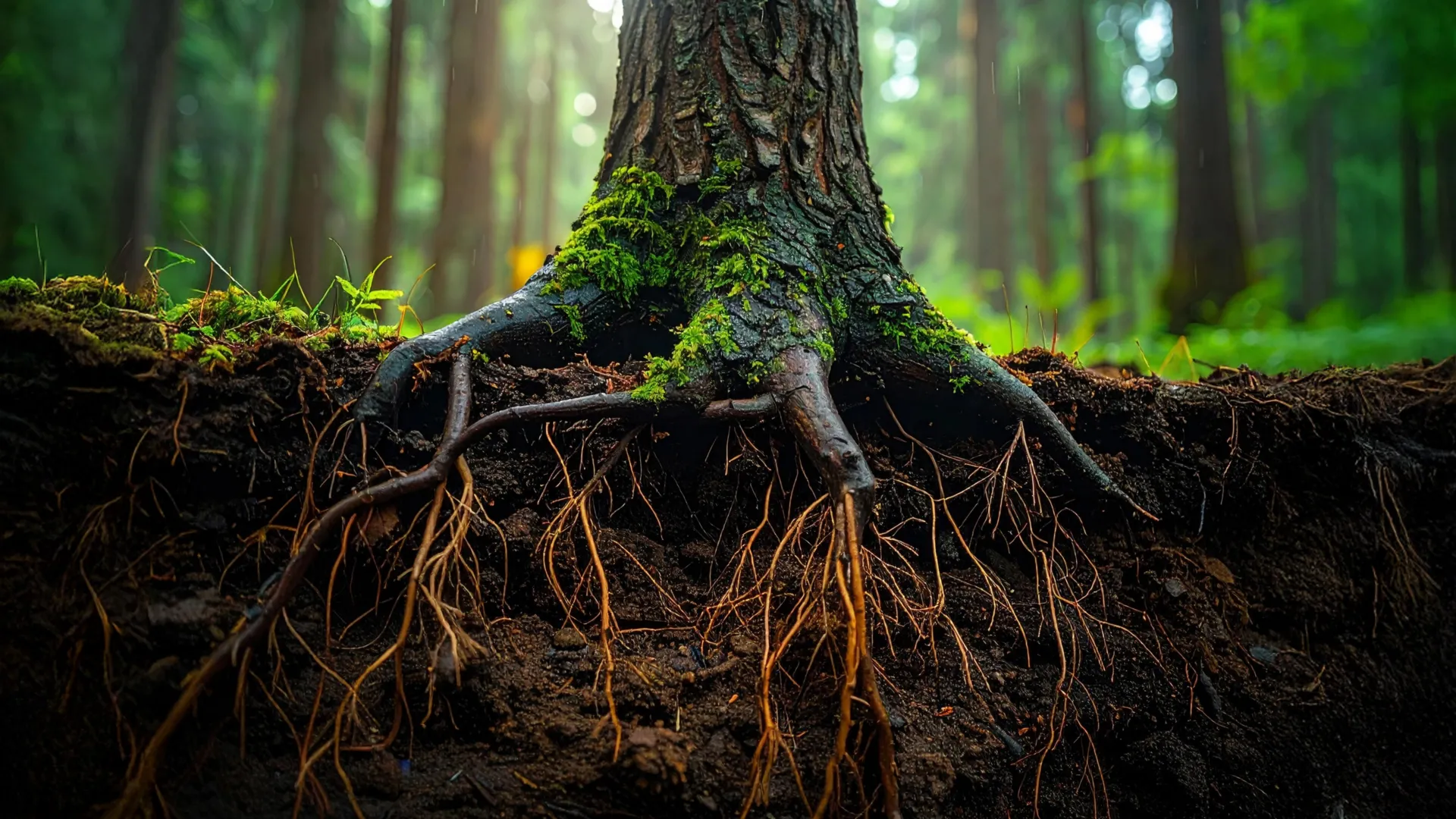
The mechanism is rooted in the basic physics of how gases move through soil, and it is more intuitive than it might first appear. Soil is not a solid block — it is a porous matrix of particles, organic matter, water, and air. The ratio of water to air in those pores determines how easily atmospheric gases, including methane, can penetrate downward from the surface.
When rainfall is heavy and soil becomes saturated, water occupies most of the available pore space, effectively blocking the pathways through which methane would otherwise travel deeper into the ground. Drier soil, by contrast, contains a greater proportion of air-filled pores, creating open channels through which methane can diffuse more readily toward the microbial communities that consume it.
Those microorganisms — known as methanotrophs — use methane as an energy source, oxidising it and thereby removing it from the atmosphere. Warmer temperatures modestly accelerate their metabolic activity, meaning they process methane somewhat faster when conditions heat up. The combination of improved gas diffusion through drier soil and slightly enhanced microbial metabolism under warmer temperatures produces the upward trend in absorption that the researchers documented across all 13 sites.
Professor Maier was direct about what the long-term data revealed: “Climate change does not necessarily have a negative impact on how much methane forest soils absorb. While the largest study to date from the US found a decline in methane uptake of up to 80 percent due to increasing rainfall, our significantly more comprehensive field study in south-western Germany found the opposite.” The regional contrast is stark, and it carries significant implications for how scientists and policymakers model forest contributions to greenhouse gas budgets.
Does this mean climate change is good for forests?
No — and the researchers are careful to say so explicitly. This finding is narrow and specific: it concerns one pathway by which forest soils interact with one greenhouse gas under one set of regional climatic conditions. It does not overturn the overwhelming body of evidence showing that climate change is destabilising forest ecosystems through drought stress, wildfire, bark beetle infestations, and shifting species ranges.
What the study does demonstrate is that the relationship between climate change and ecosystem function is more geographically variable and more mechanistically complex than broad international meta-analyses can capture. Those meta-analyses combine data from forests in vastly different climatic zones — tropical, boreal, temperate — and under widely varying precipitation regimes. Averaging across such diversity can obscure regional patterns that are real, significant, and policy-relevant.
In southwestern Germany, where rainfall trends are moving in a particular direction and soil types share certain characteristics, the net effect on methane absorption has been positive over the study period. In wetter regions experiencing increased precipitation — as documented in parts of the United States — the opposite appears to be true. Neither finding cancels the other out; both are true in their respective contexts, and both demand attention.
What are the policy and scientific implications?
The most immediate implication is methodological: long-term monitoring programs are not a luxury. They are an irreplaceable tool for understanding how ecosystems respond to gradual environmental change, and they deserve sustained public funding. As Professor Maier put it, “Our results make it clear that taking a series of measurements over many years and running monitoring programs are indispensable for assessing the real effects of climate change.” That is a call for the kind of institutional commitment — from governments, research councils, and environmental agencies — that produces knowledge over decades rather than grant cycles.
For climate modellers, the findings argue for greater regional granularity in how forest soil methane fluxes are represented. National and global greenhouse gas inventories that treat temperate forest soils as uniform sinks or sources may be systematically over- or underestimating their contributions, depending on local precipitation trends. Correcting that could matter for the accuracy of net-zero accounting frameworks that nations are legally committed to under the Paris Agreement.
There is also a broader message here about the complexity of nature-based climate solutions. Forests are frequently cited — correctly — as critical carbon sinks that must be protected and expanded. This research adds a further dimension: healthy, intact forest soils in temperate zones may also be functioning as increasingly effective methane sinks, a service that would be lost if those forests were cleared, degraded, or allowed to dry beyond the point of ecological function. That is one more reason, grounded in hard data rather than sentiment, to take forest protection seriously as environmental policy.