
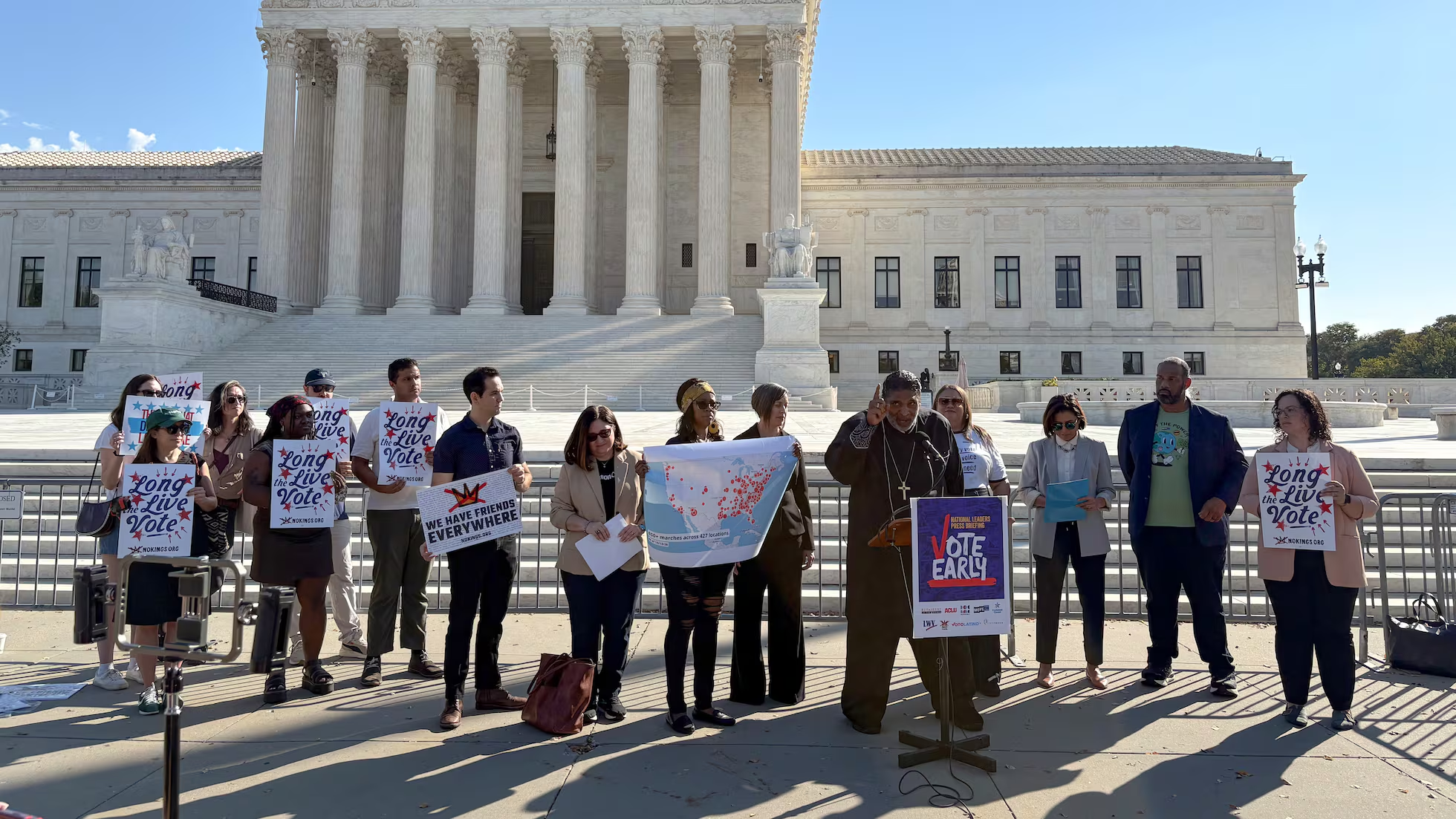
On a Saturday morning outside Mar-a-Lago, a protester who gave her name only as Rebecca stood in the Florida heat and said she wanted so many Americans to cast ballots that the coming midterm election would become, in her words, “too big to rig.” She was one of thousands gathered at more than 3,000 events held nationwide — marches, cookouts, block parties, neighborhood gatherings — all organized under the banner of the No Kings movement, which has pivoted sharply from mass street protest toward a disciplined, ground-level campaign to bank early votes ahead of the November 3 midterms. The shift marks a significant strategic evolution for a coalition that has spent months channeling public anger at Donald Trump’s presidency into something more durable than a demonstration.
The “Vote Early” day of action drew endorsements from some of the right’s most prominent Trump critics, underscoring how the anti-Trump coalition has grown beyond its progressive and liberal base into territory that makes Republican strategists uncomfortable. Former Illinois Representative Adam Kinzinger and longtime conservative commentator Bill Kristol both lent their voices to the effort, signaling that the movement’s appeal now spans a wider ideological range than its origins might suggest — though it remains, at its core, a coalition united by alarm at what it sees as an authoritarian drift in American governance.
Indivisible co-founder Ezra Levin was direct about what Saturday represented. “The first three No Kings were designed to send a message,” he told NPR. “We’re done sending a message.” Levin said the coalition’s explicit goal is to drive the largest midterm early vote in American history, a target that would require not just enthusiasm but infrastructure — and No Kings is building it. Volunteers at Saturday’s events helped participants confirm their voter registration, plan exactly when and how they would cast their ballots, and understand their legal rights at polling places. Organizers are also actively recruiting poll watchers, a decision Levin connected directly to fears that federal immigration enforcement agents could show up at polling locations and to the Trump administration’s sustained efforts to restrict access to mail-in voting.
Those concerns are not abstract. The Trump administration has taken concrete steps to complicate mail-in voting, and the prospect of immigration agents near polling places raises documented chilling effects on voter participation in immigrant communities — communities that, in many battleground districts, could determine the outcome of tight races. The decision to recruit poll watchers is a recognition that the right to vote means little if the act of voting feels dangerous or uncertain.
Bill Kristol, writing in The Bulwark, framed Saturday’s events in explicitly historical terms, arguing that No Kings had moved before public opinion caught up. “Before it was fashionable, No Kings was there,” he wrote. He pointed to a striking set of numbers to make the case: when the first No Kings protest took place in June 2025, Trump held 44 percent approval against 52 percent disapproval in the New York Times polling average. By Saturday, those figures had shifted dramatically — Trump sat at just 37 percent approval and 60 percent disapproval, a collapse that Kristol attributed in part to the sustained pressure the movement has applied. On X, he drew a pointed contrast between the day’s two Americas: millions gathering at local events to defend democratic norms, and Trump addressing a smaller crowd of loyalists in Kentucky before retreating to what Kristol called a “Candlelight Dinner” at Mar-a-Lago with, in his words, “MAGA fat cats seeking favor and favors from the wannabe king.”
Kinzinger, for his part, declined to name Trump directly but left no ambiguity about his target. In a video posted to his Substack on Saturday, he described “a man in a gold-plated palace” and argued that the political landscape is shifting beneath everyone’s feet. “Americans are waking up and the ground under this election is moving. Everyone can feel it,” he said, before adding a warning against complacency that felt carefully chosen: “But hope isn’t victory. Nothing is won until the last vote is counted.” It was the kind of message that No Kings organizers themselves might have scripted — a reminder that the energy visible in 3,000 communities across the country must translate into marked ballots, not just raised fists.
What Saturday demonstrated, more than anything, is that the No Kings coalition understands something that protest movements often learn too late: moral clarity is necessary but not sufficient. The infrastructure of democracy — registration drives, early-vote banking, poll watching, voter education — is unglamorous work, but it is precisely where elections are won or lost. With Trump’s approval rating at its lowest recorded point and a midterm electorate that historically punishes the party in power, the coalition is betting that this moment is different, and that the difference will be measured not in crowd size but in ballots cast before the polls even close on November 3.