
Boston approved it. The permits came through faster than anyone expected. The city needed the housing desperately. And then, according to a lawsuit filed in Suffolk Superior Court, the investment partners who owned the land decided they’d rather blow up the deal than honor the price they’d agreed to.
The story of 75 Morrissey Boulevard — a 754-unit residential development that would have been one of the largest multifamily housing projects in Boston’s recent history — is now unfolding in court. Developer Copper Mill has sued its own partners, POB Capital and Pactolus Private Wealth Management, alleging fraud, civil conspiracy, and a deliberate scheme to sabotage a project they had collectively agreed to build.
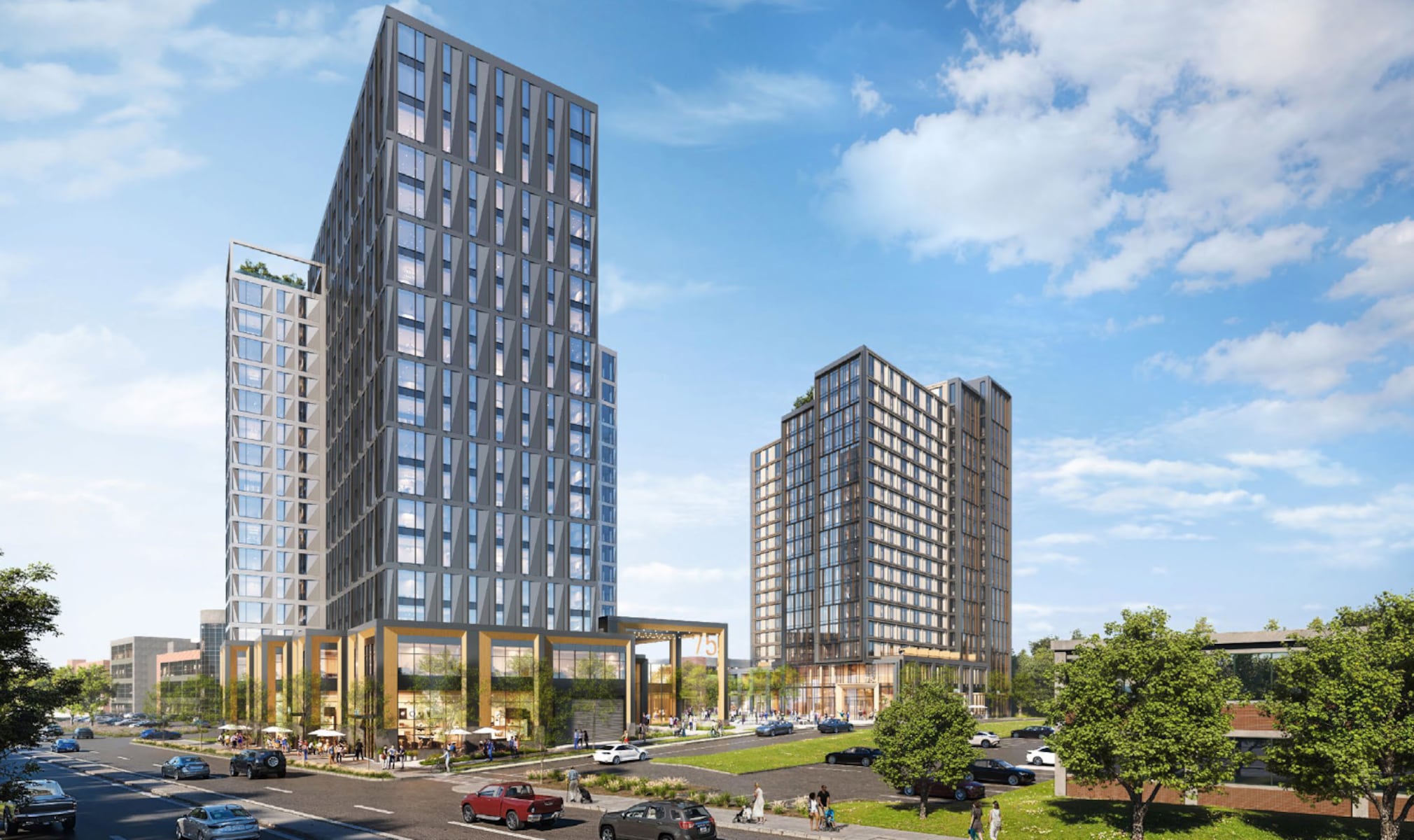
The project matters. Boston’s housing market remains punishingly expensive, and large-scale residential developments are rare. This one, planned for a 2.2-acre former WLVI-TV station site on Dorchester’s Morrissey Boulevard, called for two towers totaling 613,320 square feet and 754 apartments. It had city approval. It had a developer ready to build. What it apparently didn’t have, according to the lawsuit, was investment partners willing to stick to their word once they realized the land had become more valuable than they’d sold it for.
Chicago-based POB Capital had owned the property since 2017. In 2024, Copper Mill agreed to buy it for $67.5 million, with closing scheduled for June 30, 2026. That agreement came after a previous developer, Centre Court Partners, had failed to advance the project since beginning the permitting process in 2019. Copper Mill took over the permitting lead in late 2024 and moved quickly — filing a proposal with the Boston Planning and Development Agency on February 28, 2025, and winning approval on August 14, 2025.
That speed, the lawsuit alleges, is precisely what triggered the problem.
When Copper Mill filed its 754-unit proposal with the city, POB Capital Managing Principal Richard D. Holly Jr. allegedly told Copper Mill CEO Andrew Flynn: “Wow, if you guys actually secure permits for 754 residential units at the Property, Harter and I are going to look like morons” for agreeing to sell at $67.5 million. The comment, quoted in the complaint, captures the moment the deal began to unravel — not because of any failure on Copper Mill’s part, but because success had made the original price look like a bargain POB no longer wanted to honor.
On September 4, 2025, the parties formalized a joint venture: POB Capital and Virginia-based Pactolus held a combined 64.35 percent stake; Copper Mill held 35.65 percent. But Copper Mill alleges that this restructuring was itself part of the scheme. Once POB became a formal partner rather than a seller, the complaint charges, it began deliberately stalling on financing — engaging a broker based in Ohio with no knowledge of the Boston real-estate market who never produced any capital — in order to run out the clock on the purchase-and-sale agreement, regain control of the parcel, and sell it to another developer at a higher price.
One POB Capital executive is quoted in the filings as allegedly saying: “There is no way that I am buying my own fucking dirt.” That line, if accurate, tells you everything about what allegedly happened here: investors who agreed to a deal, watched a builder do the hard regulatory work, and then decided the rules no longer applied to them.
Copper Mill filed suit on October 15 in Suffolk Superior Court and also in Massachusetts Land Court, seeking a court order compelling POB Capital to honor the original $67.5 million sale price and to pay damages for the alleged effort to derail the transaction after benefiting from Copper Mill’s permitting work and city relationships. The complaint describes the defendants’ conduct as a calculated scheme to “recover the property and prevent Copper Mill from taking title” — retaining the planning approval and preliminary work Copper Mill had already paid for, while cutting the builder out entirely.
POB Capital, based in Chicago, did not respond to requests for comment. A representative for Pactolus declined to comment.
What makes this dispute particularly consequential is the backdrop against which it’s playing out. Housing costs in Greater Boston remain among the highest in the country. Large residential developments — the kind that can meaningfully move the needle on supply — are difficult to approve, slow to permit, and expensive to build. This project had cleared the hardest hurdles. It was approved. It was ready. The obstacle now is not regulation or neighborhood opposition or construction costs. It is, allegedly, the greed of the financial partners who stood to profit most.
Andrew Flynn, Copper Mill’s chief executive, said in a statement: “We have worked closely with the city of Boston and neighborhood stakeholders to earn their support and approval for the development of 750 housing units — housing that is needed now, without further delay. We continue to believe strongly in the vision for this site and its importance to Boston residents.”
The litigation now threatens to delay the project indefinitely — which means 754 apartments that Boston families could have occupied may sit on paper for years while lawyers argue in court over who gets to profit from land that was always meant to become housing.