
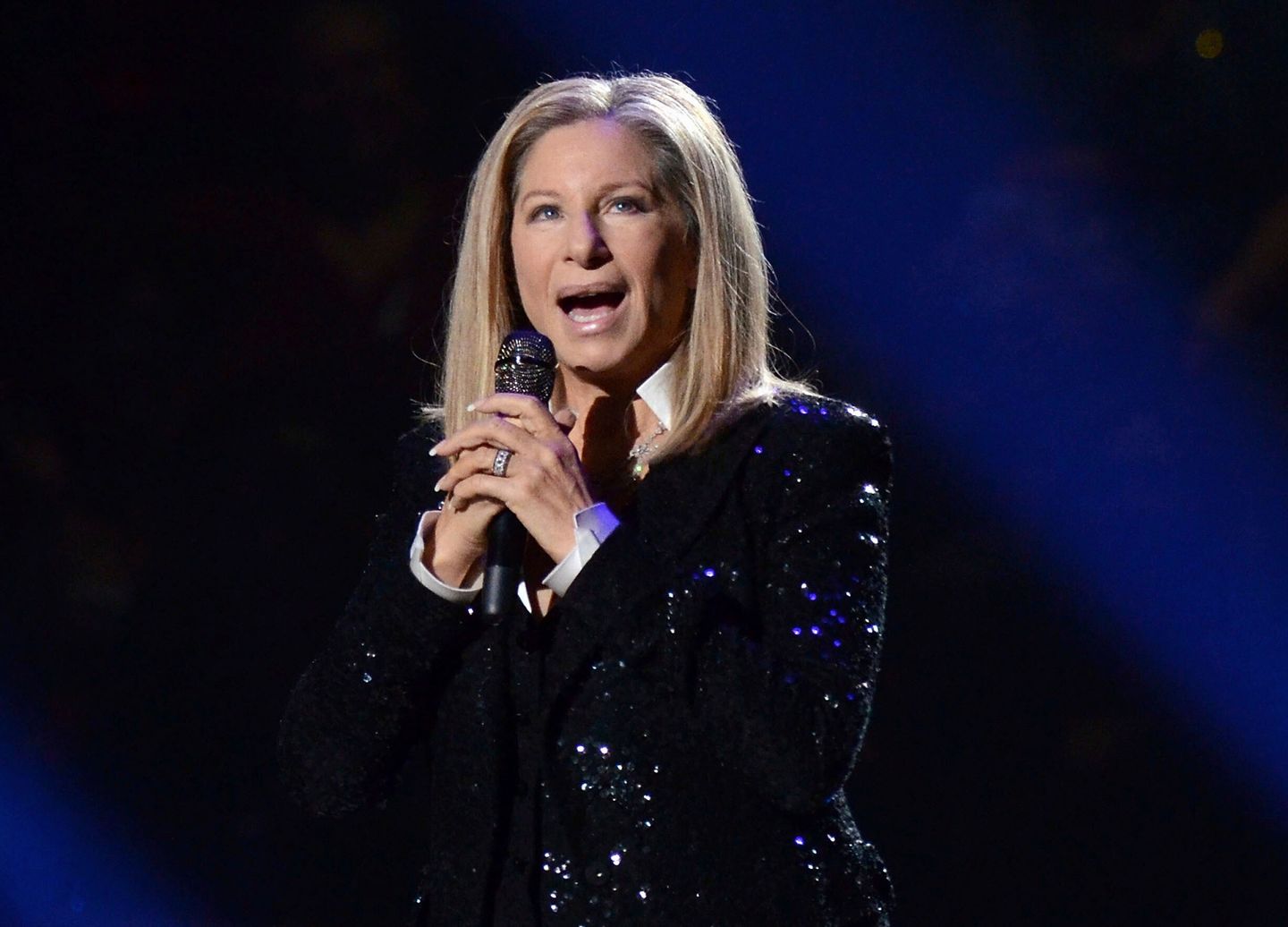
Barbra Streisand has been sending emails again. At 84, the singer and longtime Democratic fundraiser is still one of the party’s most reliable celebrity voices — and with less than two weeks until the midterm elections, the Democratic Congressional Campaign Committee is leaning on that voice hard. Her name landed in inboxes across the country this week, attached to a mass DCCC pitch warning that Republican control of the House represents a direct threat to constitutional governance. It is a familiar message, delivered with characteristic urgency, and it arrives at a moment when the arithmetic of power in Washington could not be tighter.
The midterm landscape is stark in its simplicity. Democrats need to flip a net of just three seats to capture a 218-to-217 majority in the House. That razor-thin margin has animated a wave of celebrity-backed fundraising appeals in recent weeks, drawing in figures from entertainment, science, and documentary filmmaking — each lending their public standing to a Democratic Party that is framing this election as a referendum on executive accountability and congressional independence.
A Chorus of Familiar Voices
The DCCC’s email strategy reflects something broader than star power for its own sake. Streisand’s message to supporters was direct and personal: “As someone fortunate to have a platform larger than most, I believe it is both my right and my duty to speak up when I see injustice in the world.” She went further, describing a House Republican majority as an instrument of presidential will rather than an independent legislative body. “We can’t have a president who doesn’t respect our constitution and relies on his GOP puppets in the House majority to carry out his every whim,” she wrote — language that is blunt even by the standards of Democratic fundraising copy, and that reflects a genuine political conviction she has held and expressed publicly for decades.
Bill Nye, the science educator and television personality whose public profile has long been intertwined with evidence-based policy advocacy, also signed a DCCC email in recent weeks. His framing was characteristically broad but pointed. “The future direction of our country is at a crucial crossroads,” he wrote, arguing that “electing Democrats is the best way to fight back against the administration.” Nye’s involvement carries particular resonance given the current administration’s posture toward science-based regulation — on climate, on public health, on environmental standards — and his willingness to attach his name to partisan electoral messaging signals how high the stakes feel to those who have spent careers defending empirical governance.
Ken Burns and the Weight of History
Perhaps the most substantively interesting voice in this celebrity coalition belongs to Ken Burns, the documentary filmmaker whose decades of work excavating American history have given him a particular kind of moral authority — the authority of someone who has studied what happens when democracies fail to hold power accountable. Burns has signed on to nearly 20 fundraising emails for Democratic Representative Maggie Goodlander’s reelection campaign in New Hampshire’s second congressional district, a level of engagement that goes well beyond a single high-profile endorsement.
“I’ve devoted my life to telling the American story — studying the moments when this country faced genuine crossroads, when the path chosen determined not just a generation, but the character of the nation itself,” Burns wrote in one of Goodlander’s campaign emails. It is the kind of statement that lands differently coming from someone who has spent his career documenting the Civil War, the New Deal, and the civil rights movement than it would from a more conventional political surrogate. Burns is not trafficking in abstraction; he is applying a historian’s framework to a specific electoral contest in a specific congressional district, arguing that Goodlander’s seat is load-bearing for any meaningful check on executive power. “If Republicans succeed in unseating Maggie from NH-2, retaking the House becomes virtually impossible — and any chance of accountability dies with it,” he wrote.
The Stakes Beneath the Celebrity
“West Wing” actor Bradley Whitford has also lent his name to the effort, joining a roster of recognizable faces whose involvement reflects the Democratic Party’s longstanding and sometimes complicated relationship with celebrity advocacy. The strategy has real limits — celebrity endorsements can alienate as easily as they persuade, and the Republican Party has spent years cultivating a counter-narrative in which Hollywood support is itself evidence of Democratic elitism. But in a cycle where the House majority turns on three seats, the DCCC is clearly calculating that the fundraising value of a Streisand email list outweighs the political risk.
What connects these figures — the singer, the scientist, the filmmaker, the actor — is less a unified ideological program than a shared alarm about the direction of the country under unified Republican government. The emails are fundraising vehicles, yes, but they also function as a kind of cultural testimony: people who have built public careers around storytelling, evidence, and accountability arguing that this particular election carries unusual weight. Whether that argument reaches beyond the Democratic base it is designed to energize is the open question that November will answer. For now, the emails keep arriving, each one carrying a famous name and the same urgent message — that three seats stand between the current arrangement of power and something different.