
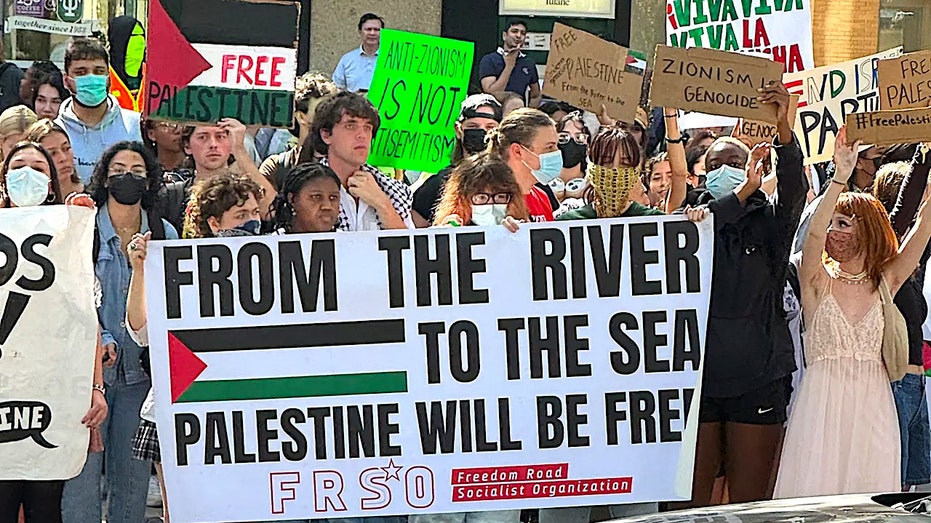
A Democratic official is avoiding her own party’s convention — and her reasons demand serious attention.
Michigan Attorney General Dana Nessel, the first Jewish person ever elected to that office in the state, has announced she will not attend the Michigan Democratic Party’s nominating convention on August 29. Her reason is stark: she fears for her safety and expects to be harassed by members of her own party. This is not a fringe complaint from a marginal figure. Nessel is a statewide elected official, and her decision exposes a real and growing problem that Democrats cannot afford to dismiss or deflect.
Nessel made the announcement during a roundtable with Jewish leaders and community members last week, speaking with unusual candor about what she has experienced firsthand. Her words deserve to be read in full, not summarized away.
What exactly did Nessel say?
“I feel like my presence isn’t going to be welcome,” Nessel said, according to the Michigan Advance. “I don’t want to get chased around. I don’t want to get harassed. I don’t want to get yelled and screamed at. I don’t want to get booed off the stage, irrespective of what I’m saying. And I believe that if I go, that is what will happen because it’s been happening to me.”
That last phrase matters enormously: “because it’s been happening to me.” This is not hypothetical anxiety. Nessel says she has already experienced this treatment from within her own party’s activist base, and she has reported those concerns to party leadership — concerns she says have been ignored.
Is this an isolated incident, or part of a broader pattern?
The evidence points clearly to a pattern, not an anomaly.
Former Michigan Senate candidate Mallory McMorrow — a progressive Democrat who gained national recognition for her impassioned floor speech against anti-LGBTQ+ legislation — confirmed during a primary debate in May that antisemitism within the party is a genuine and growing problem. McMorrow described a specific, disturbing incident: “At the Democratic convention, an attendee yelled an antisemitic slur at my husband, who is Jewish and was walking with my 5-year-old daughter. That is terrifying.” McMorrow subsequently suspended her Senate campaign.
Nessel herself was revealed in 2023 to have been the target of a plot by a heavily armed defendant allegedly planning attacks against Jewish elected officials following the outbreak of Israel’s war in Gaza. She has also faced direct political conflict with Representative Rashida Tlaib (D-MI) after bringing charges against anti-Israel protesters at the University of Michigan — a decision that drew fierce criticism from the party’s activist wing.
Jessica Alexander, chair of the Michigan Democratic Jewish Caucus and a professor at Eastern Michigan University, told Fox News Digital that she respects Nessel’s decision. While Alexander does not believe the Democratic Party as an institution is antisemitic, she acknowledged something important: anti-AIPAC rhetoric circulating through many current campaigns is functioning as a vehicle for older, uglier prejudices. “The anti-AIPAC rhetoric circling many current campaigns is a dog whistle for classic anti-Jewish tropes such as ‘Jews hold the power, they have the money, rising gas prices are their fault,'” Alexander said. Because Alexander does not hold elected office and faces less public scrutiny, she plans to attend the convention herself, expecting a strong turnout from her caucus.
What is the difference between legitimate political dissent and antisemitism?
This distinction is critical — and collapsing it in either direction causes real harm.
Criticizing the Israeli government’s military conduct in Gaza, opposing specific lobbying organizations, or debating U.S. foreign policy toward Israel are all legitimate political positions that fall well within the bounds of democratic discourse. Progressives and liberals have long debated these questions, and that debate should continue without suppression.
What is not legitimate — and what Nessel and others are describing — is something different: the deployment of rhetoric that recycles centuries-old tropes about Jewish wealth, power, and conspiracy. When political grievances are expressed through those frames, the target is not a government or a policy. The target is Jewish people. That distinction is not subtle, and refusing to name it clearly is its own form of failure.
How has the Michigan Democratic Party responded?
A spokesperson for the Michigan Democratic Party told the Michigan Advance that the party rejects “antisemitism, Islamophobia, and all forms of hateful conduct” and that it is “ensuring party-hosted events are safe and secure environments for all attendees” at the August 29 convention.
That statement is necessary but insufficient. Boilerplate condemnations of hatred in the abstract do not address the specific, documented experiences of elected officials like Nessel or the incidents described by McMorrow. A party that takes antisemitism seriously does not wait until its own attorney general feels unsafe enough to skip its flagship state event.
What are the political consequences if this goes unaddressed?
The downstream consequences are already visible. Some Jewish Michigan Democrats have reportedly indicated they would vote for Republican Senate candidate Mike Rogers over progressive candidate Abdul El-Sayed if El-Sayed wins the Democratic primary — a signal of how severely this issue is straining party cohesion.
Nessel put it plainly: society must be able to sustain “intelligent discourse and debate” without threats. That is a low bar. The fact that a sitting state attorney general cannot clear it within her own party’s convention is not a talking point — it is a failure that the Democratic Party must confront honestly, with accountability rather than press releases.