
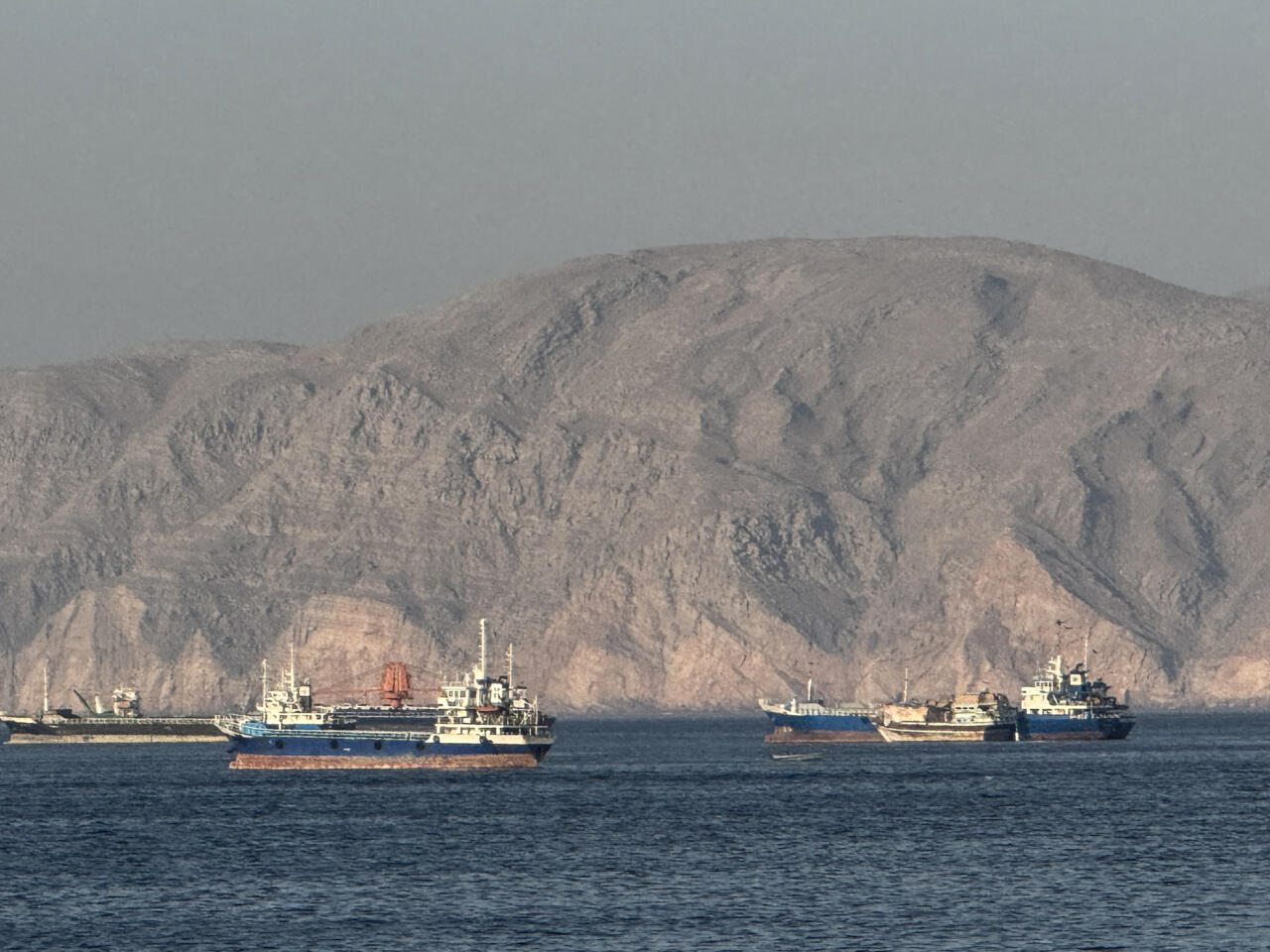
The tankers keep moving — for now. But for how long, and under whose rules, is precisely what diplomats in Tehran, Muscat, and Washington have been racing to settle.
Iran and Oman are on the verge of finalizing a shipping arrangement for the Strait of Hormuz, one of the world’s most strategically critical waterways, through which roughly a fifth of global oil supply passes. An Iranian government official close to the negotiations told reporters that commercial vessels would face no fees or tolls under the interim deal — a significant concession that clears a major obstacle to resuming broader diplomatic talks between Tehran and Washington.
The arrangement, as described by the official — who requested anonymity given the sensitivity of the negotiations — covers all inbound traffic through Iranian territorial waters and outbound traffic along a route closer to Oman. Its immediate purpose is procedural but consequential: to restart the clock on a 60-day negotiating cycle anchored to the ceasefire and memorandum of understanding that the U.S. and Iran reached in mid-June, and which has since stalled under mutual recriminations.
Iranian Deputy Foreign Minister Kazem Gharibabadi told state broadcaster IRNA on Wednesday evening that the United States was ready to “return to commitments” — language that strongly implies Washington had been falling short of its obligations under the June 17 agreement. That memorandum required Tehran to permit commercial vessels to transit the strait without charge for 60 days; in exchange, the U.S. committed to lifting its naval blockade of Iranian ships, among other undertakings. Gharibabadi declined to specify which commitments he had in mind, but the framing was pointed: Iran was signaling that it had been the aggrieved party, not the obstructionist one.
The diplomatic choreography around the deal has been notably contorted. Gharibabadi simultaneously insisted that “no negotiations with the U.S. have taken place during this period,” describing the current channel as an Iran-Oman “understanding” rather than a bilateral U.S.-Iran agreement. That formulation allows both governments to manage their domestic political optics — Tehran avoids the appearance of direct capitulation to Washington; the Trump administration can claim forward momentum without acknowledging the limits of its leverage.
President Trump had accused Iranian leaders on Monday of being “duplicitous” about peace talks, asserting they were underway “whether Iran wants to admit it or not.” The White House did not respond to requests for comment on Gharibabadi’s subsequent statements. Treasury Secretary Scott Bessent told CNBC that a deal to reopen the waterway could be reached by Wednesday. Axios reported Tuesday that the U.S., Iran, and Oman were closing in on an interim agreement, with Washington aiming for a Wednesday announcement — a deadline that appears to have slipped by at least a day.
The deal has reportedly been endorsed by the members of the Gulf Cooperation Council, according to a separate Gulf government official, lending it a degree of regional legitimacy that neither Washington nor Tehran could manufacture alone. The United Nations’ International Maritime Organization and the U.S. are also expected to be involved in any formal announcement, signaling that the arrangement is being structured to carry institutional weight rather than remain a bilateral handshake.
Iran’s Foreign Ministry spokesperson, Esmail Bagahei, had earlier signaled that the deal was close, provided that “some third parties do not obstruct work in this regard” — a carefully vague warning that left open the question of which actors Tehran views as potential spoilers. That ambiguity sits uncomfortably alongside a separate report from the U.K. Maritime Trade Operations Centre, which said Thursday it had received reports of explosions near tankers off Yemen and Oman on Wednesday. The incident underscores just how fragile the security environment remains in the waters surrounding the strait, and how much depends on whether a diplomatic framework can be made durable rather than merely declaratory.
Iran had also demanded changes to the shipping routes themselves, with Gharibabadi stating that the “old routes no longer meet the current difficult conditions that have jeopardized the national security of the Islamic Republic of Iran.” U.S. Central Command, meanwhile, insisted in a post on X that the southern route through the strait — which passes through Omani rather than Iranian territorial waters — “remains free and open for all commercial vessels.” The two statements describe the same geography through entirely different lenses of sovereignty and threat, which is, in miniature, the entire problem these negotiations are trying to solve.
What hangs in the balance is not abstract. The Strait of Hormuz is the jugular of the global energy system. A sustained disruption would spike oil prices, hammer working families disproportionately, and destabilize economies that have little margin for another shock. The diplomacy unfolding between Tehran, Muscat, and Washington — however awkward its choreography — is, at its core, an attempt to keep that from happening. Whether the commitments made on paper will be honored in practice is the question that neither a press statement nor a memorandum of understanding can fully answer.