
A Senator’s Stark Language Reflects a Broader Strategic Drift
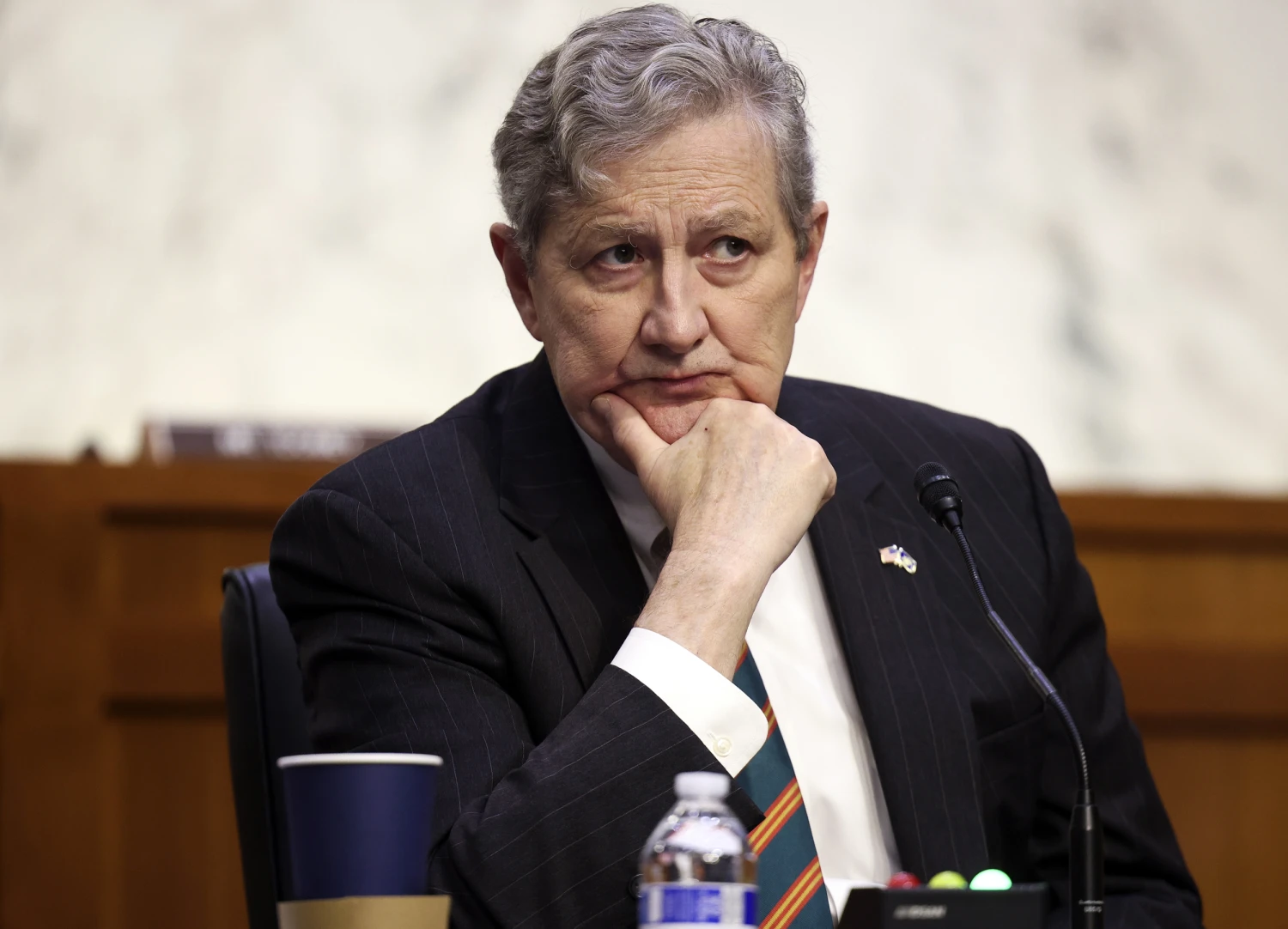
Senator John Kennedy (R-La.) used a televised appearance Sunday to signal that President Trump is committed to the ongoing military campaign against Iran — and to deploy some of the most inflammatory rhetoric yet heard from a sitting U.S. senator about a conflict that has now stretched across nearly two weeks of continuous strikes on Iranian infrastructure.
Speaking on CBS News’s Face the Nation, Kennedy endorsed an aggressive posture: continuing a naval blockade, bombing deeply buried Iranian facilities, and tightening sanctions on Iranian oil sales. His comments came one day after the U.S. paused its campaign following 13 consecutive days of strikes — a pause the administration has not yet explained publicly.
The remarks raise urgent questions about the war’s objectives, its legal basis, and who in Washington is actually setting the terms of this conflict.
Key Takeaways
Kennedy’s Sunday appearance contained several statements that deserve close scrutiny, both for what they reveal about administration thinking and for what they obscure about the war’s direction.
Both the U.S. and Iran have left the door open to continued diplomatic talks, though the administration has actively downplayed that channel — a choice that sits uncomfortably alongside Kennedy’s own admission that the military pressure strategy may not work.
The Messaging Problem Kennedy Can’t Solve
Kennedy’s call for cabinet officials to explain the war publicly is, in effect, a concession that the administration has failed basic transparency. He praised Trump’s general approach while acknowledging the president “exists loudly” and “is not always disciplined in his messaging” — a polite formulation for an information vacuum that has left the public, and apparently some senators, without a clear account of U.S. war aims.
Asking Hegseth and Ratcliffe — officials who have themselves been subjects of serious credibility concerns — to fill that vacuum is not a communications strategy; it is an acknowledgment that one is needed.
Sanders, Democrats, and the Withdrawal Debate
Kennedy dismissed Senator Bernie Sanders (I-Vt.) and Democrats calling for U.S. withdrawal with a folksy metaphor about going to bed with the cat inside. The condescension is notable: Sanders and his allies are raising substantive questions about congressional authorization, international law, and the human cost of sustained bombardment — questions that deserve engagement, not caricature.
The framing of “cut and run” versus “stay the course” is a false binary that has historically served to extend military engagements well past the point of strategic coherence. Progressives who oppose this war are not naive; they are applying a consistent standard that military force requires clear legal authority, defined objectives, and proportionate means — none of which have been publicly established here.
What Comes Next
Cassidy’s call for a congressional conversation about the war’s future is the most responsible position to emerge from Sunday’s news cycle. Whether the Republican-controlled Congress has the institutional will to assert itself — demanding authorization votes, public hearings, and accountability from the executive branch — remains the central unanswered question.
Without that accountability, the war’s trajectory will be set by a president who, by his own senator’s account, favors daily strikes as a signaling tool and communicates impulsively — a combination that carries serious risk for the region, for U.S. credibility, and for the Americans absorbing the economic costs at home.