
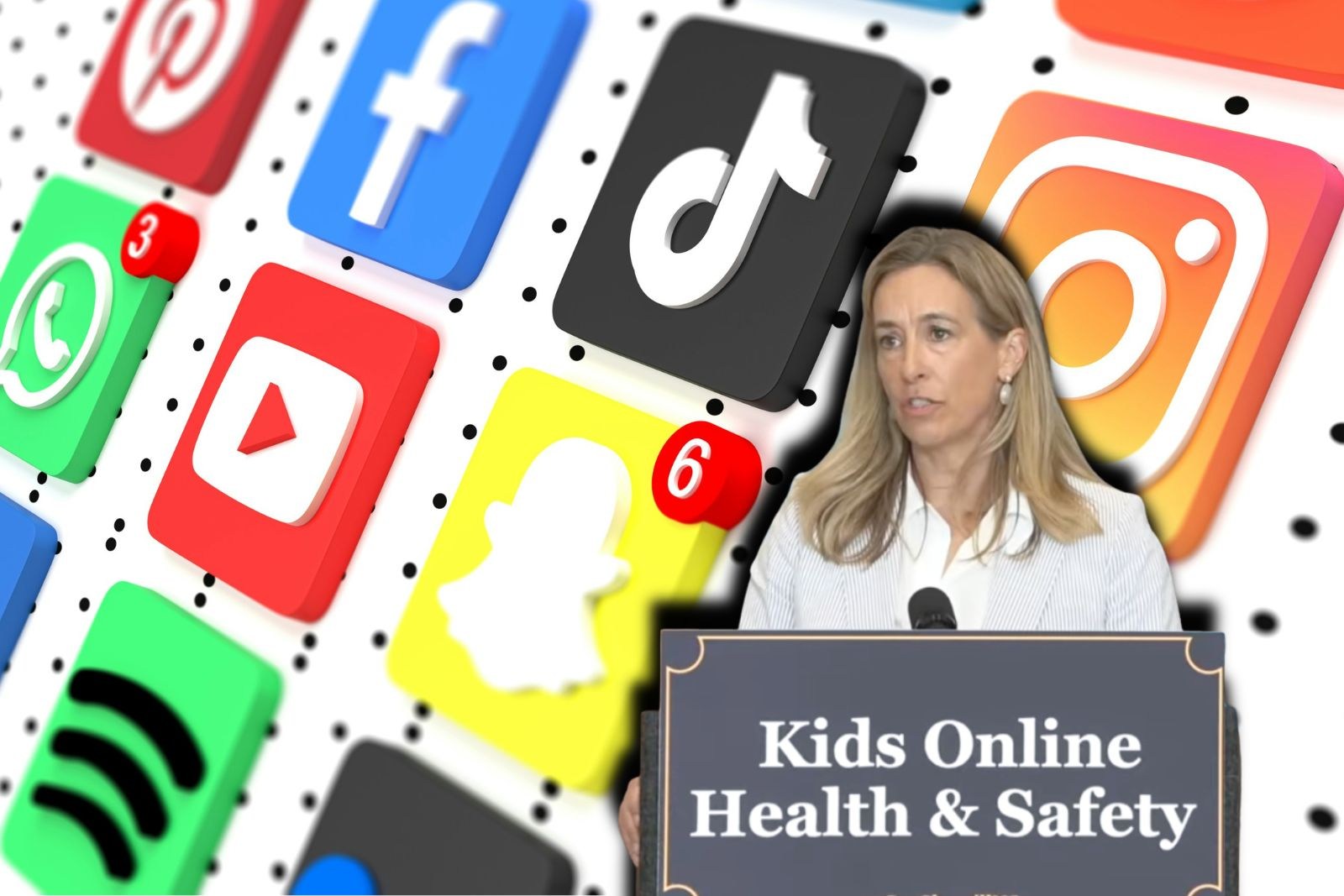
New Jersey Governor Mikie Sherrill signed three landmark bills into law on Tuesday, establishing what advocates and lawmakers are calling the toughest children’s online safety legislation in the country. The signing ceremony took place at the Boys and Girls Club of Hudson County in Jersey City, where legislators, child welfare advocates, and a room full of young people gathered to mark the occasion. At the heart of the package is the New Jersey Kids Code Act, which mandates the highest default privacy settings for minors and explicitly prioritizes their mental health over platform engagement metrics.
The legislation arrives as a direct rebuke to an industry that has, for years, resisted meaningful accountability. Assemblywoman Andrea Katz, the prime sponsor of the Kids Code Act, put the stakes bluntly: “Parents should not have to compete with multi-million-dollar algorithms to protect their own children — and yet that’s exactly what’s been happening.” She noted that three of the top four social media platforms currently use artificial intelligence to recommend children’s profiles to strangers. That stops now, at least in New Jersey.
Companies that fail to comply face real legal exposure. Governor Sherrill confirmed that non-compliant platforms will be vulnerable to lawsuits under the new law — a liability mechanism that gives the legislation actual teeth, rather than the toothless voluntary guidelines Big Tech has long preferred.
The governor drew a direct line between Tuesday’s signing and a prior federal failure. Two years ago, while still serving in Congress, Sherrill watched as tech industry lobbyists successfully pressured the House to kill a federal kids’ online safety bill — despite that bill having sailed through the U.S. Senate with broad bipartisan support. Washington refused to act. New Jersey is acting anyway.
The two remaining bills in the package establish the state’s first-ever social media research center, to be housed at one of New Jersey’s four-year public colleges or universities. Its mandate is to study the relationship between digital technology and children’s well-being — generating the kind of independent, publicly funded research that the industry has historically tried to suppress or discredit. The state Office of the Secretary of Higher Education launched a request for proposals on Tuesday, with an application deadline of September 11 and a target launch date of this coming fall.
The event brought together a notable coalition of voices:
Vazirani’s presence was pointed. Young people built the political pressure that made this legislation possible. “By signing this Age-Appropriate Design Code, Governor Sherrill is shifting the burden of mitigating online harms back toward the platforms themselves,” he said, “ensuring that young people can continue to build safe connections without being exploited.”
That shift — from individual families bearing the entire weight of protecting children, to corporations being legally required to design safer products — is precisely what progressive governance looks like in practice. New Jersey has set a standard. The question now is whether other states, or eventually Congress, will follow.