
Palestinians Commemorate the Nakba as Gaza Displacement Continues
Palestinians around the world marked the 78th anniversary of the Nakba on May 15, 2026, commemorating the mass displacement of more than 700,000 Palestinians during the 1948 Arab-Israeli war — even as a new wave of forced displacement continues to reshape Gaza and the West Bank.
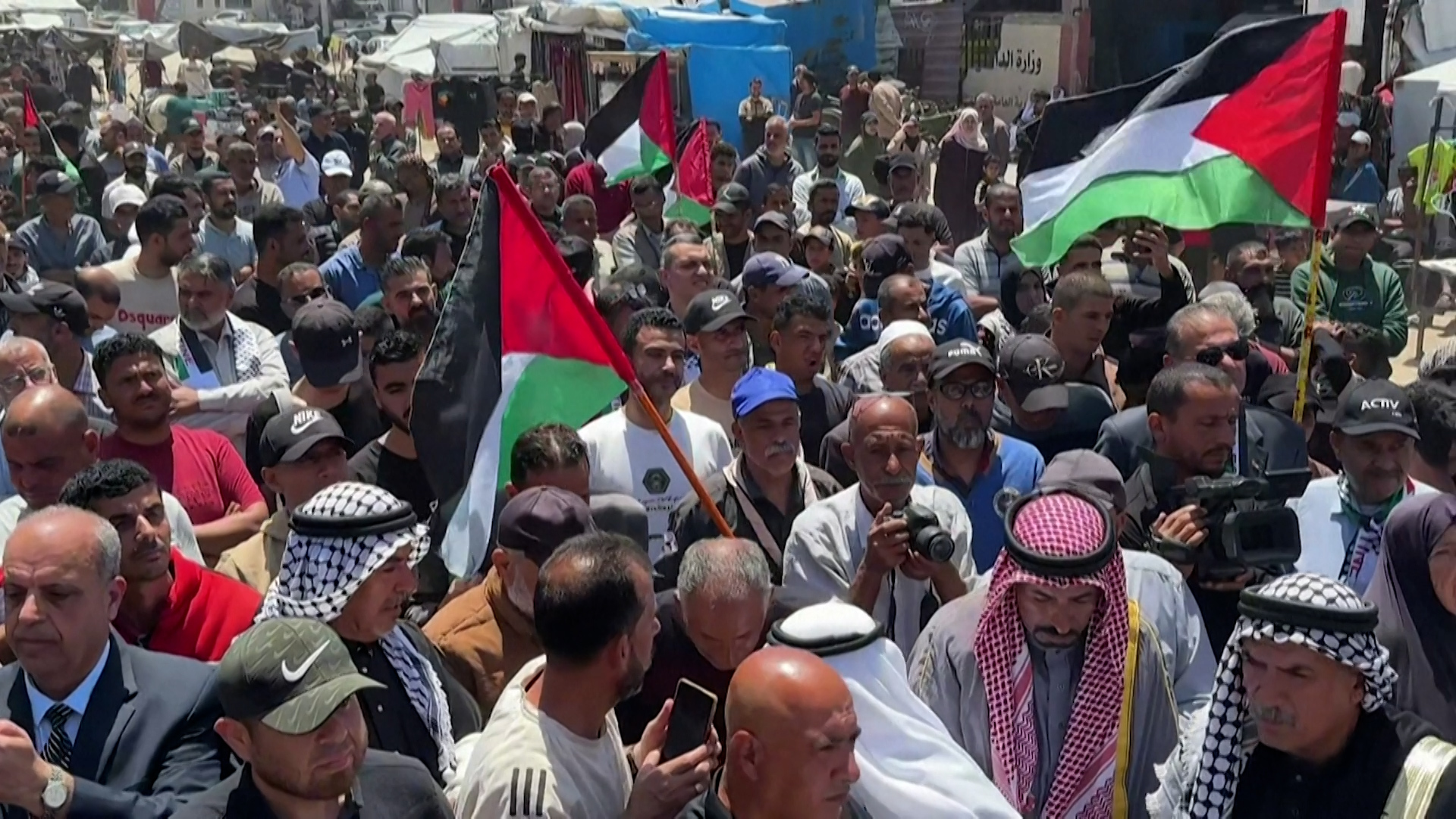
In Khan Yunis, Palestinians gathered to rally and remember, carrying keys and flags that have become enduring symbols of dispossession and the right of return. For many, this year’s commemoration carried a particular weight: the Nakba is no longer only a historical event, but an ongoing reality.
What the Nakba Represents
The word Nakba means “catastrophe” in Arabic. It refers to the period surrounding Israel’s founding in 1948, during which hundreds of Palestinian villages were destroyed and Palestinians were expelled or fled from their homes across historic Palestine.
Approximately 5.9 million Palestinian refugees and their descendants are registered with UNRWA today, the majority still denied the right to return to their places of origin — a right affirmed repeatedly under international law.
Displacement in the Present Tense
This year’s anniversary comes amid what human rights organizations have described as one of the most severe humanitarian crises in the Palestinian territories in decades. The ongoing Israeli military campaign in Gaza has displaced the vast majority of the enclave’s 2.3 million residents, many of them multiple times.
For Palestinians, the continuity between 1948 and today is not metaphorical. Families who were displaced in the Nakba and settled in Gaza now face displacement again, their refugee status compounded by fresh dispossession.
A Memory That Demands Political Reckoning
Nakba Day has long been suppressed or minimized in mainstream Western political discourse. Israel passed a law in 2011 allowing the government to withhold funding from institutions that mark the Nakba, and in the United States, political leaders across both parties have historically avoided direct engagement with Palestinian historical grievances.
That silence has consequences. Without acknowledgment of the foundational dispossession, advocates argue, any framework for lasting peace remains structurally incomplete.
Across rallies in Khan Yunis, Ramallah, and diaspora communities from London to Chicago, Palestinians on May 15 made clear they have not forgotten — and do not intend to.