
State Cruelty Documented: Eight Deaths, 161 Disappearances
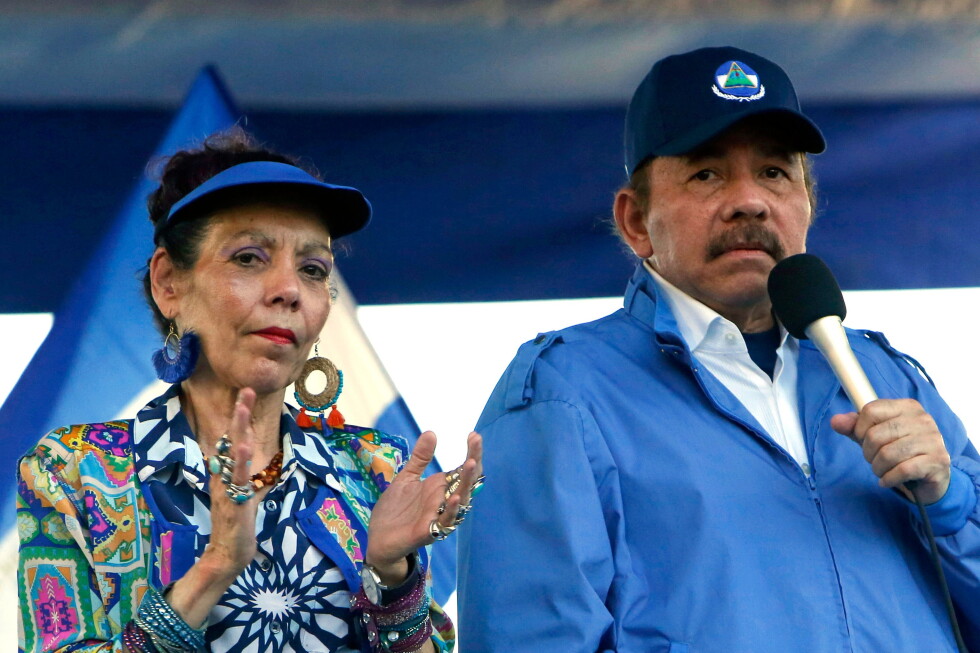
A United Nations expert body has formally determined that the Nicaraguan government of co-Presidents Daniel Ortega and Rosario Murillo has used enforced disappearance and the deaths of political prisoners as deliberate instruments of state repression, rising to the level of crimes against humanity. The Group of Human Rights Experts on Nicaragua (GHREN) presented its findings in Geneva on September 22, 2026, in a report titled Anatomy of State Cruelty: Enforced Disappearance and Death in Custody in Nicaragua — the latest and most damning international condemnation of a government that has systematically dismantled democratic governance since mass protests erupted in 2018.
Eight political prisoners have died following prolonged incommunicado detention since 2018. At least 161 people have been forcibly disappeared. Twenty-nine remain missing today, their fates concealed by a state apparatus that, according to GHREN, operates under the direct, centralized control of Ortega and Murillo themselves.
The report is not a close call. It is a comprehensive indictment.
Brooklyn Rivera: A Death the Government Cannot Explain
The report devotes significant attention to the death of Brooklyn Rivera, an Indigenous Miskito leader who died in state custody on May 30, 2026, after nearly three years in arbitrary detention — 32 months during which his family had almost no contact with him. His case crystallizes the systemic pattern GHREN documents: isolation, denial of medical care, and a government account riddled with contradictions.
Nicaraguan authorities attributed Rivera’s death to complications from a prior COVID-19 infection. That explanation appeared nowhere in official statements made in the days immediately before he died. The government then refused to permit an independent autopsy and moved to bury Rivera before his family could be present to say goodbye.
Reed Brody, an expert member of the Group, was unsparing. “The Nicaraguan Government took Brooklyn Rivera’s freedom, then his health, then his life,” he said. “Its explanation for what happened to him is riddled with inconsistencies and undermined by its refusal to allow an independent autopsy and its rush to bury him before his family could even say goodbye.”
Co-President Murillo claimed Rivera had received medical care and family support throughout his illness. The government did not respond to requests for further comment.
Command Responsibility Reaches the Top
GHREN’s findings on institutional responsibility are precise and structural. The report includes detailed diagrams tracing chains of command, establishing that Ortega and Murillo exercised direct authority over the very institutions — police, prisons, and courts — that exist to protect individuals from exactly this kind of abuse. Officials who obstructed habeas corpus proceedings or concealed information about disappeared persons may themselves have committed crimes against humanity, the group found.
Jan-Michael Simon, the group’s chair, framed the stakes plainly: “A State that resorts to enforced disappearance and allows persons to die in its custody falls short of the minimum human rights standards required for credible democratic governance.”
The report also documented failures of care in the deaths of Humberto Ortega — the president’s estranged brother — former Sandinista guerrilla fighter Hugo Torres, and lawyer Carlos Cárdenas Zepeda. These were not isolated incidents. They form a pattern.
Democratic Collapse and International Accountability
The political context sharpens the report’s significance. Two months before GHREN presented its findings, Ortega publicly announced that Nicaragua would hold no further competitive elections. The experts noted that this declaration only confirms what their documentation already shows: a government that has abandoned any pretense of democratic accountability and now openly says so.
GHREN called on the Nicaraguan government to immediately disclose the fate and whereabouts of the 29 people still disappeared. The group recommended independent investigations into all eight documented deaths in custody, including Rivera’s, and demanded that the remains of those who died be returned to their families and communities for proper funeral rites — a basic measure of human dignity that the Ortega-Murillo government has so far denied.
The international community now has a detailed, evidence-based record. What it does with that record remains to be seen.