
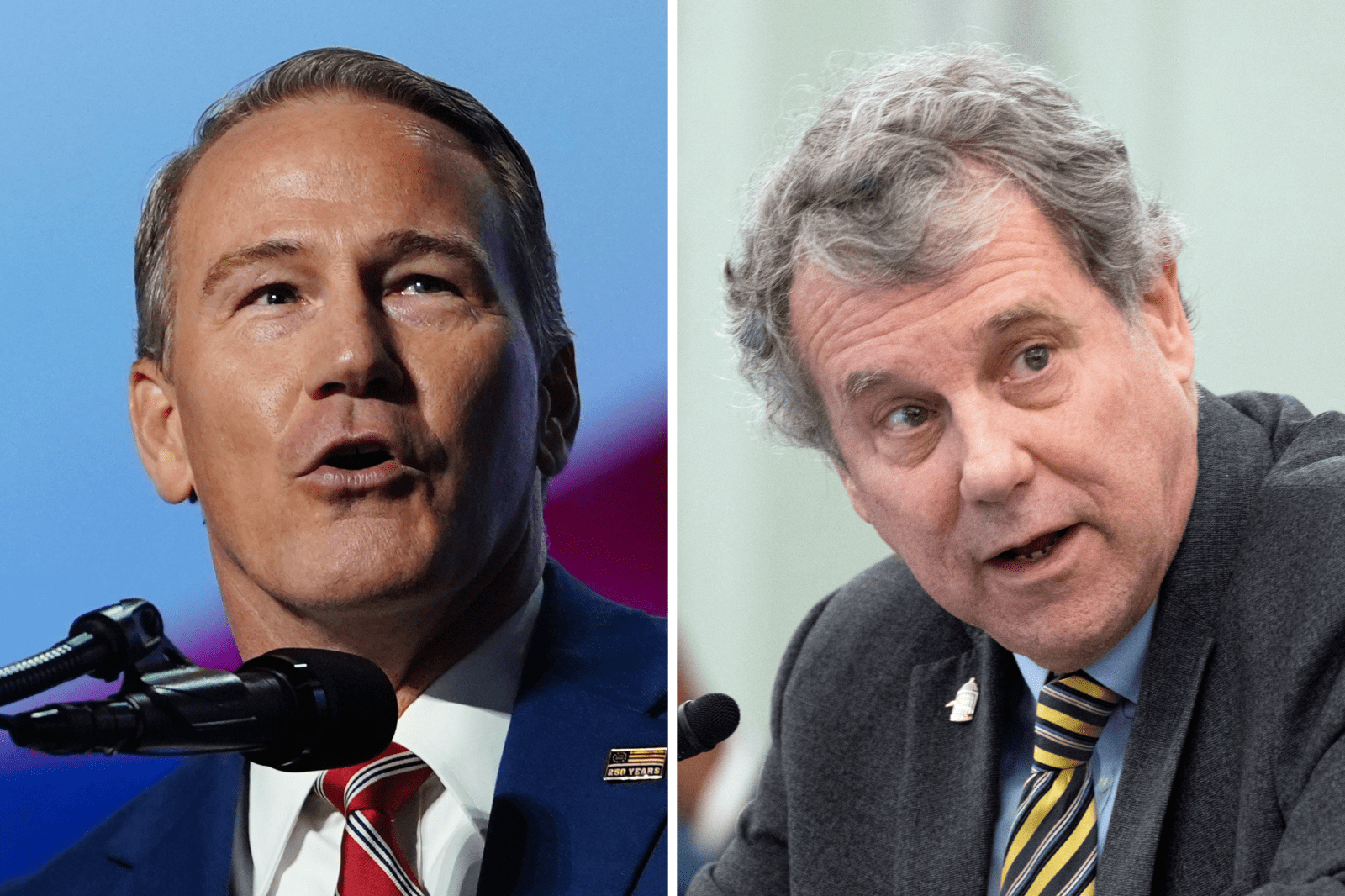
National Republicans are escalating their financial commitment to Ohio’s U.S. Senate race at a pace that reveals genuine anxiety, not confidence. The Senate Leadership Fund, the super PAC aligned with Senate Majority Leader John Thune, announced Friday an additional $14 million investment in the contest, bringing its total spending to $93 million — a staggering sum for a state that Donald Trump carried comfortably just two years ago. The race pits appointed Republican incumbent Jon Husted against Democrat Sherrod Brown, who is mounting a comeback after losing his Senate seat in 2024. That Republicans feel compelled to spend at this level in what was supposed to be friendly territory tells you something important about how this race is actually going.
The Ohio contest has emerged as one of the most consequential races on the 2026 Senate map, with control of the chamber potentially hinging on its outcome. Republicans are defending a narrow majority and can ill afford to lose ground in a state they have worked hard to lock down over the past decade. Several key facts define the stakes heading into November.
Brown’s political durability is not accidental. He has spent decades cultivating a brand of economic populism that genuinely resonates with working-class Ohioans — a lane that national Democrats have too often abandoned in favor of messaging that plays better in coastal cities than in Youngstown or Dayton. His ability to outperform his party in statewide races is a track record, not a talking point, and it explains why Republicans are spending as though they are behind even when their own rating services suggest otherwise. Husted, by contrast, was appointed to his seat by Governor Mike DeWine rather than elected to it, and he carries the weight of an administration whose data center policies have generated real, organized opposition in communities across the state.
The data center controversy is worth taking seriously as a substantive issue, not merely a political liability. The rapid buildout of AI infrastructure has placed enormous strain on local power grids and land use, and the communities bearing those costs are not always the ones reaping the economic benefits. That Husted championed policies enabling this expansion — and that a Republican campaign committee felt compelled to circulate an internal warning about it — suggests the backlash reflects legitimate grievances, not manufactured outrage. Democrats are right to press the issue. Whether Brown can translate that pressure into a Senate seat will go a long way toward determining which party controls the chamber after November.