
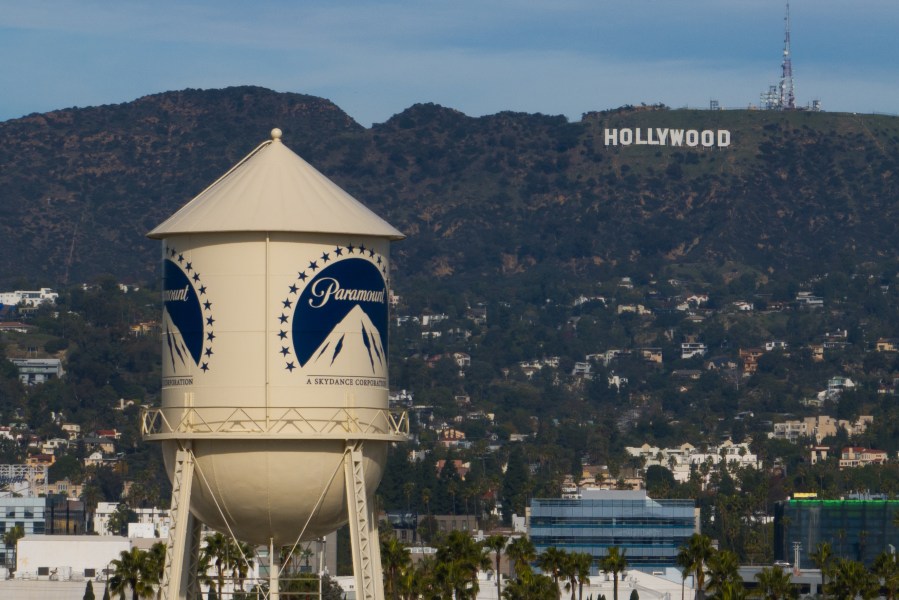
The largest merger in Hollywood history is now cleared to close. Paramount has reached a settlement with California and eleven other states that had sued to block its $111 billion takeover of Warner Bros. Discovery, California Attorney General Rob Bonta announced Monday morning — ending a legal battle that had threatened to delay the deal until mid-2027 and cost the company hundreds of millions in litigation fees.
The coalition of states — Arizona, California, Colorado, Connecticut, Massachusetts, Minnesota, Nevada, New Jersey, New Mexico, New York, Oregon, and Washington — had filed the antitrust lawsuit arguing that the merger would cause substantial harm to movie theaters, basic cable distributors, and audiences nationwide by effectively “extinguishing” competition between two of Hollywood’s five remaining major film distributors. That concern was not unfounded. Consolidation at this scale concentrates enormous market power in a single corporate entity, and the history of media mergers offers little comfort to those hoping the combined company will prioritize creative diversity or fair dealing over shareholder returns.
The settlement, reached over the weekend and announced at a Monday press conference, does not require Paramount to make any major divestitures — a notable concession to the company. But it does extract meaningful commitments in return for the states dropping their case. Paramount pledged to increase domestic production by spending at least an additional $1.5 billion on U.S. film production, with at least $300 million invested annually, and committed to keeping its operations in California. The company also agreed not to sell the Paramount Studios or Warner Bros. lots in the state for at least five years, a provision designed to protect California’s entertainment economy and the workers embedded in it.
Bonta was careful to frame the settlement on his own terms. “The settlement is not a vote of support for this merger,” he said at the press conference — a pointed clarification that distinguishes a negotiated compromise from an endorsement, and one worth taking seriously. Regulators and attorneys general do not always have the leverage to stop a deal of this magnitude outright; sometimes the most they can do is extract enforceable concessions that limit the worst potential harms, and that is precisely what this agreement attempts to do. Whether those commitments prove durable over time will depend on enforcement, political will, and the merged company’s actual behavior once the ink is dry.
The Writers Guild of America, which had filed its own separate suit to block the merger in July, is also included in the settlement. The WGA secured concrete protections: Paramount agreed to prohibit writer layoffs at CBS News Broadcast for five years and to pay $17.5 million into the union’s health fund, along with attorneys’ fees. The WGA made clear it remains opposed to the deal on principle — a position that reflects a broader and legitimate labor concern about what further consolidation means for writers, below-the-line workers, and the creative ecosystem more broadly. But with the states moving to drop their case, the union faced the practical reality of litigating alone against a $111 billion transaction, and chose to secure what protections it could rather than fight a battle it could no longer win.
Paramount CEO David Ellison, son of Oracle billionaire Larry Ellison, welcomed the settlement effusively, calling it “complete clearance for this merger” and thanking Attorney General Bonta, fellow state AGs, the WGA, and Governor Newsom for their cooperation. In a memo to employees obtained by CNBC, Ellison said the company expects to close the deal in approximately two weeks. The combined entity will bring together Paramount and Warner Bros. Discovery’s film studios, a broad portfolio of television networks, the broadcast network CBS, and two major streaming platforms in Paramount+ and HBO Max — a media empire whose scale will reshape the competitive landscape for years to come.
Financial markets responded predictably. Paramount shares rose 9% on the news, while Warner Bros. Discovery gained 10%, trading at roughly $30.50 per share against the deal’s offer price of $31 per share. The numbers reflect investor confidence, but stock performance is not the same as public benefit, and the distinction matters. The settlement’s real test will come not in the trading day’s gains but in whether the production commitments are honored, whether the CNN editorial guardrails hold, whether the cable negotiation rules preserve meaningful competition, and whether workers — writers, technicians, journalists — find that the promises made in this agreement translate into stable livelihoods rather than fine print. Consolidation of this magnitude demands sustained scrutiny long after the deal closes, and the public interest does not expire when the lawyers go home.