
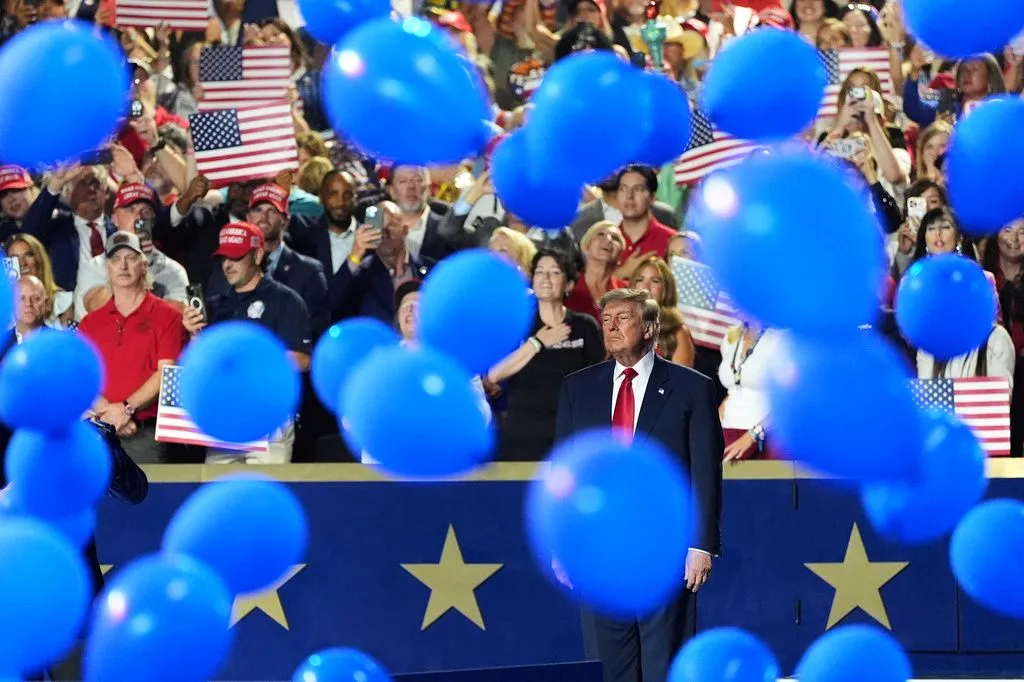
The Republican Party poured $40 million into an unprecedented midterm convention held in Texas, a costly spectacle designed to reverse a campaign season that had been slipping steadily away from them. It was, by any honest measure, a bet born of desperation — an extraordinary financial commitment for a party that had spent the year watching Democrats consolidate leads across nearly every competitive Senate race.
The strategic logic, such as it was, rested on a well-established pattern in American electoral politics: party conventions reliably produce a polling bounce, typically somewhere between one and two and a half percentage points. In a cycle where the Senate majority could plausibly turn on margins that narrow, even a modest surge in the numbers might have been enough to breathe life back into a floundering Republican campaign apparatus.
It did not go as planned.
A Year of Democratic Momentum
To understand why the convention gamble felt so urgent to Republican strategists, it helps to trace the arc of the 2026 midterm cycle from its earliest months. Democrats had entered the year with structural advantages that party operatives were careful not to overstate publicly, but which internal polling made difficult to ignore. Across the Senate map, Democratic candidates had posted consistent leads in state after state, and the national environment — shaped in no small part by ongoing fights over healthcare access, reproductive rights, and economic inequality — had proved stubbornly resistant to Republican messaging.
Republican leaders watched those numbers and concluded that conventional campaign tactics were insufficient. The decision to stage a full midterm convention, a format with no real modern precedent outside of presidential election years, reflected how seriously the party’s senior figures took the threat of a Democratic wave. Forty million dollars is not a figure arrived at lightly.
The Convention and Its Aftermath
The Texas event was, by the standards of political stagecraft, a significant production. Party officials, major donors, and prominent elected figures gathered to project unity and purpose, hoping the television coverage and attendant media cycle would translate into the kind of polling movement that could reset the race. Historical data gave them at least some reason for optimism — the one-to-two-and-a-half-point bounce that conventions have traditionally generated is real, even if it tends to fade within weeks.
What the Republicans appear to have received instead was the opposite of what they sought. Rather than consolidating their own base and peeling away persuadable voters, the convention’s spectacle seems to have energized Democratic voters and reinforced the contrasts that had been driving Democratic leads throughout the year. The bounce, when it came, went in the wrong direction entirely.
That outcome is not entirely surprising to analysts who have watched the Republican Party struggle, across multiple cycles now, to translate high-dollar, high-visibility events into durable polling gains when the underlying policy environment works against them. Spectacle can amplify a message, but it cannot substitute for one that voters find credible or compelling.
What the Numbers Mean
A shift of even one to two points in a competitive Senate environment carries real consequences. Democrats, who had already been leading across the map, now find themselves with additional cushion in races they needed to win and, potentially, within striking distance in contests they had previously written off. For Republicans, the failure to generate even a modest bounce from a $40 million investment raises pointed questions about strategic judgment at the highest levels of the party.
The episode also illustrates a broader pattern that has defined Republican electoral strategy in recent years: the prioritization of performative politics — the convention, the spectacle, the carefully staged show of strength — over substantive engagement with the policy concerns that actually drive voter behavior. On healthcare, on economic security, on environmental protection, Republican candidates have repeatedly found themselves on the wrong side of public opinion, and no amount of convention stagecraft has yet found a way to close that gap.
Democrats, for their part, would be wise not to treat a convention bounce as a substitute for sustained organizing and policy clarity. But as a signal of where the midterm cycle stands with weeks still remaining, the numbers tell a story that $40 million in Republican spending could not rewrite.