
There is something almost theatrical about watching the loudest advocates for cutting government waste burn through public funds on private aircraft. Two of Washington’s most prominent figures — Health Secretary Robert F. Kennedy Jr. and Senator Rand Paul — stand accused of doing exactly that, each caught using taxpayer money for travel arrangements that would be indefensible under any serious standard of public accountability, let alone the standards these men claim to uphold.
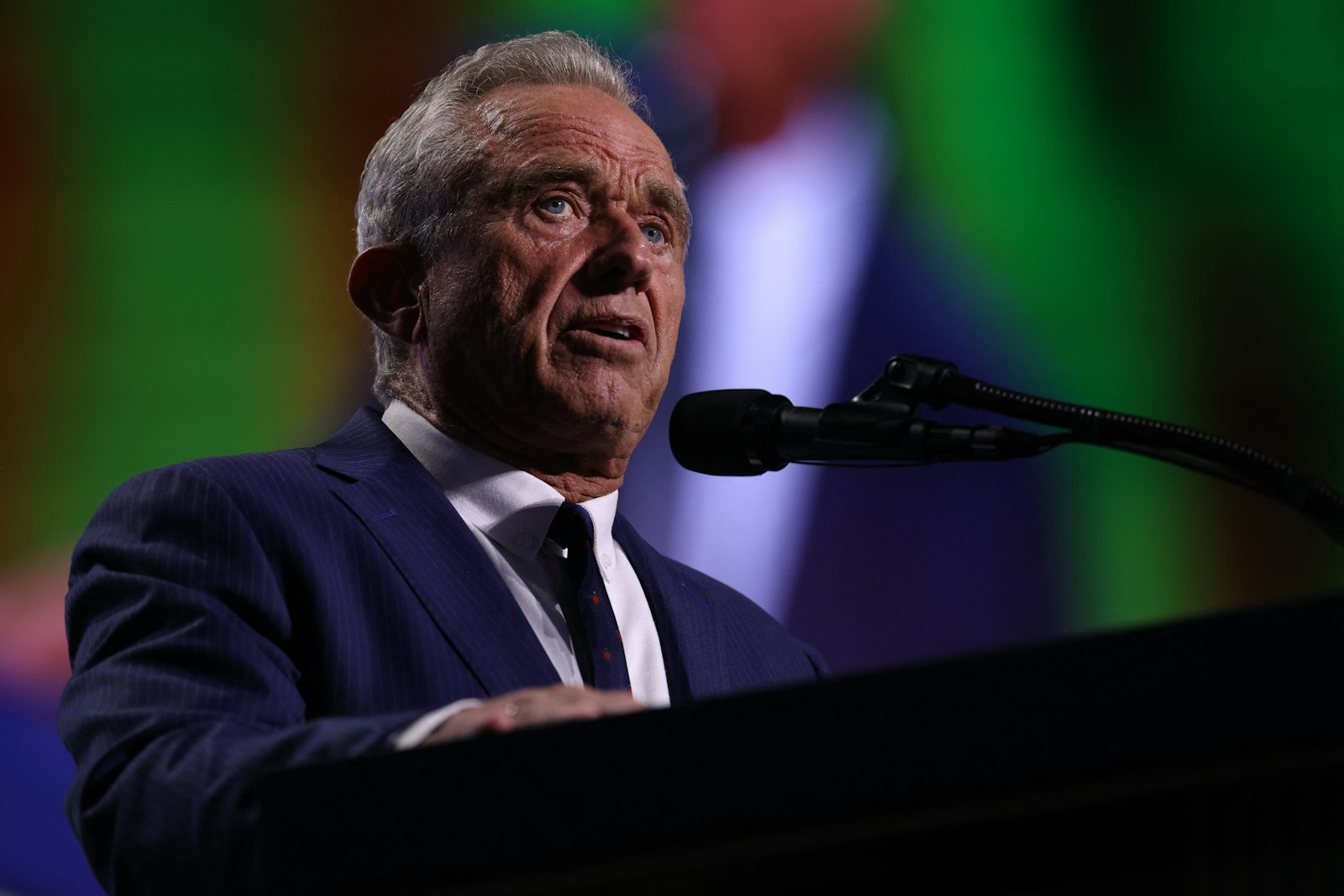
Kennedy, who now leads the Department of Health and Human Services, has been granted access to Air Force-operated Gulfstream jets — the kind of aircraft the Defense Department charges $9,000 per hour to operate. According to a Washington Post investigation published Friday, Kennedy used one of these military planes to fly from Washington, D.C., to Des Moines, Iowa, on August 17, where he attended a campaign event with Representative Mariannette Miller-Meeks. For context, a federal employee booking a commercial flight to Des Moines can do so for as little as $250. The gap between those two figures is not a rounding error — it is a statement about priorities.
White House officials and lawyers for the Department of Health and Human Services signed off on Kennedy’s access to military aircraft, and several people familiar with the arrangements told the Post that Kennedy rarely exercises that access. Two sources went so far as to suggest the jet’s flight path simply happened to align with Kennedy’s travel plans — a framing so convenient it strains credulity. What remains unclear is how many times Kennedy has chosen military transport over commercial alternatives, and the administration has not offered a transparent accounting of those decisions.
The historical comparison here is damning and impossible to ignore. During Donald Trump’s first term, Health Secretary Tom Price was forced out of office after reports emerged that he had been flying private jets between Washington and Philadelphia. The distances and costs involved in Price’s scandal were, if anything, more modest than what Kennedy is now accused of. Yet the political environment has shifted so dramatically that Kennedy’s arrangements were quietly approved rather than loudly condemned — at least from within his own party. That asymmetry deserves scrutiny, not a shrug.
Rand Paul’s situation carries its own particular irony. Paul has built an entire political brand on fiscal conservatism, positioning himself as the Senate’s self-appointed guardian against wasteful government spending. He has delivered theatrical objections to federal budgets, published annual “Wastebook” reports cataloguing frivolous expenditures, and made deficit reduction a cornerstone of his public identity. Against that backdrop, the revelation that six of his staffers chartered a private jet from Washington to Pittsburgh — at a cost of $17,827 to taxpayers — lands with the force of a punchline that nobody in his office seems to have anticipated.
The trip, reported Friday by Politico, occurred in the days following the attempted assassination of Donald Trump in Butler, Pennsylvania. Paul was at the time the ranking Republican on the Senate Homeland Security and Governmental Affairs Committee, and his office argues the private jet represented “the most efficient and effective means for the entire investigative team to participate in the investigative activities that day.” That justification deserves to be measured against the facts: a direct commercial flight to the area takes little more than an hour, and the drive from Washington to Butler is approximately five hours. The claim that a $17,827 charter was the only viable option is the kind of argument that works only if no one is expected to push back.
What unites these two stories is not merely hypocrisy — though hypocrisy is certainly present in abundance. What unites them is a pattern of treating public funds as a personal convenience, shielded from the accountability that these same officials routinely demand of government programs that serve working people. When Republicans argue that Medicaid, housing assistance, or public education must be cut to control spending, they invoke the taxpayer as a sacred figure deserving of protection. When the bill arrives for their own travel, that same taxpayer becomes an afterthought. The contrast is not incidental. It reflects a coherent, if unstated, set of priorities — one in which austerity is a discipline reserved for those who can least afford it, while those in power travel in comfort on the public’s dime.
Accountability does not require partisan theater. It requires consistent application of the same standards to everyone who draws a public salary and makes decisions about public money. By that measure, both Kennedy and Paul have questions left to answer — and the public, whose money funded these flights, has every right to demand those answers in full.