
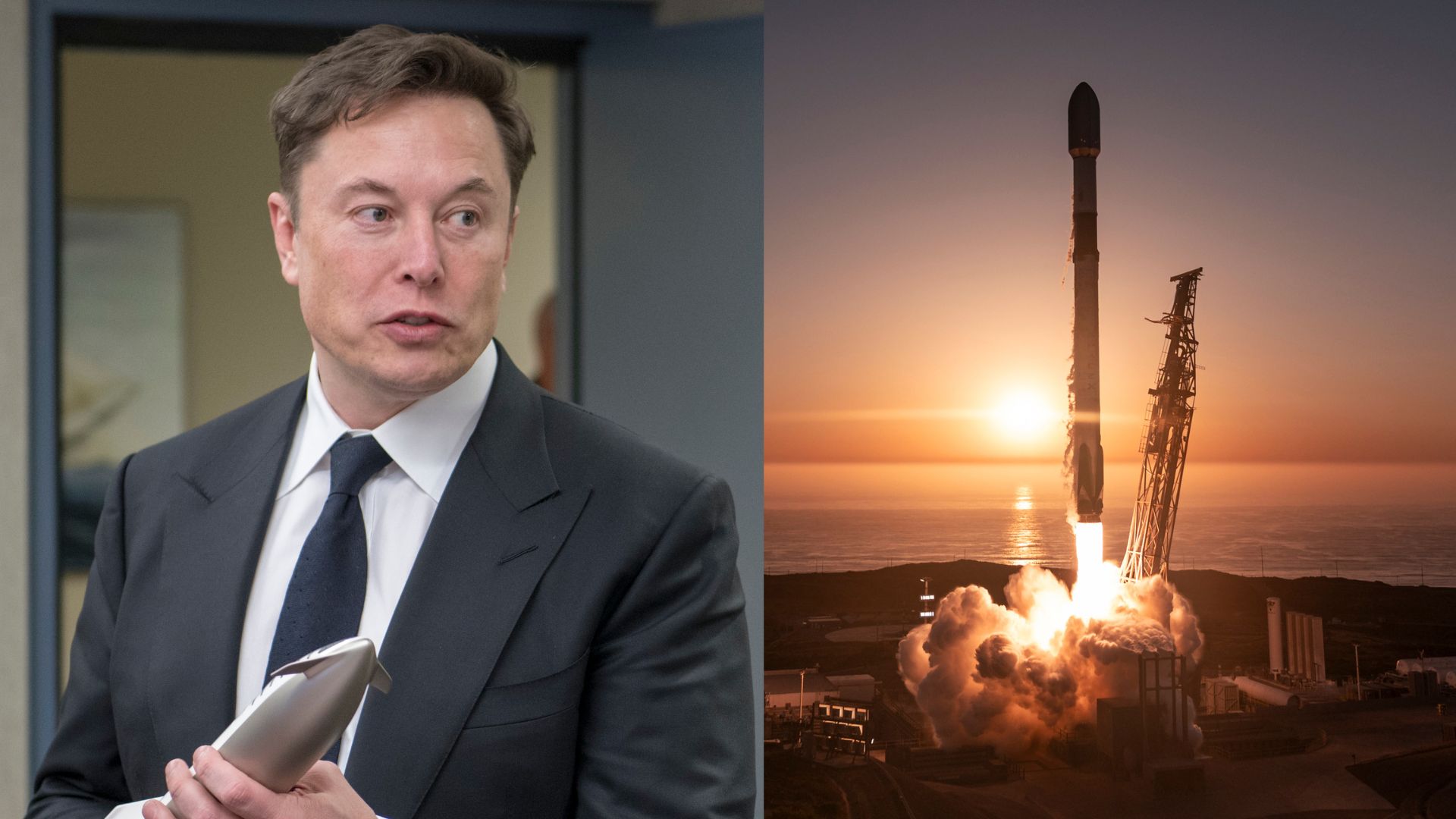
SpaceX Goes Public With Record-Breaking Ambitions — and Serious Red Flags
SpaceX has filed for an initial public offering that could value Elon Musk’s rocket and satellite company at nearly $2 trillion, potentially eclipsing Saudi Aramco’s 2020 record and pushing Musk’s personal fortune past the $1 trillion mark for the first time in history. The company’s S-1 filing reveals explosive revenue growth alongside billion-dollar losses, mounting workplace safety concerns, and a concentration of power that should give prospective investors serious pause.
The company plans to list on the Nasdaq under the ticker symbol SPCX. Goldman Sachs and Morgan Stanley are leading the deal, joined by more than 20 major financial institutions. Retail investors may access shares directly through platforms including Robinhood, Fidelity, and Schwab.
Revenue Surges, But Losses Mount
SpaceX reported $18.6 billion in revenue for 2025, a 33% increase over the prior year, driven largely by Starlink, its satellite internet service. Starlink now counts 10.3 million subscribers worldwide — double the figure from a year earlier — with aggressive expansion across rural America and international markets.
That growth, however, comes at a steep price. The company posted a net loss of $4.3 billion for the quarter ending March 31. SpaceX has invested roughly $15 billion in Starship, its next-generation heavy-lift rocket designed for lunar and Mars missions. Another upgraded Starship launch is expected imminently.
The filing also notes that average revenue per Starlink user is declining as the company pushes into lower-income markets outside North America — a tension between scale and profitability that investors will need to weigh carefully.
A Holding Company for Musk’s Entire Empire
SpaceX has quietly transformed into a vehicle for Musk’s broader ambitions well beyond rockets. The company absorbed xAI earlier this year and now controls Grok, Musk’s artificial intelligence chatbot platform. It also holds X, the social media platform formerly known as Twitter, which reported 6.3 million paid subscribers across X Premium and related services.
Musk continues to pursue his stated vision of an “everything app” combining social media, payments, commerce, and communications — a strategy with no proven model at scale in Western markets.
The xAI integration introduces regulatory risk. The filing disclosed ongoing investigations related to Grok and alleged deepfake content, which could result in penalties or increased regulatory oversight.
AI Infrastructure Becomes a Major Revenue Source
Anthropic, the AI safety company backed by Google and Amazon, has agreed to pay SpaceX approximately $1.25 billion per month through May 2029 for access to cloud computing capacity tied to the Colossus and Colossus II data centers in Tennessee and Mississippi. The deal could generate nearly $15 billion annually for SpaceX.
Musk originally built the GPU facilities for xAI’s own operations but later determined the company had excess capacity. The arrangement now positions SpaceX simultaneously as an AI competitor and a critical infrastructure supplier to rival laboratories — a structural conflict of interest the filing acknowledges but does not fully resolve.
Musk Retains Near-Total Control
After the offering, Musk will hold approximately 85% of voting control while serving as CEO, chairman, and chief technology officer. That concentration of power in a single individual — one who is simultaneously running Tesla, X, xAI, and a federal cost-cutting operation through DOGE — represents a governance risk that any serious investor must reckon with.
Public shareholders will have minimal ability to challenge management decisions, executive compensation, or strategic direction. This is not a company going public to invite accountability; it is a company using public markets to further consolidate one man’s financial and political reach.
Workplace Safety Record Demands Scrutiny
The filing does not obscure all of SpaceX’s problems. A worker recently died after falling from scaffolding at a Texas facility. Reuters has previously reported hundreds of workplace injuries connected to SpaceX operations.
For a company seeking a $2 trillion valuation on the strength of its workforce’s labor, that safety record is not a footnote — it is a material concern that regulators, investors, and the public should treat accordingly.
The Bottom Line
SpaceX is a genuinely significant aerospace and technology company with real revenue, real infrastructure, and real strategic importance. It is also a sprawling, loss-making conglomerate controlled almost entirely by a single individual with conflicts of interest at every level, a troubling workplace safety record, and active regulatory investigations.
Whether the market prices the ambition or the risk will define one of the most consequential public offerings in a generation.