
President Donald Trump suggested on September 13 that the United States might “stay in Iran” and “keep the oil” after the ongoing military conflict concludes, drawing a direct parallel to what he described as a lucrative resource arrangement the administration has already secured in Venezuela. The remarks, made to reporters at the Trump International golf course in Ireland, raise urgent questions about the administration’s long-term intentions in a war that has destabilized global energy markets and drawn widespread public opposition at home.
“We’ll ultimately get out of Iran, unless we decide to stay and keep the oil like Venezuela,” Trump told reporters, adding that U.S. revenue extracted from Venezuela has “paid for the war many times.” He offered no further detail on any prospective oil agreement with Iran, and the White House had not responded to requests for comment at the time of publication.
A Template from Venezuela
Trump’s Venezuela comparison carries concrete weight. In August, the administration announced it had secured majority control over more than 65 billion barrels of Venezuela’s proven oil reserves through a partnership with private business. Delcy Rodriguez, who assumed interim leadership after the United States seized President Nicolás Maduro in January, publicly welcomed the deal, framing it as an economic boost for both the country and its government.
The prospect of a similar arrangement in Iran — a sovereign nation currently under active U.S. military engagement — would represent an extraordinary assertion of resource extraction as a war aim, one that critics argue runs directly counter to international law and the stated justification of targeting nuclear capabilities.
Soaring Gas Prices, Falling Public Support
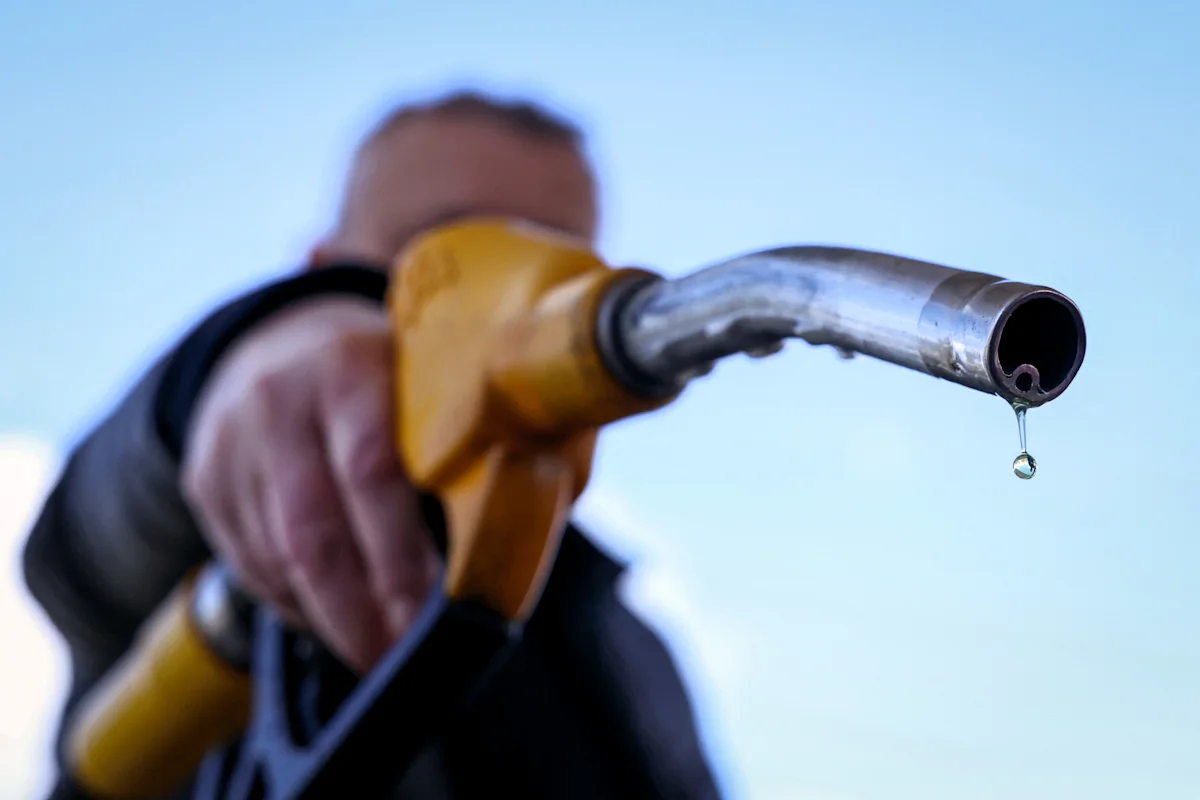
The war’s economic toll on American households is measurable and growing. The closure of the Strait of Hormuz has rattled global energy markets for months, and the average national price for a gallon of regular gasoline stood at $4.31 on September 13, according to AAA. That figure reflects sustained pressure on working families who have seen little relief since the conflict began.
Public sentiment has shifted sharply against the war. A Reuters/Ipsos poll released in late August found that only one in four Americans now considers the Iran conflict worthwhile, a marked decline from earlier surveys this year. Despite this, Trump has continued to defend the military campaign, insisting at a 9/11 memorial last week that the United States must ensure Iran “will never ever have a nuclear weapon.”
Trump Promises the War Ends After the Midterms
In the same Ireland press availability, Trump offered a strikingly political timeline for the conflict’s conclusion. “Iran will end right after — maybe before — but it’ll end right after the midterms,” he told reporters. “Gasoline’s going to drop like a rock.” The comment ties the duration of a shooting war explicitly to an electoral calendar, a framing that will deepen skepticism among voters already questioning the conflict’s purpose.
Trump also claimed that Iranian officials are eager to negotiate. “Iran wants to make a deal so bad. They are calling constantly,” he said, insisting he would only accept favorable terms. Iranian officials have repeatedly denied similar characterizations of back-channel contacts with Washington, and no independent confirmation of active negotiations has emerged.
Broader Context
The president used the same Ireland trip to weigh in on artificial intelligence, defending the technology after Anthropic CEO Dario Amodei published an essay urging greater precautions around AI development. That tangent aside, it is Trump’s remarks on Iran and Venezuela that carry the most consequential implications — sketching, however loosely, a vision of American military engagement as a vehicle for resource acquisition rather than security or democratic principle.
Additional reporting by Reuters.