
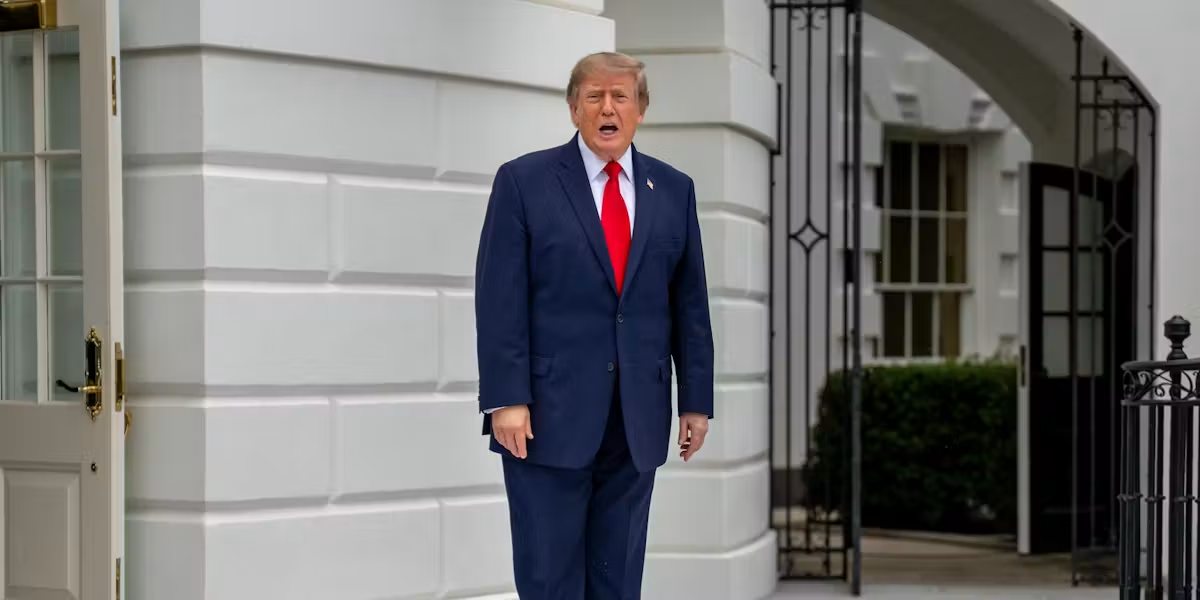
President Donald Trump, having barred CNN, MSNBC, and Politico from White House access on September 18, 2026, unveiled his self-styled replacement for independent journalism just days later — a YouTube live stream grandiosely titled “Trump TV: The Essentials Station” — and the venture has landed with a resounding thud, drawing widespread ridicule and thin viewership in equal measure.
The move crystallizes a contradiction that has defined Trump’s relationship with the press since his first campaign: a politician who built his national profile on relentless media coverage now claims he can govern without it, or better yet, manufacture his own. Neither claim holds up to scrutiny.
Trump’s decision to expel three major news organizations from White House grounds represents one of the most aggressive acts of press restriction by a sitting American president in recent memory. CNN, MSNBC, and Politico collectively reach tens of millions of readers and viewers; their exclusion does not make their reporting disappear — it simply removes the administration’s ability to shape or respond to it in real time, a self-inflicted wound dressed up as strength.
A Channel Nobody Asked For
“Trump TV: The Essentials Station” debuted Monday as a low-budget YouTube stream, and even by the forgiving standards of online broadcasting, early assessments have been damning. The branding alone — clunky, bureaucratic, stripped of the showmanship Trump once wielded effortlessly — signals how far the operation falls from its ambitions.
The deeper irony is structural. Trump did not rise to political dominance by avoiding the media; he rose by consuming it and being consumed by it, trading insults with anchors who nonetheless kept his face on screen for billions of dollars in free airtime during the 2016 cycle alone. Independent journalism, including its most adversarial forms, gave Trump a stage he could never have constructed himself.
State-controlled or state-adjacent media channels have a poor track record of winning public trust precisely because audiences understand the incentive structure. A channel that exists to flatter its founder cannot perform the basic function of accountability journalism, and most news consumers — even those skeptical of mainstream outlets — recognize the difference between coverage and propaganda.
Banning credentialed journalists from the White House does not silence them; it removes the administration from the conversation while those journalists continue reporting from every other available vantage point. Press freedom advocates and First Amendment lawyers have already flagged the expulsions as constitutionally fraught, and legal challenges are expected to follow.
What “Trump TV” demonstrates, above all, is that replacing independent media is harder than attacking it. A president who spent a decade calling journalists the “enemy of the people” has discovered, apparently to his surprise, that he still needs them — or at least needs something they provide that a YouTube stream run out of the West Wing simply cannot replicate.