
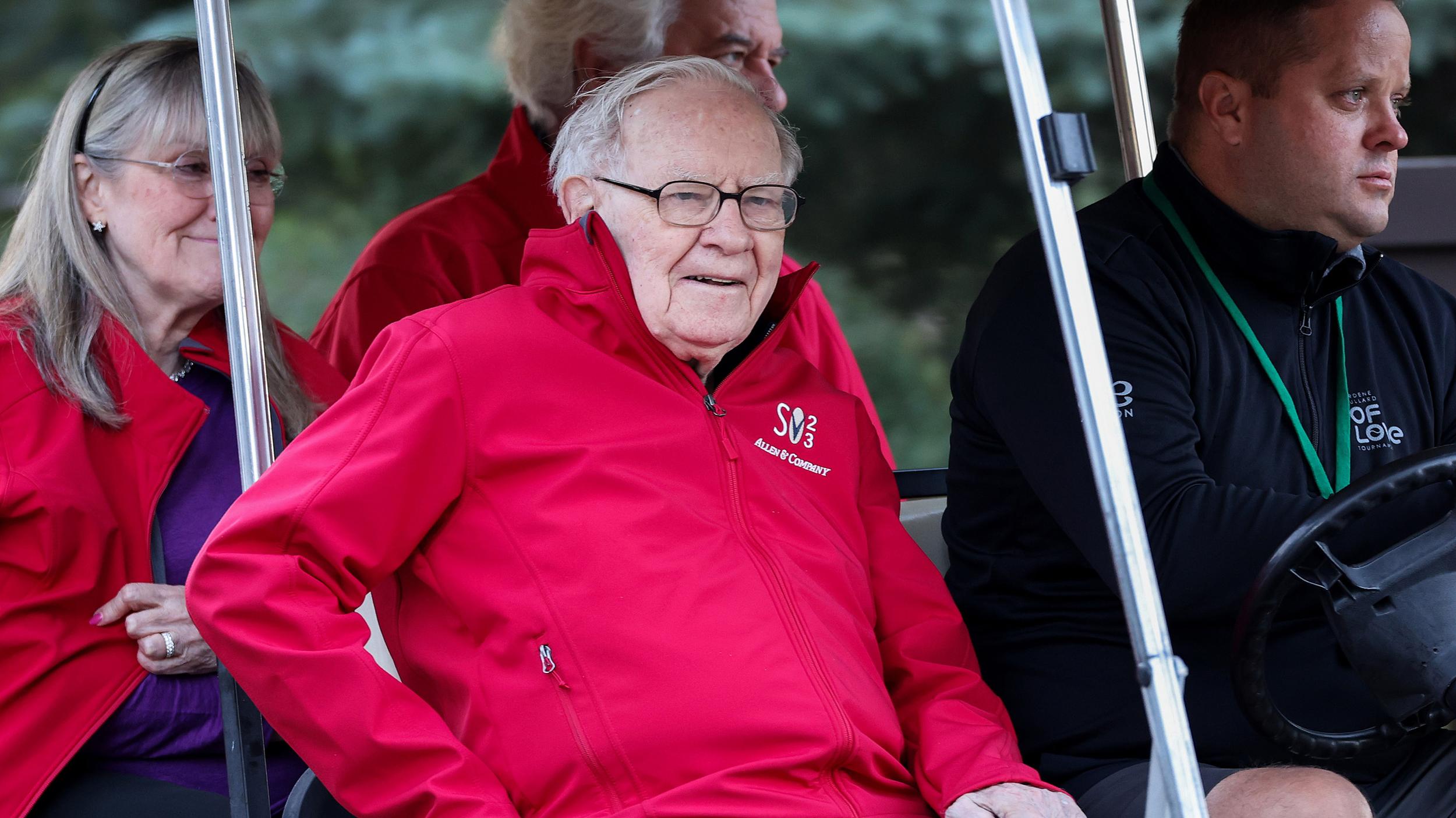
Warren Buffett’s extraordinary run at the top of Berkshire Hathaway is over — and the transition underway at the Omaha-based conglomerate offers a rare, instructive case study in what genuine corporate succession can look like when it is managed with patience, transparency, and institutional seriousness rather than ego or boardroom drama.
Buffett, 96, stepped down as chairman of Berkshire Hathaway on Friday, effective immediately. His son Howard, a board member since 1993, assumes the chairmanship. Earlier this year, Greg Abel had already replaced the elder Buffett as chief executive officer — a move announced at the company’s 2025 annual meeting. Warren Buffett will remain on the board as chairman emeritus, but the operational and governance levers of the more-than-$1-trillion conglomerate now rest firmly in other hands.
The thesis here is straightforward: what Berkshire has executed over the past two years is not merely a leadership change at a large corporation — it is a deliberate, values-driven institutional handoff of a kind that most major American enterprises conspicuously fail to achieve. That matters, because how power is transferred inside dominant institutions shapes outcomes for employees, shareholders, and the broader economy alike.
Buffett himself framed the timing around Abel’s performance rather than his own health or age. “He has been making the decisions that matter for some time now, and I have not had to think twice about any of them,” Buffett wrote in a letter to shareholders. “So the timing is right to complete the transition.” That framing is notable: it centers institutional readiness over personal legacy, which is precisely the sequence a well-governed organization should follow.
A Succession Built on Accountability, Not Sentiment
Abel has wasted little time demonstrating independent judgment. Since taking the CEO role, he has begun deploying Berkshire’s historically large cash reserves — which peaked at nearly $397 billion — including through share buybacks. By the second quarter, that hoard had dropped to $365.5 billion, a sign that Abel is willing to act where Buffett, in his final years, had grown more cautious. Whether that capital deployment proves wise will take years to assess, but the willingness to move is itself significant.
Berkshire’s stock has gained only 1.3% this year, lagging the S&P 500’s 11.6% return — a gap that would ordinarily invite sharp criticism. Yet Christopher Davis of Hudson Value Partners called the chairmanship announcement “the latest example in the textbook of good governance at Berkshire,” arguing that the underlying business trends remain positive even as the share price stalls. That assessment deserves scrutiny: investors and analysts should watch whether Abel’s capital allocation decisions translate into real long-term value, or whether the Buffett premium simply deflates as the founder recedes.
Howard Buffett’s role is deliberately non-operational. His father described him as the guardian of Berkshire’s culture and values — assets Buffett called worth more than anything on the company’s balance sheet. That is a meaningful structural choice: separating cultural stewardship from business execution acknowledges that these are distinct functions that can pull against each other when collapsed into a single role. It also places a check on the CEO that is rooted in institutional memory rather than financial metrics alone.
Buffett transformed Berkshire from a failing New England textile mill into one of the largest and most diversified companies in American history. That arc — from industrial decline to conglomerate dominance — was built on a philosophy of patient capital, managerial autonomy, and long-term thinking that stood in deliberate contrast to the short-termism that has hollowed out much of American corporate life. The question now is whether those values survive their architect, or whether they were always more personal than institutional. The structure Buffett has put in place suggests he believed, with some reason, that they can outlast him.