
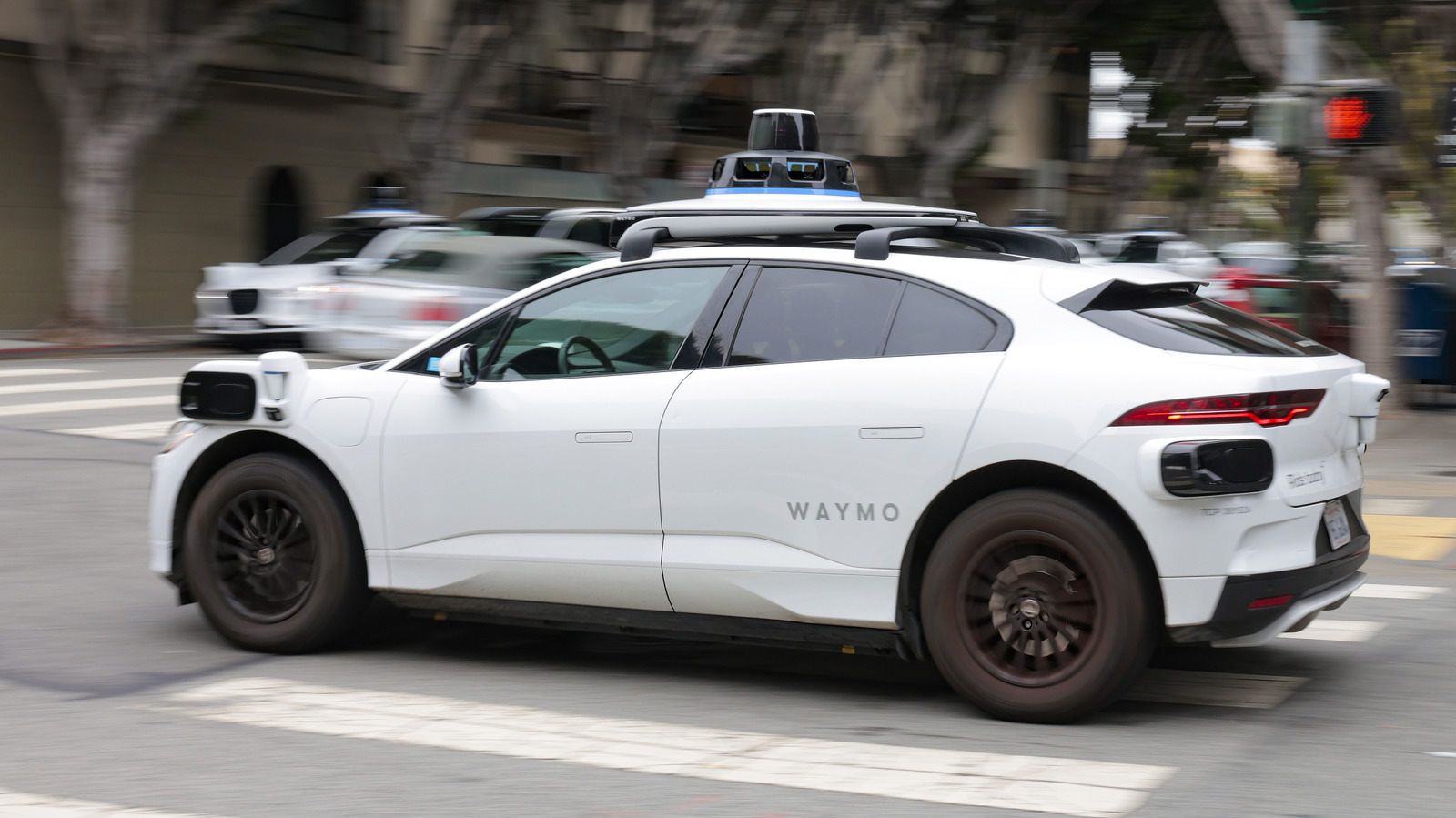
A new study by the Insurance Institute for Highway Safety (IIHS) suggests that Waymo’s autonomous robotaxis are involved in significantly fewer crashes than vehicles driven by humans. At first glance, the conclusion appears to reinforce the narrative that self-driving technology is steadily delivering on its promise of safer roads. However, a closer examination of the report reveals a far more nuanced picture. The researchers themselves acknowledge that the comparison required extensive statistical adjustments before any meaningful conclusions could be drawn, highlighting the limitations of the available evidence as much as its potential.
The central challenge lies in the nature of the data. Waymo’s autonomous fleet does not operate under the same conditions as the average human driver. Its vehicles are concentrated in carefully selected urban environments, avoid many adverse weather conditions, and function within predefined operational boundaries. To compensate for these differences, IIHS researchers applied multiple correction factors designed to approximate what the company’s safety record might look like under conditions more comparable to those faced by the broader driving population. While such adjustments are common in scientific research, they inevitably introduce assumptions that influence the final outcome.
Perhaps the most important limitation is the relatively small dataset underpinning the analysis. The study ultimately relies on just 89 police-reported crashes involving Waymo vehicles. Although this represents millions of autonomous miles driven, it remains a modest number of incidents from which to draw broad conclusions about overall road safety. Rare but high-impact events, edge cases, or unexpected system failures may not yet be adequately represented, meaning the statistical confidence of long-term safety projections remains limited.
Another key consideration is the difficulty of establishing a truly equivalent comparison between autonomous systems and human drivers. Human motorists operate across virtually every conceivable environment, from rural roads and highways to severe weather, poor infrastructure, unpredictable traffic patterns and varying levels of driver fatigue or impairment. Waymo’s operational design domain is deliberately narrower, reducing exposure to many of the situations that contribute disproportionately to human crashes. Consequently, lower crash rates do not necessarily indicate that autonomous technology is universally safer under all conditions; they may also reflect the fact that the vehicles are deployed in environments where risk is inherently more manageable.
The study nevertheless provides valuable evidence that autonomous driving systems are maturing. Waymo’s willingness to publicly disclose detailed mileage and crash data represents an important step toward greater transparency in an industry that has often been criticised for withholding performance metrics. Such openness enables independent researchers to evaluate safety claims rather than relying solely on company statements or marketing material, and establishes a benchmark that other autonomous vehicle developers should be encouraged—or required—to follow.
For regulators, however, the report should be viewed as a starting point rather than a definitive verdict. Policymakers face the challenge of balancing innovation with public safety, and isolated studies—even well-executed ones—should not become the sole basis for sweeping regulatory decisions. The introduction of autonomous vehicles onto public roads carries profound implications not only for transportation but also for insurance, liability, infrastructure planning and public trust. Those decisions require evidence accumulated over many years and across diverse operational environments.
Rather than treating the IIHS findings as proof that autonomous vehicles have already surpassed human drivers in every meaningful respect, regulators would be better served by expanding the evidence base. Mandatory reporting of autonomous vehicle mileage, standardized crash classifications, independent auditing of disengagements and system failures, and harmonized reporting frameworks comparable to those used for human-driven vehicles would all strengthen future evaluations. Larger datasets spanning different weather conditions, geographic regions and traffic scenarios would provide a far more reliable picture of real-world performance than currently exists.
Ultimately, the IIHS study is encouraging, but it is not conclusive. It suggests that Waymo’s technology may already offer measurable safety benefits within its current operating limits, while simultaneously illustrating how difficult it remains to compare autonomous systems with human drivers on equal terms. The appropriate response is neither sceptical dismissal nor uncritical celebration. Instead, it is a commitment to gathering more comprehensive data, applying transparent scientific scrutiny and allowing the evidence—not the excitement surrounding artificial intelligence—to determine when autonomous driving has truly earned widespread public confidence.