
A memo landed quietly in the inboxes of WNBA team executives last Friday. By the time it circulated publicly, it had already become a flashpoint in one of the most charged debates in American sports.
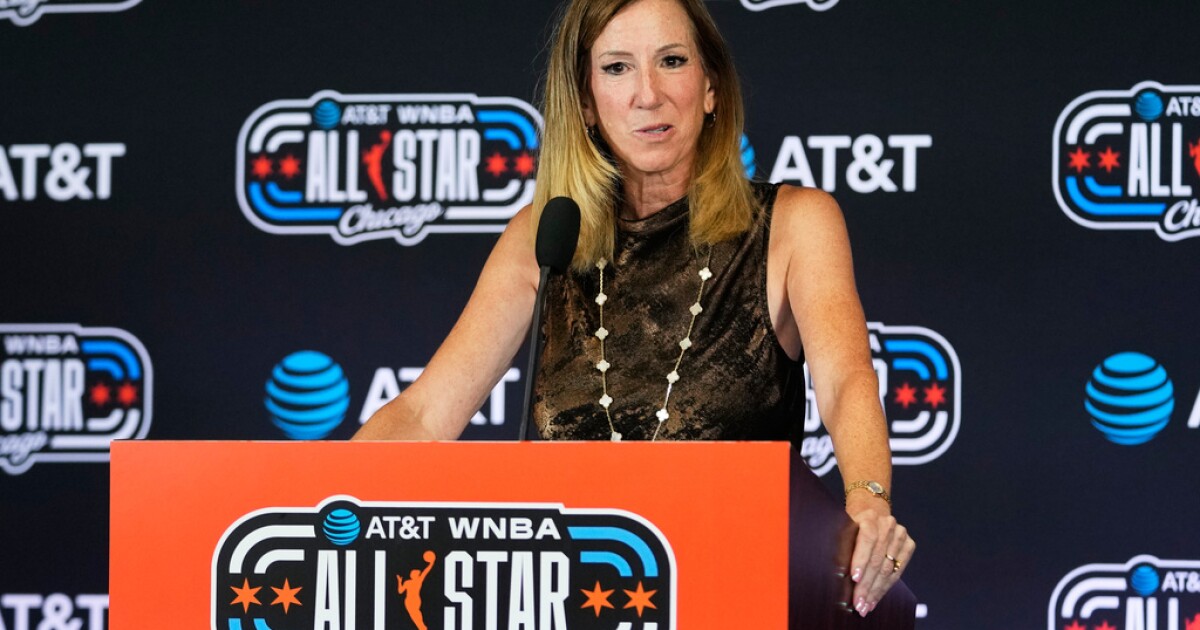
WNBA Commissioner Cathy Engelbert sent the communication to team leadership acknowledging what she described as a wave of questions about transgender athlete participation in women’s basketball. “I know many of you have received questions in recent weeks regarding transgender athlete participation in women’s basketball,” she wrote, “and I expect this topic will continue to receive significant attention.” The tone was measured, the language deliberate — and conspicuously free of any explicit position. Engelbert confirmed that a task force of team presidents and general managers would take up the issue at a previously scheduled meeting in the coming week, signaling that the league intends to work through internal channels rather than issue sweeping unilateral policy changes.
That institutional caution reflects a structural reality the memo itself underlined. Unlike many sports governing bodies, the WNBA does not set eligibility rules by fiat. Its collective bargaining agreement — negotiated jointly with the WNBA Players Association — currently states only that “players who are women are eligible to play in the WNBA.” The language is brief. It does not define “women,” does not reference gender identity, and does not address sex assigned at birth. Any meaningful policy change would require collective bargaining, not a commissioner’s decree. That matters enormously. It means the players themselves have formal power over what comes next.
The players’ union moved quickly to assert exactly that. The WNBPA released its own statement Friday, one that declined to mirror the league office’s studied neutrality. “Hate, abuse, and demonization of any person or group of people, including transgender people, only fuel fear, division, and harm,” the association wrote. It described its membership as more than 200 individuals with different lived experiences and explicitly named transgender people among those deserving protection from abuse. The statement also carried a pointed warning: “We will not be used as political pawns.” That sentence did not arrive in a vacuum.
The context matters. The debate inside the WNBA did not originate organically. It accelerated after Indiana Fever guard Sophie Cunningham voiced public support — in an ESPN interview last month — for barring transgender girls and women from women’s sports. Her comments ignited significant controversy within the league and drew intense attention from outside it. Then came a more transparently provocative escalation: former NBA players Enes Kanter Freedom and Royce White announced plans to pursue the 2027 WNBA Draft, citing the CBA’s undefined use of the word “women” as a supposed loophole. The stunt was widely read as a bad-faith political provocation rather than a genuine athletic ambition — and it landed precisely as Republican politicians across the country were advancing legislation targeting transgender athletes at every level of competition.
That political backdrop cannot be separated from the league’s internal deliberations. The WNBA has long been one of the most progressive institutions in professional sports, with a player base that has consistently spoken out on racial justice, LGBTQ+ rights, and voting access. The union’s statement reflects that history. So does the response from several coaches and players who have publicly emphasized inclusion throughout the discourse. The league’s challenge now is to navigate a genuinely complex policy question — one with real implications for competitive fairness, athlete welfare, and institutional integrity — without surrendering the process to those who are using it primarily as a culture-war instrument.
Engelbert’s memo stressed that the league would “always approach this topic thoughtfully, respectfully, and in alignment with the longstanding values of our league,” and that “preserving the integrity of our game and ensuring fair competition will always remain among the league’s highest priorities.” Those commitments are not mutually exclusive with protecting transgender athletes from discrimination, though the political moment is designed to make them feel that way. The coming weeks of task force discussions and ongoing CBA conversations will test whether the WNBA can hold both values at once — and whether the women who built this league retain the authority to decide its future on their own terms.