
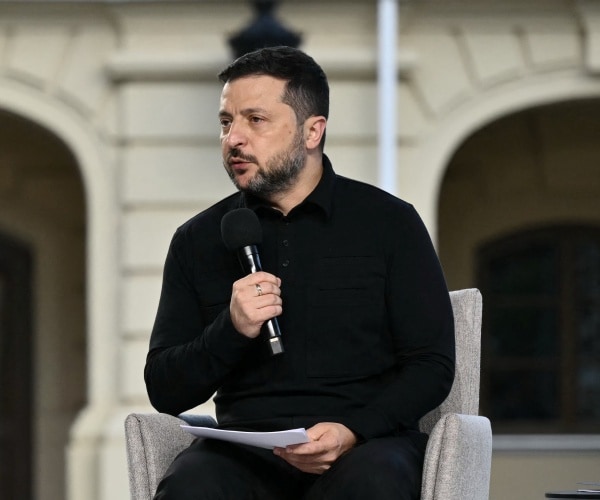
Ukrainian President Volodymyr Zelenskyy announced Sunday that he and President Donald Trump have agreed to meet in New York on the sidelines of the United Nations General Assembly — a summit he says “could change a lot” in the effort to end Russia’s war against Ukraine, now in its fifth year. The meeting, expected to take place Tuesday, follows a series of diplomatic moves that suggest the stalled peace process may finally be gathering real traction.
“We agreed to meet in New York, and this meeting could change a lot. There is diplomatic momentum,” Zelenskyy wrote on X. He also noted that “the peace track is our number-one priority,” and pointed to emerging ideas around de-escalation, energy security, food security, and the protection of civilian life — issues that have defined the humanitarian catastrophe Russia’s invasion has produced since February 2022.
The diplomatic groundwork for Tuesday’s meeting has been laid in part by Zelenskyy’s chief negotiator and intelligence chief Rustem Umerov, who has been coordinating with White House envoys Steve Witkoff and Jared Kushner. Earlier this month, the two U.S. envoys made their first-ever visit to Kyiv in their capacity as mediators — a notable shift after several previous trips exclusively to Moscow, a sequencing that had drawn quiet but pointed criticism from Ukrainian officials and their European allies.
The timing of the meeting carries real weight.
Just days before the planned summit, Trump signed the Lindsey O. Graham Sanctioning Russia and Iran Act of 2026, legislation that expands statutory sanctions, tariffs, and other economic restrictions on Russia while extending existing measures against Iran. He also approved what the administration is describing as the largest U.S.-Ukraine arms package since Trump returned to office — two concrete steps Kyiv had been pressing Washington to take for months. Both moves signal that the administration, whatever its internal contradictions on Ukraine, is willing to use economic and military leverage in the negotiating process.
Russia has indicated that direct talks between Moscow and Kyiv could resume in October, after negotiations collapsed last winter and were further disrupted by the outbreak of conflict involving Iran. The Trump administration has expressed confidence that trilateral talks — with the U.S. as mediator — can produce what Witkoff called a “good resolution.” That framing deserves scrutiny: a resolution acceptable to Washington and Moscow is not automatically one that guarantees Ukraine’s sovereignty, territorial integrity, or long-term security. Zelenskyy has consistently insisted those elements are non-negotiable.
What distinguishes this moment from earlier diplomatic overtures is the combination of legislative pressure on Russia, a renewed arms commitment to Ukraine, and the direct engagement of both presidents. Whether that combination translates into a durable framework — or another round of process that benefits the aggressor — remains an open and urgent question.
Trump is scheduled to address the UN General Assembly on Tuesday, the same day the bilateral meeting with Zelenskyy is expected to occur. The war will reach its five-year mark in February. The window for a just settlement, one that does not reward Russia’s violations of international law with territorial gains, is not unlimited.